
Listed on 
 Years active
 English (Arabic)
 Chinese Simplified - 中文 (简体)
 Chinese Traditional - 中文 (繁體)
 English
 Japanese - 日本語
 Korean - 한국어 (대한민국)
 Portuguese - Português
 Russian - Русский
 Spanish - Español
 Thai - ไทย
 English (India)
Don't have an account?
Register via AppHave an account?
Login
People ask, “What is a Blockchain?”, but when you start talking to them about distributed ledgers and crypto wallets, they tend to get disheartened. These digital items are clearly not ledgers or wallets in the normal senses of the words, so what are they really? The best way to define the blockchain is by understanding exactly how it functions. In this article, we’ll help you do this through depicting the blockchain as a coral reef, and cryptocurrencies as the fish that dwell within it.
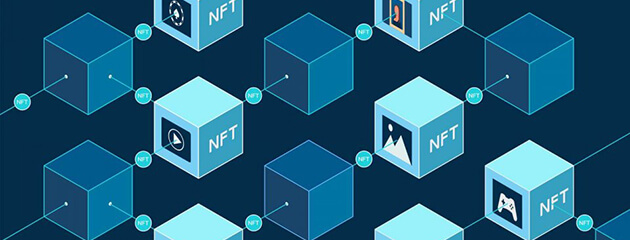
Blockchains are indeed distributed ledgers, but this just means they are transaction accounts that are publicized on the internet. More than that, blockchains provide a medium in which cryptocurrencies and other digital assets can subsist and move. Blockchains are not static and dead, but dynamic and alive – consistently developing themselves to fit the needs of the assets that live on them.
For Stanford University, blockchains are really “blocks of data linked into an uneditable, digital chain”. When cryptocurrency is transferred from one wallet to another on the blockchain, a new data block is generated, recording the details of the transaction – how much crypto was sent, the wallet addresses of sender and receiver, and the exact time of the transferal. The new block interlocks with both the preceding block and the one to follow, bound together with something called a cryptographic hash. IBM explains that “The cryptographic hash makes it nearly impossible to alter any block without changing all subsequent blocks, ensuring the integrity of the entire process”.
Each link of the chain is made publicly available to every participant. Since everyone shares the same transaction record, an environment of trust develops throughout the blockchain. If someone tried to deny that a particular transaction had occurred, or to alter any of the information recorded on a block, his action would immediately be recognized as a fraud by all other nodes.
Similarly, new coral is added to a reef in a gradual, organic process, with each new piece building directly upon the previous one. Every inhabitant of the reef is aware of exactly how the reef has developed, possessing a mental map of each twist and turn in the structure. Should a chunk of coral suddenly become detached, everyone would realize this almost instantaneously. Moreover, the development of the reef depends directly on the behavior of the species that live on it. When there is lots of fish traffic in a certain direction, it will impact the way in which the reef expands.
Just as the fish attract the most attention in the coral reef, cryptocurrencies are the most popular assets that exist on blockchains. It also happens to be true that the original use-case for blockchains, as outlined in a 2008 article titled “Bitcoin: A Peer-to-Peer Electronic Cash System” by Satoshi Nakomoto, was as a vehicle for monetary transactions. Nakomoto promoted the idea of a payment system underpinned by a public ledger, where each node in the system carries a copy of every transaction.
Thousands of other cryptocurrencies – besides Nakamoto’s Bitcoin – were later minted and took up residence on various blockchains. Blockchain technology had opened the door to transferring funds across the globe without the need for any intermediary. Just as the clownfish needs the reef in order to live and interact with other species, so crypto tokens need the blockchain to exist and move from one wallet to another. Just as each clownfish exhibits markings that distinguish it both as a species and an individual, so crypto tokens belong to “species” like Ether, Solana, or Cardano, and carry more specific token IDs too.
When people transfer cryptocurrencies, thus creating a new block in the chain, there are two consensus mechanisms they can use to do it: Proof of Work (PoW) and Proof of Stake (PoS). PoW, which is used to validate Bitcoin transactions, requires “miners” to solve mathematical puzzles at speed. Whoever gets this done first is allowed to add the next block to the chain and is also rewarded with some Bitcoin. In our analogy, imagine a group of crabs vigorously competing in a weight-lifting competition with shells for the merit of placing the next piece of coral, each hoping to receive a reward of fish.
In understanding PoS, which validates transactions on the Ethereum blockchain, think of an elite group of turtles who have earned their status through caring for the reef over many years, but also through possessing plenty of their own fish. When a turtle volunteers to lend out its fish for the good of the reef, it earns the right to add the next piece of coral. The more fish a turtle commits to the cause, the more of an active role the turtle can take in building the reef. Returning now to dry land: The more a recognized blockchain participant “stakes” of his own crypto for the sake of a transaction, the more blocks he may create on the chain, and the more compensation he can receive in the form of transactions costs.
While blockchain is the underlying technology and cryptocurrencies are its most famous inhabitants, there’s more than one way to participate in the crypto ecosystem. One increasingly popular method is trading cryptocurrencies via Contracts for Difference (CFDs). This approach allows traders to speculate on the price movements of digital assets like Bitcoin, Ethereum, or Solana—without ever owning the actual coins.
Just as you don't need to own a fish to understand its value in the reef, CFD traders don’t need to transfer crypto between wallets or manage private keys. Instead, they can open positions based on whether they believe the price will go up or down. This makes crypto trading more accessible, especially for those who are interested in market volatility but not the technical challenges of wallets, gas fees, or blockchain navigation.
CFD trading also allows for leverage, enabling you to control a larger position with a smaller capital outlay—though this also increases the level of risk. Additionally, iFOREX offers advanced tools, real-time charts, and flexible trading conditions to help navigate the ups and downs of the crypto market effectively.
In short, while blockchains remain the habitat where digital assets live and breathe, CFD trading offers a bridge to that ecosystem for traders who prefer simplicity, speed, and strategic control.
Cryptographic hashes are a vital security mechanism used in the preservation of the blockchain. Think of them in the following way: Every coral polyp carries its own genetic blueprint – its DNA. The DNA describing a particular polyp takes account of how its structure fits into the overall reef. Moreover, if somebody were to chip away at a polyp until it fell off, and then add a foreign polyp in its place, the entire reef would register that its DNA didn’t fit in with the pattern.
Similarly, cryptographic hashes describe the uniqueness of each block in the chain, which includes the interlocking role the block assumes in the larger system. The hash guarantees the integrity of each block and depicts for us the full context in which it exists. Should somebody attempt to insert a strange block into the middle of the chain, the entire reef would recognize that its “DNA” didn’t fit and, consequently, reject it. Thus, cryptographic hashes – in storing away the genetic blueprints of each valid block – ensure that the blockchain as a whole remains healthy and functional, while also keeping malicious actors at bay.
The digital assets that live on blockchains contribute to those ledgers’ organic development through their normal functionality. Thus, while cryptocurrencies depend on blockchains for their existence, blockchains also need cryptocurrencies to keep developing as they should. The transparency of the blockchain’s rules gives it a trustworthiness that allows each participant to keep using it for their own purposes, while also benefiting the greater structure and every other member.
In this way, it’s like a coral reef that lives in a mutually beneficial relationship with the species that call it home. A single coral polyp, when viewed on its own, may seem insignificant, but when combined with thousands of others, it creates a structure that supports the lives of many creatures. A new block on the blockchain is very similar: In conjunction with many others of its kind, it creates the conditions that support “life” for digital assets.
Join iFOREX to get an education package and start taking advantage of market opportunities.
 A beginner's e-book
 $5,000 practice demo account
 A 12-part video course
 Trusted partner
 Featured partner


