
Listed on 
 Years active
 English (Arabic)
 Chinese Simplified - 中文 (简体)
 Chinese Traditional - 中文 (繁體)
 English
 Japanese - 日本語
 Korean - 한국어 (대한민국)
 Portuguese - Português
 Russian - Русский
 Spanish - Español
 Thai - ไทย
 English (India)
Don't have an account?
Register via AppHave an account?
Login 14/04/2026 - 06:44 UTC
The USDX traded vulnerably near the 98.40 level on Tuesday, struggling to recover after sliding -0.71% during Monday’s session. The Greenback remains under pressure as investors price in a more dovish path for the Federal Reserve, with rate hike expectations for the year largely evaporating amid hopes for a permanent ceasefire. Sentiment was further dampened by U.S. Vice President JD Vance’s description of weekend talks with Iran as "productive," leading markets to anticipate a second round of high-level negotiations before the current truce expires on April 21.
Gold maintained a positive bias, building on Monday’s 1.85% surge to trade near the $4,775 mark. The yellow metal is attracting follow-through buyers as the combination of a depressed Dollar and shifting Fed expectations bolsters the appeal of non-yielding assets. While volatility in the Strait of Hormuz continues to provide a geopolitical floor for bullion, the primary driver remains the cautiously optimistic tone from Washington, which has encouraged investors to move back into commodities despite the lack of a formal breakthrough in Pakistan.
WTI Oil remained subdued near $92.00, following a massive -7.79% collapse on Monday as the market began pricing out a significant portion of the geopolitical risk premium. Prices are currently consolidating as traders weigh the possibility of a long-term de-escalation against ongoing supply constraints. Although OPEC+ reported a staggering production decline of 7.9 million bpd in March due to the Hormuz shutdown, the prospect of continued diplomacy initiated by Tehran has kept a lid on prices. Investors are now looking toward the upcoming IEA monthly report for clearer guidance on global supply-demand dynamics.
Asian equity markets advanced in broad-based trading on Tuesday, drawing a firm lead from a sharp rally on Wall Street. Sentiment was driven by sustained optimism surrounding artificial intelligence demand and easing concerns over bond yields, which outweighed softer-than-expected export data from China. As of 05:25 AM GMT, regional performance was notably led by the Korea 200, which surged 3.67% as investors aggressively returned to heavyweight chipmakers. In Japan, the Japan 225 climbed 0.70%, supported by significant gains in the technology sector. In Mainland China, markets remained resilient despite trade data showing a sharp slowdown in March exports; the China SSE rose 0.21% and the China SZSE gained 0.53%. Conversely, the Hong Kong 50 bucked the regional trend, retreating -0.34% as the market continues to navigate broader geopolitical uncertainty and the implications of the narrowed Chinese trade surplus.
The focus now shifts to Tuesday’s session as major U.S. banks, including JPMorgan Chase and Wells Fargo, prepare to release their latest quarterly results. Investors are particularly alert for updates on loan growth and trading activity, as well as how sustained high interest rates are affecting the financial sector's bottom line. These reports follow a mixed showing from Goldman Sachs, where a dip in trading revenue pressured overall performance.
Looking ahead, the market focus remains centered on a critical slate of economic and corporate updates. Following Tuesday’s U.S. PPI data, which will provide fresh insights into wholesale inflation trends, attention will shift to the United Kingdom on Thursday for the monthly GDP release. On the corporate front, Netflix is slated to report its first-quarter 2026 results on April 16. With the streaming giant projecting revenues of approximately $12.16 billion—a more than 15% year-over-year increase—investors will be looking for confirmation that membership growth, strategic content deals with major studios, and an expanding ad-revenue base continue to drive high-level performance despite the broader economic uncertainty.
The EUR/USD pair extended its upward momentum on Tuesday, climbing to the 1.1765–1.1770 range during the Asian session—its highest level since early March.
Investor sentiment has shifted toward riskier assets despite the lack of a breakthrough in recent Iran peace negotiations. Market participants remain cautiously optimistic that diplomatic efforts could still progress. Comments from US Vice President JD Vance, who signaled measured optimism and pointed to incremental progress in talks, have contributed to reduced demand for the Dollar as a traditional safe-haven asset.
Adding to the pressure on the greenback is ongoing uncertainty surrounding the US Federal Reserve’s interest rate outlook. This ambiguity has kept the USD hovering near its lowest levels in months, further supporting the euro’s advance.
However, geopolitical tensions continue to present a counterbalance. Concerns over the security of shipping routes through the Strait of Hormuz remain elevated after US President Donald Trump announced the initiation of a naval blockade, warning of potential military action against Iranian vessels approaching the area.
Iran has responded with threats targeting ports across the Persian Gulf and the Gulf of Oman, sustaining geopolitical risk in the region. Despite these risks, the broader fundamental backdrop continues to favor the euro.
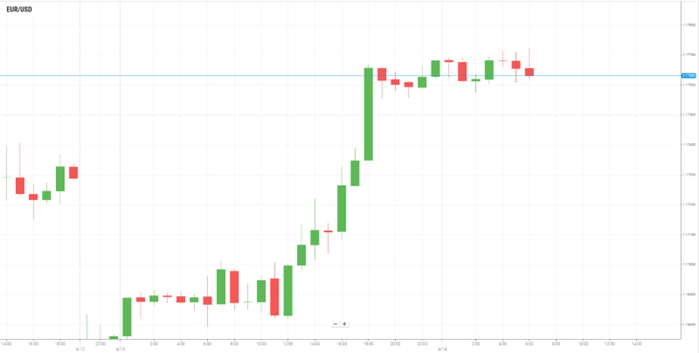
Gold prices maintained a positive bias during Tuesday’s Asian session, as the precious metal continues to attract buyers as the US Dollar remains under pressure, supported by cautious optimism surrounding Iran diplomacy and lingering uncertainty over US monetary policy.
Despite the absence of a breakthrough in recent US-Iran negotiations, market participants remain hopeful that diplomatic channels will stay open.
At the same time, uncertainty surrounding the US Federal Reserve’s rate path continues to weigh on the greenback. Mixed signals on inflation and growth have clouded the outlook for monetary policy, providing support for non-yielding assets such as gold.
However, gains in bullion remain measured amid rising geopolitical and inflation risks. Escalating tensions in the Middle East, particularly around the Strait of Hormuz, have raised concerns over potential energy supply disruptions and a renewed surge in inflation.
While markets are still pricing in the possibility of a rate cut later this year, persistent inflation risks could limit the scope for monetary easing, offering some underlying support to the Dollar.
Geopolitical developments continue to act as a key overhang. US President Donald Trump confirmed the start of a naval blockade in the Strait of Hormuz and warned of military action against Iranian vessels approaching the area. Iran has responded with threats targeting ports across the Persian Gulf and the Gulf of Oman, keeping tensions elevated.
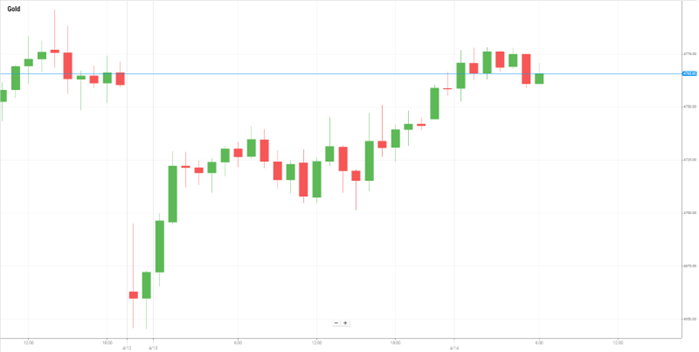
Oil prices moved lower early on Tuedsay as traders assessed evolving supply risks alongside the possibility of renewed ceasefire negotiations between the United States and Iran.
Market sentiment remained cautious following mixed signals on diplomatic progress. US Vice President JD Vance indicated that recent talks with Iran, held over the weekend, were not entirely unsuccessful, pointing to constructive discussions and suggesting that further de-escalation now depends on Tehran’s next steps. He emphasized that a potential agreement would hinge on the full reopening of the Strait of Hormuz and a halt to Iran’s nuclear enrichment activities.
Oil prices had surged sharply at the start of the week amid heightened supply concerns but pared gains after US President Donald Trump stated that dozens of vessels had successfully transited the Strait of Hormuz before the US naval blockade was implemented. Shipping activity, however, appears to have slowed מאז, with reports indicating that many vessels are avoiding the key waterway despite limited movement by some tankers.
The United States officially began blockading Iranian ports and vessels on Monday, following unsuccessful ceasefire negotiations. Core disagreements remain centered on Iran’s nuclear program, regional influence, and the strategic importance of keeping the Strait of Hormuz open.
While Iran has signaled little interest in returning to negotiations, diplomatic efforts from regional and Asian stakeholders may still pave the way for further talks. Meanwhile, a fragile ceasefire between the two sides appears to be holding for now, with no significant escalation reported in recent days.
Despite the current pullback, oil markets remain highly sensitive to geopolitical developments. Prices had surged to record monthly gains in March after conflict in the Middle East disrupted a significant portion of global supply.
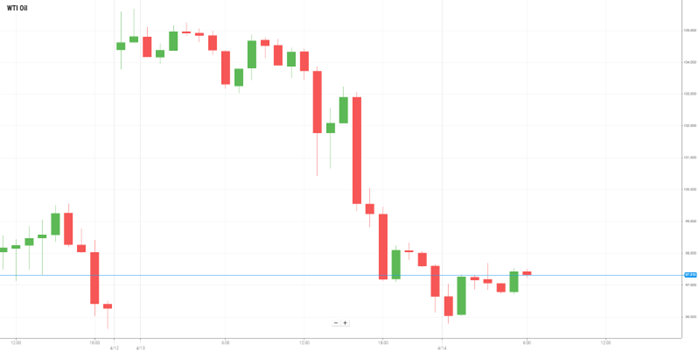
US equities closed higher on Monday, staging a strong rebound from early losses as gains in technology stocks, renewed focus on corporate earnings, and cautious optimism over US-Iran diplomacy supported sentiment.
Markets demonstrated resilience despite ongoing geopolitical uncertainty. While US President Donald Trump confirmed that a naval blockade in the Strait of Hormuz had officially begun, he also noted strong shipping activity through the key waterway prior to its implementation, helping to ease immediate supply concerns.
Investor sentiment was further supported by indications that diplomatic efforts with Iran may continue.
Attention is also shifting toward the start of the earnings season, which is increasingly seen as a key driver of the current equity rally—particularly within the technology sector and AI-related industries that carry significant weight in major indices.
Inflation remains another key variable for markets. Recent data showed a sharp rise in US consumer prices in March, largely driven by higher energy costs linked to the conflict. Elevated oil prices—amid disruptions to flows through the Strait of Hormuz, a critical artery for global crude supply—have heightened concerns about sustained price pressures.
On the corporate front, earnings season began with results from Goldman Sachs, which reported strong profit growth driven by robust trading and dealmaking activity. However, weaker performance in its fixed income division weighed on investor sentiment, sending its shares lower. Other major banks, including JPMorgan, Wells Fargo, Citigroup, Bank of America, and Morgan Stanley, are set to report later this week, keeping the spotlight on the financial sector.
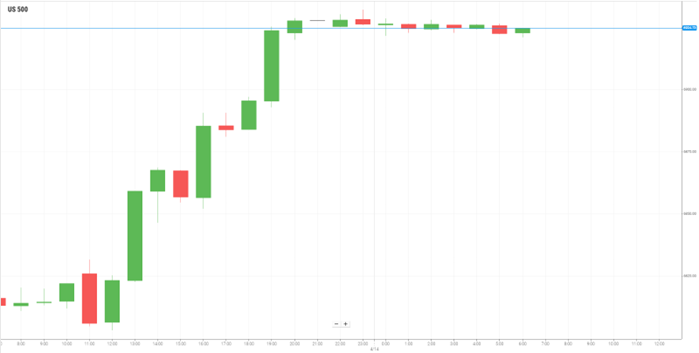
The materials contained on this document should not in any way be construed, either explicitly or implicitly, directly or indirectly, as investment advice, recommendation or suggestion of an investment strategy with respect to a financial instrument, in any manner whatsoever. Any indication of past performance or simulated past performance included in this document is not a reliable indicator of future results. For the full disclaimer click here.
Join iFOREX to get an education package and start taking advantage of market opportunities.
 A beginner's e-book
 $5,000 practice demo account
 A 12-part video course
 Trusted partner
 Featured partner
 By
By 


