
Listed on 
 Years active
 English (Arabic)
 Chinese Simplified - 中文 (简体)
 Chinese Traditional - 中文 (繁體)
 English
 Japanese - 日本語
 Korean - 한국어 (대한민국)
 Portuguese - Português
 Russian - Русский
 Spanish - Español
 Thai - ไทย
 English (India)
Don't have an account?
Register via AppHave an account?
Login 17/08/2026 - 06:58 UTC
US Dollar Index (USDX) traded near the 99.50 level on Monday (+0.12% for the week), losing ground following softer-than-expected economic data. US Retail Sales unexpectedly fell -0.6% MoM in July (5.0% YoY), missing forecasts and recording the largest decline in over a year. Coupled with recent mild CPI and PPI figures, the contraction prompted traders to scale back expectations for Federal Reserve rate hikes, with the CME FedWatch Tool pricing in just a 31% probability of a rate hike at the September 15–16 policy meeting.
Gold held onto modest gains, rising +0.73% for the week to trade just below the $4,400 mark. The precious metal found support from a subdued greenback and reduced Fed rate hike expectations, though upside momentum remained constrained by persistent geopolitical risks and volatile energy prices, which continue to complicate the broader inflation outlook.
West Texas Intermediate (WTI) crude oil gained +6.95% over the past week, hovering near $81.60. Energy markets remain volatile as negotiations to reopen the Strait of Hormuz hit a complete impasse amid elevated Middle East tensions, ongoing supply risks, and fuel shortages stemming from Ukrainian strikes on Russian oil refineries.
Asian Stock Markets mostly advanced, buoyed by semiconductor and technology shares. Regional chipmakers outperformed on AI-driven momentum, with SK Hynix surging +15.51% and Samsung Electronics jumping +18.57% over the week. Chinese tech equities also posted gains, even as Alibaba slipped -3.65% weekly despite reports that it agreed to sell its gaming developer unit, Lingxi Games, to private equity firm Trustar Capital for over $1.5 billion.
US Equities navigated mixed sentiment as benign inflation data was offset by concerns over consumer spending and corporate news. Alphabet fell -2.80% and Amazon dropped -4.33% over the week, while Microsoft rallied +7.56% and Nvidia surged +11.57%. Outside public equity markets, SpaceX gained +5.08% for the week. Investors now look ahead to major retail earnings reports and the upcoming release of the FOMC meeting minutes.
Bitcoin traded virtually flat on Friday, near $62,907, consolidating within a narrow range and bringing its weekly loss to -2.90%. The world's largest cryptocurrency showed little reaction to macroeconomic releases, hovering below resistance as market participants waited for fresh catalysts.
Today's Economic Slate and the week ahead shift investor focus toward the release of the FOMC meeting minutes, key UK CPI and employment data, and corporate earnings from major players including Home Depot, Analog Devices, Target, and Walmart. Combined with ongoing monitoring of stalled US-Iran negotiations in the Strait of Hormuz, these events will offer critical guidance for global monetary policy and broader market direction.
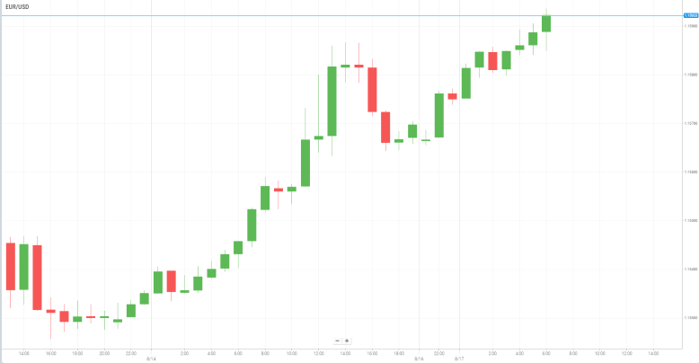
EUR/USD extends its advance for a third consecutive session, reaching a two-month high during the Asian session as fading expectations for an immediate Federal Reserve rate hike continue to weigh on the US Dollar. The pair is now approaching the 1.1600 psychological level, with a sustained break above this barrier potentially opening the door to further upside.
The US Dollar remains near the lower end of its monthly range after disappointing US economic data reinforced expectations that the Fed may keep interest rates unchanged. Markets are increasingly focused on upcoming US data for further clues about the strength of the economy and the timing of potential policy changes.
The weaker USD backdrop has provided additional support to the euro, with EUR/USD building on last week’s rebound from the 1.1500 area.
Meanwhile, ongoing US-Iran tensions continue to keep geopolitical risks elevated, while volatile oil prices could fuel renewed inflation concerns. A renewed rise in energy prices could complicate the inflation outlook and limit expectations for easier monetary policy.
Attention now turns to the release of the FOMC Minutes on Wednesday, which could offer fresh clues about the Fed’s policy outlook.
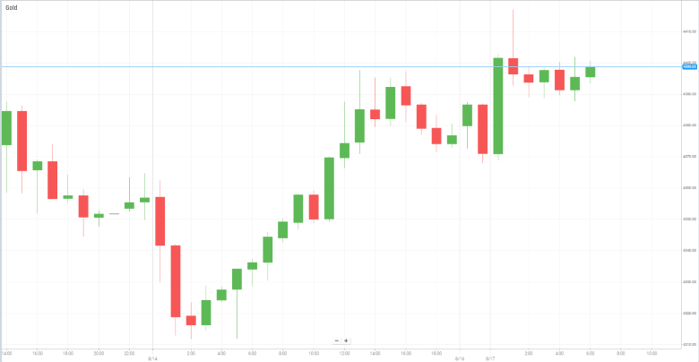
Gold maintains a modestly positive bias at the start of the new week, trading near $4,400 after extending gains for a second consecutive session. However, the precious metal remains below last Thursday’s peak, its highest level since June 5, as traders weigh a weaker US Dollar against persistent geopolitical and inflation risks.
The US Dollar remains under pressure following disappointing US economic data. Alongside signs of moderating inflation, the data has reduced expectations for an immediate Federal Reserve rate hike, weighing on the USD and supporting non-yielding Gold.
Still, uncertainty over the inflation outlook could limit the precious metal’s gains. Volatile energy prices may keep inflationary pressures elevated and encourage the Fed to maintain a restrictive policy stance. At the same time, ongoing geopolitical tensions are supporting safe-haven demand for the US Dollar, which could limit further upside in Gold.
The US-Iran standoff remains a key source of uncertainty, with US officials signaling the possibility of significant economic measures against Tehran. Developments surrounding the Strait of Hormuz are also keeping markets focused on energy supply risks, while fresh Ukrainian attacks on Russian refineries could add further upward pressure on oil prices.
Attention now turns to the release of the FOMC Minutes on Wednesday, which could provide fresh clues about the Fed’s policy outlook.
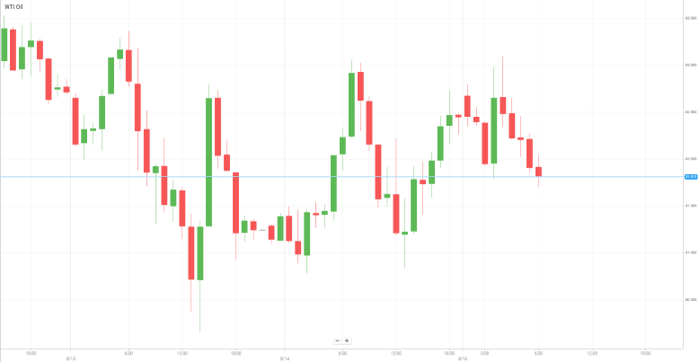
Oil prices trade in a narrow range on Monday after posting strong gains last week, with ongoing uncertainty surrounding US-Iran relations and disruptions around the Strait of Hormuz keeping crude prices supported.
Shipping activity through the Strait of Hormuz has slowed further following Iranian attacks on tankers in the region, while the US continues to maintain pressure on Tehran. Over the weekend, Iranian Foreign Minister Abbas Araqchi reiterated that Tehran was not engaged in direct talks with Washington, while the US threatened additional economic measures against Iran.
Tensions have also spread to the Red Sea, where Yemen’s Iran-backed Houthis continue to target commercial vessels around the Bab al-Mandab Strait. Further disruptions in the region could add to concerns about the security of global oil supplies and keep a geopolitical premium embedded in crude prices.
Supply concerns have largely outweighed expectations for weaker global oil demand. Both OPEC and the International Energy Agency lowered their 2026 demand forecasts last week, but the potential for tighter near-term supplies continues to provide support to the market.
Damage to Persian Gulf refineries, combined with ongoing Russia-Ukraine attacks on energy infrastructure, could further tighten refined fuel supplies and provide additional support to oil prices.
For now, traders remain focused on developments surrounding Iran, the Strait of Hormuz and regional energy infrastructure. Any signs of de-escalation could ease supply concerns, while further disruptions may keep Brent and WTI supported near recent highs.
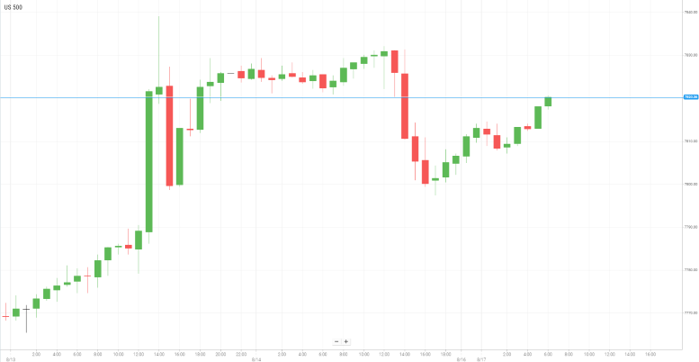
Wall Street closed slightly lower on Friday as investors digested weaker-than-expected US retail sales, while the major indexes delivered a mixed performance for the week. Despite Friday’s pullback, the US 500 posted a weekly gain as a series of softer economic indicators reduced expectations for an imminent Federal Reserve rate hike.
Market sentiment was supported throughout the week by signs of moderating inflation and weaker consumer activity. July retail sales fell 0.6% month-on-month, well below expectations for a 0.1% increase, while core retail sales declined 0.3%. The data followed softer-than-expected inflation readings and a weak jobs report, reinforcing expectations that the Fed may have less urgency to tighten monetary policy.
Technology stocks also remained in focus. Chipmakers cooled after a strong start to August, although several semiconductor names continued to post gains. Sandisk jumped 7.55% on Friday after a strong long-term outlook, while Micron and Western Digital also advanced. By contrast, Cisco Systems and Applied Materials came under pressure as high investor expectations overshadowed otherwise solid results.
Nvidia also remained a key focus for the AI trade after announcing partnerships aimed at mobilizing up to $500 billion in third-party capital for AI infrastructure.
With monetary policy expectations increasingly supportive of equities but geopolitical and energy risks still elevated, Wall Street may remain sensitive to incoming economic data, oil-price movements and developments surrounding the Fed.
The materials contained on this document should not in any way be construed, either explicitly or implicitly, directly or indirectly, as investment advice, recommendation or suggestion of an investment strategy with respect to a financial instrument, in any manner whatsoever. Any indication of past performance or simulated past performance included in this document is not a reliable indicator of future results. For the full disclaimer click here.
Join iFOREX to get an education package and start taking advantage of market opportunities.
 A beginner's e-book
 $5,000 practice demo account
 A 12-part video course
 Trusted partner
 Featured partner
 By
By 


