
Listed on 
 Years active
 English (Arabic)
 Chinese Simplified - 中文 (简体)
 Chinese Traditional - 中文 (繁體)
 English
 Japanese - 日本語
 Korean - 한국어 (대한민국)
 Portuguese - Português
 Russian - Русский
 Spanish - Español
 Thai - ไทย
 English (India)
Don't have an account?
Register via AppHave an account?
Login 20/07/2026 - 06:49 UTC
The US Dollar Index (USDX) is consolidating around the 100.75–100.80 region after edging down -0.21% last week. Despite this minor pullback, the underlying fundamental backdrop strongly supports the greenback's premier safe-haven status as the risk of a broader Middle Eastern war looms. Because surging energy prices are keeping potential 2026 Federal Reserve rate hikes firmly on the table, the path of least resistance for the dollar remains skewed to the upside, suggesting that any near-term market corrections will likely attract buyers.
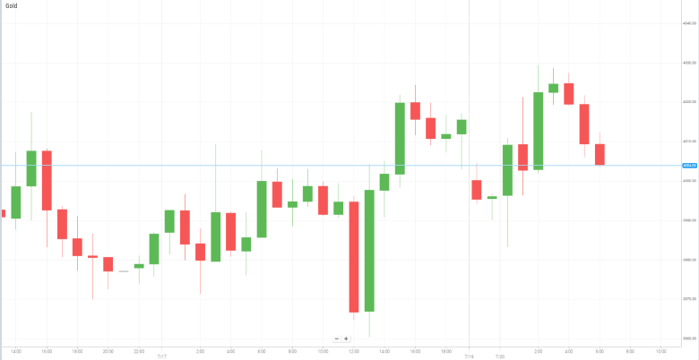
This resilient dollar profile leaves Gold staging a rather fragile recovery, with the non-yielding bullion managing to bounce off its monthly low near $3,982 after dropping -2.28% last week. While minor greenback weakness offered temporary support, gold’s upside remains strictly capped by the exact same geopolitical forces driving the broader markets. The sudden spike in energy costs has reignited global inflation fears, prompting hawkish rhetoric from Fed officials like Cleveland President Beth Hammack and pushing bond yields higher, which continues to keep gold bulls cautious.
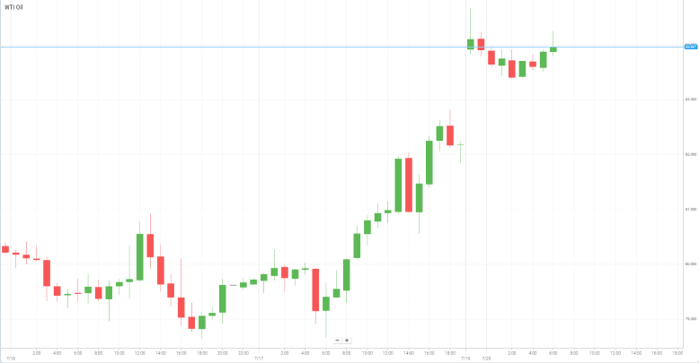
Directly driving these global inflationary concerns is West Texas Intermediate (WTI) crude oil, which has soared to a one-month high near $84.50 following a staggering +14.75% surge last week. Prices are climbing rapidly as physical supply anxieties reach a boiling point, triggered by a US naval blockade of Iranian ports and the severe disruption of the critical Strait of Hormuz. Because this narrow chokepoint handles a massive percentage of daily global oil transit, its closure effectively chokes off major fuel supplies to international markets. Energy traders are rapidly pricing in a steep geopolitical risk premium, fearing that a protracted standoff will lock away substantial crude production, prolong global supply deficits, and force energy prices even higher.
The global market landscape shifted on Monday as the tech sector experienced a geographic divergence, driven by a disruptive domestic milestone. The catalyst was the debut of Moonshot AI’s Kimi K3 large language model, which positioning itself as a highly cost-efficient competitor to established Western platforms. This launch immediately sparked fears that accelerating industry competition could undermine current lofty tech valuations, setting off a wave of profit-taking across key Asian semiconductor and chip manufacturing hubs. South Korean shares bore the brunt of this valuation anxiety, with the KOSPI plunging nearly 4% as major semiconductor heavyweights Samsung Electronics and SK Hynix fell in tandem. Conversely, Chinese and Hong Kong equities thrived on the news, interpreting the domestic technological breakthrough as a major win for China's sovereign ecosystem. Against this cautious macro backdrop—and with China keeping its benchmark lending rates unchanged—global investors are turning their focus to upcoming quarterly earnings from Wall Street giants.
Global markets are bracing for heightened volatility as attention shifts to a high-stakes economic calendar and the peak of the second-quarter corporate earnings season. Macroeconomic risk events are stacked heavily throughout the week. The action begins on Wednesday with the UK Claimant Count Change (expected at 31.2K), closely followed on Thursday by the UK's annual CPI reading (forecast at 2.8%) and crucial Australian employment data, which is projected to show 40.3K jobs added alongside a tight 4.4% unemployment rate. The week's macroeconomic centerpiece arrives with the European Central Bank’s (ECB) monetary policy decision, where officials are widely expected to hold the Main Refinancing Rate at 2.40% before delivering their policy statement and highly anticipated press conference.
Simultaneously, the corporate earnings calendar kicks into high gear as industry giants across multiple sectors report quarterly results. Market participants will be closely parsing updates from tech and EV pioneers Alphabet (GOOGL) and Tesla (TSLA), alongside major reports from semiconductor stalwart Texas Instruments (TXN), energy transition leader GE Vernova (GEV), tobacco giant Philip Morris (PM), defense contractor Lockheed Martin, and oil major ExxonMobil. Together, these dual macroeconomic and corporate catalysts are poised to drive sharp price action across global asset classes.
The EUR/USD pair opened the week on a weaker footing, marking its third consecutive daily decline, as investors continued to favor the US Dollar amid heightened geopolitical tensions and rising inflation risks.
Demand for the US Dollar strengthened after the US military confirmed a ninth consecutive night of strikes targeting Iranian military assets linked to attacks on commercial shipping in the Strait of Hormuz. Reports from regional allies also pointed to renewed attacks over the weekend, reinforcing fears of a broader conflict. The escalating situation has boosted demand for traditional safe-haven assets, lending further support to the Greenback and weighing on the euro.
At the same time, crude oil prices climbed to their highest level since June 12 as concerns over supply disruptions intensified following the closure of the Strait of Hormuz and the US naval blockade of Iranian ports. Higher energy prices have revived fears of persistent inflation, increasing speculation that major central banks—including the Federal Reserve—could maintain a more hawkish policy stance for longer. These expectations have provided an additional tailwind for the US Dollar.
Attention now turns to the European Central Bank's monetary policy meeting on Thursday, which is expected to be the key catalyst for the euro this week. Investors will closely monitor the ECB's policy guidance for fresh clues on the interest rate outlook. In the meantime, ongoing geopolitical developments are likely to remain a major driver of market sentiment, with any further escalation in the Middle East potentially sustaining demand for the US Dollar and limiting upside potential for EUR/USD.
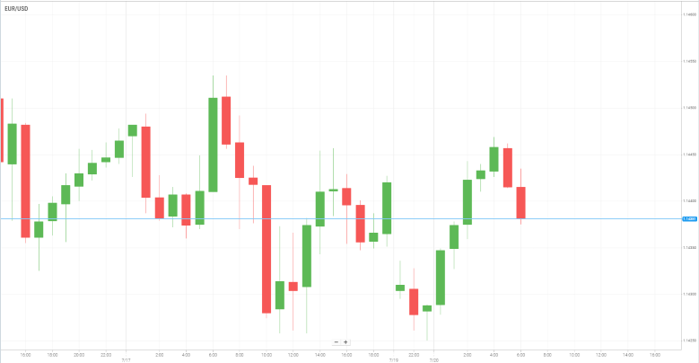
Gold prices regained modest ground at the start of the week, trading above the $4,000 level. The precious metal is attempting to build on Friday's rebound from its monthly low, although the broader outlook remains cautious as persistent geopolitical tensions and expectations of higher U.S. interest rates continue to support the U.S. dollar.
Investor sentiment remains focused on the escalating conflict in the Middle East. The United States confirmed it had completed a ninth consecutive night of military strikes against Iranian targets, with President Donald Trump stating the operations were conducted in response to the deaths of American service members. According to US Central Command, the strikes are intended to weaken Iran's military capabilities used in attacks on commercial shipping and civilian vessels transiting the Strait of Hormuz.
Iran responded by launching ballistic missiles and one-way attack drones targeting US allies across the region, with Bahrain, Jordan, Kuwait, and Iraq reporting fresh attacks. The continued exchange of hostilities has heightened fears of a wider regional conflict, reinforcing demand for safe-haven assets and keeping geopolitical risk firmly in focus.
Meanwhile, energy markets remain under pressure as the United States maintains its naval blockade of Iranian ports and tightens restrictions on Iranian oil exports, while Iran's Islamic Revolutionary Guard Corps continues to monitor and challenge shipping through the Strait of Hormuz. These developments have pushed crude oil prices to their highest levels since June 12, intensifying concerns over renewed inflationary pressures.
With no major US economic data scheduled for release on Monday, market participants are likely to focus on remarks from Federal Reserve officials and further developments in the Middle East.
Oil prices climbed sharply in early Asian trading on Monday after the United States and Iran exchanged another round of military strikes over the weekend, raising concerns about a broader regional conflict and the potential for prolonged disruptions to global crude supplies.
The latest advance followed renewed military action between Washington and Tehran. The US Central Command (CENTCOM) confirmed additional strikes against Iranian targets on Sunday, following an Iranian attack on a US military base in Jordan that reportedly killed two American service members and injured several others.
US forces have expanded the scope of their operations, targeting a broader range of Iranian military sites, while Iran has intensified attacks on US allies across the Gulf region. Despite the widening conflict, both sides remain heavily focused on the strategic Strait of Hormuz, a vital global energy shipping route. According to CENTCOM, the latest US operations were aimed at weakening Iranian capabilities used to target commercial shipping transiting the waterway.
The renewed hostilities mark the most severe escalation between the United States and Iran since the collapse of their April ceasefire, with diplomatic efforts appearing to have stalled completely. Shipping traffic through the Strait of Hormuz remains significantly below normal levels, heightening concerns over supply interruptions and prompting traders to build a larger geopolitical risk premium into oil prices.
While higher US crude production has provided some additional supply, it has not been sufficient to offset tightening global market conditions. Declining inventories and persistent disruptions continue to keep both crude oil and refined fuel markets well supported, reinforcing the bullish outlook for energy prices in the near term.
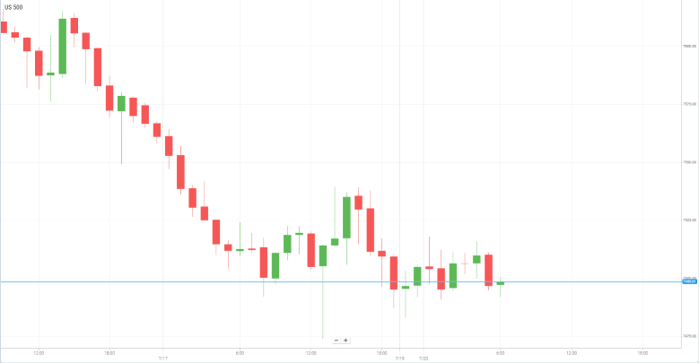
Wall Street closed sharply lower on Friday, ending a two-week winning streak as a broad selloff in technology stocks weighed heavily on investor sentiment. The continued unwinding of the artificial intelligence rally pushed semiconductor shares into bear market territory, while escalating tensions between the United States and Iran drove oil prices higher and reignited inflation concerns.
The technology sector came under significant pressure early in the session, falling more than 3% after the market opened. Investors reacted to the launch of a powerful new artificial intelligence model by China's Moonshot AI, which intensified concerns over rising competition in the AI space.
Away from the AI sector, Netflix was another major drag on the technology index after the streaming giant released weaker-than-expected revenue and profit guidance for the current quarter. Although the company's latest earnings broadly met expectations, investors expressed concern that slowing growth and intensifying competition could weigh on future performance.
Economic data released on Friday provided a mixed backdrop for financial markets. The University of Michigan's preliminary consumer sentiment index rose to 54.4 in July, its highest reading since February, supported by easing fuel costs and improving consumer confidence. Meanwhile, one-year inflation expectations declined to 4.2% from 4.6% in June, reinforcing signs that inflation had been moderating before the recent spike in energy prices.
However, policymakers continue to emphasize that inflation remains a key concern. Several Federal Reserve officials reiterated that additional policy tightening may still be necessary if price pressures persist, particularly as higher oil prices threaten to reverse recent progress.
The materials contained on this document should not in any way be construed, either explicitly or implicitly, directly or indirectly, as investment advice, recommendation or suggestion of an investment strategy with respect to a financial instrument, in any manner whatsoever. Any indication of past performance or simulated past performance included in this document is not a reliable indicator of future results. For the full disclaimer click here.
Join iFOREX to get an education package and start taking advantage of market opportunities.
 A beginner's e-book
 $5,000 practice demo account
 A 12-part video course
 Trusted partner
 Featured partner
 By
By 


