
Listed on 
 Years active
 English (Arabic)
 Chinese Simplified - 中文 (简体)
 Chinese Traditional - 中文 (繁體)
 English
 Japanese - 日本語
 Korean - 한국어 (대한민국)
 Portuguese - Português
 Russian - Русский
 Spanish - Español
 Thai - ไทย
 English (India)
Don't have an account?
Register via AppHave an account?
Login 27/07/2026 - 04:52 UTC
The US Dollar Index (USDX) started the week under pressure, hovering near the 101.00 level as easing US-Iran tensions reduced demand for the safe-haven Greenback. Despite the improved risk environment, concerns over potential energy supply disruptions following Houthi attacks on Saudi Red Sea facilities continued to limit downside pressure. Meanwhile, markets are largely pricing in a steady Federal Reserve policy decision this week, although a small number of participants still see the possibility of a surprise move.
On the other hand, gold prices advanced for a second straight session, trading above the $4,100 level during the Asian session on Monday as investors returned to the precious metal amid lower Treasury yields and softer inflation expectations following the decline in oil prices. The move also reflected continued demand for portfolio protection despite an improvement in geopolitical sentiment. Investors are now turning their attention to a busy week of central bank meetings, alongside key economic releases such as US GDP, Core PCE inflation, and Eurozone CPI, which are expected to provide fresh direction for financial markets.
Crude oil prices retreated sharply at the start of the week, with both WTI and Brent falling as easing US-Iran tensions encouraged traders to unwind part of the geopolitical risk premium accumulated in recent sessions. However, losses remained limited by ongoing supply concerns, with disruptions to key shipping routes in the Red Sea and the Strait of Hormuz keeping uncertainty elevated. The market remains sensitive to further developments in the Middle East, which continue to shape the near-term outlook for energy prices.
On the crypto front, Bitcoin prices held above the $64,000 level on Sunday, supported by increased market activity and positioning ahead of the Federal Reserve’s policy decision. However, Bitcoin’s inability to extend its recent rally beyond monthly highs highlighted continued caution among investors, with sentiment remaining fragile amid uncertainty over interest rates and broader risk appetite. Elsewhere in the crypto market, Ethereum gained ground alongside modest advances in BNB and Solana, while memecoins remained volatile. Regulatory developments also stayed in focus, with ongoing discussions around the US CLARITY Act adding further attention to the future framework for digital asset oversight.
Asian equity markets traded higher on Monday, supported by improving risk sentiment as a pause in US-Iran hostilities reduced geopolitical uncertainty. Australia200 led regional gains, while Japan's Nikkei 225 and Japan 100, together with major Chinese indices, also moved higher. Chinese technology stocks outperformed after strong corporate earnings, while memory-chip maker CXMT surged in its market debut, reflecting continued optimism toward the country's semiconductor industry. Market sentiment was further supported by stronger US equity futures ahead of a busy week of central bank decisions and earnings from major US technology companies.
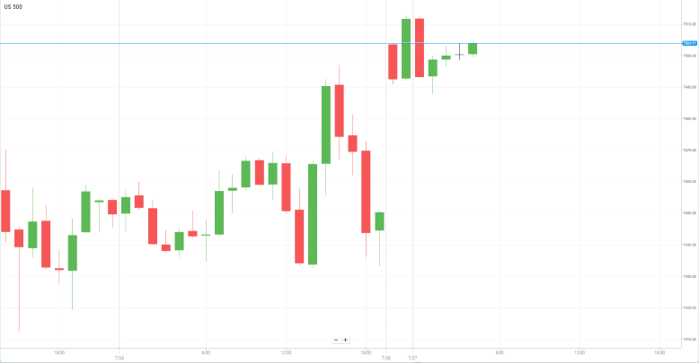
US stock index futures moved sharply higher ahead of Monday's session, with gains led by technology shares as improving geopolitical sentiment boosted risk appetite. The rebound followed a mixed finish on Wall Street last week, where all three major indices posted weekly losses amid concerns over artificial intelligence spending and elevated market valuations. The recent weakness has highlighted growing sensitivity around AI-related investments, with investors reassessing whether elevated capital spending can translate into stronger long-term earnings growth while maintaining confidence in the broader equity rally.
Attention now turns to a pivotal week for global markets, with the Federal Reserve, Bank of England, and Bank of Japan set to announce their latest policy decisions. Investors will also monitor key economic releases, including US GDP, Core PCE inflation, Eurozone CPI, and Nonfarm Payrolls, for fresh signals on growth, inflation, and the interest rate outlook. On the corporate front, earnings from Microsoft, Apple, Amazon, Meta, and other major companies will provide further insight into AI spending, cloud demand, profitability, and consumer resilience.
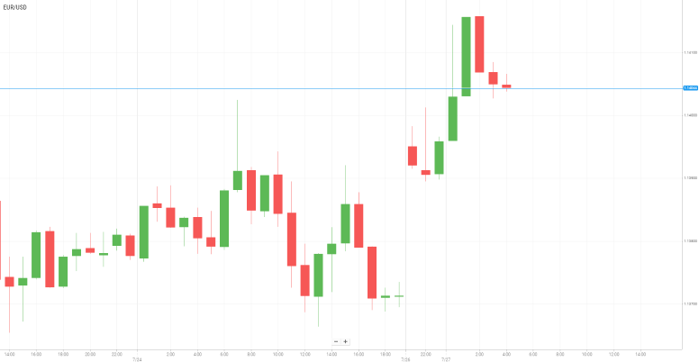
EUR/USD started the week on a firmer footing, climbing back above the 1.1400 level as renewed hopes for a diplomatic resolution to the US-Iran conflict weighed on the safe-haven US Dollar.
Improving geopolitical sentiment triggered a sharp decline in oil prices, easing concerns over inflationary pressures and reducing expectations for further Federal Reserve tightening. This added further pressure on the Greenback, with the US Dollar Index retreating from recent highs.
The pair’s upside, however, remains limited as traders adopt a cautious stance ahead of the Federal Reserve’s policy decision on Wednesday.
The US paused its bombing campaign against Iran late last week after nearly two weeks of strikes, while diplomatic efforts gained momentum. The shift in tone boosted market sentiment and reduced demand for traditional safe-haven assets, including the US Dollar.
The FOMC is widely expected to keep interest rates unchanged at this week’s meeting, although it highlighted that rising oil prices have strengthened the case for a more hawkish policy stance. The bank noted that while hawkish momentum is building, further evidence may be needed before gaining broader support within the committee.
Beyond the Fed decision, traders will continue monitoring developments in the Middle East, with any renewed escalation potentially restoring demand for the US Dollar and influencing the near-term direction of EUR/USD.
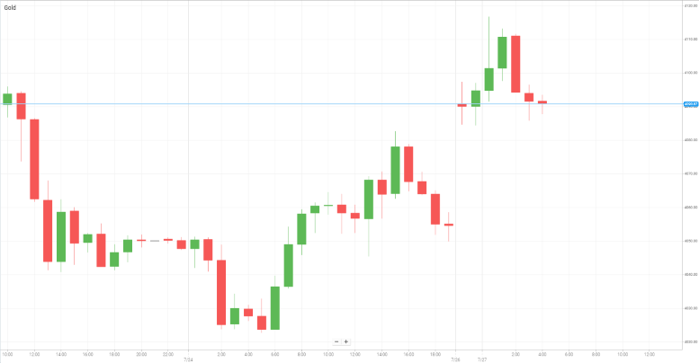
Gold extended its recovery for a second consecutive session on Monday, trading around the $4,100 level as easing geopolitical tensions and a sharp decline in oil prices reduced concerns over inflation and further interest rate increases.
The pause in US-Iran military strikes improved market sentiment and triggered a sell-off in crude oil prices, lowering expectations that higher energy costs could fuel renewed inflationary pressures. This weighed on US rate hike bets and provided additional support for the non-yielding precious metal.
Geopolitical developments remain a key driver for gold prices. The US suspended its bombing campaign against Iran late last week after nearly two weeks of strikes, while Tehran indicated it would hold back retaliatory actions as long as the pause continues. The improved diplomatic outlook reduced demand for traditional safe-haven assets, although uncertainty surrounding the conflict continues to limit downside risks for gold.
Looking ahead, traders will closely monitor the Federal Reserve’s policy guidance, with any shift in expectations for future rate moves likely to influence both the US Dollar and gold’s near-term direction.
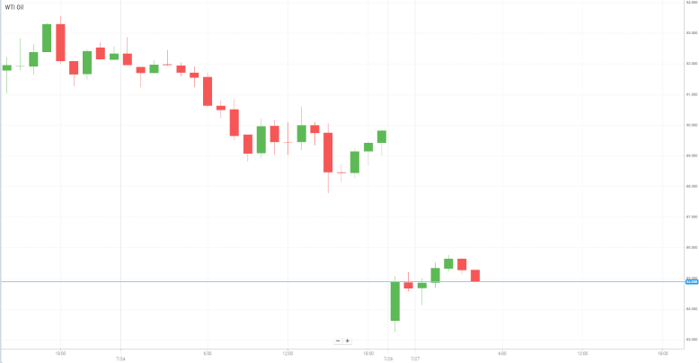
Oil prices fell sharply at the start of the week, dropping more than 5% as a pause in US-Iran military strikes reduced fears of further escalation and encouraged investors to unwind the geopolitical risk premium built into crude prices.
Brent crude briefly slipped below the $90 level before recovering slightly, while WTI also moved lower as markets reacted to improving diplomatic prospects between Washington and Tehran. The decline followed last week’s surge, when concerns over disruptions to Middle Eastern energy supplies pushed Brent close to the $100 mark.
The US decision to pause its bombing campaign after nearly two weeks of strikes, combined with Iran’s decision to hold back retaliatory attacks as long as the pause remains in place, boosted hopes that negotiations could resume. Reports that China was also attempting to help revive stalled talks added to optimism that tensions could ease.
Despite the sharp pullback, traders remain cautious as shipping disruptions continue across key energy routes. Reduced traffic through the Strait of Hormuz and ongoing risks around the Red Sea and Bab el-Mandeb Strait continue to threaten global supply flows.
Analysts noted that the market has so far managed to absorb supply disruptions through lower Chinese crude imports, emergency stock releases, and alternative export routes. However, these buffers could become increasingly limited if shipping risks persist or tensions escalate again.
Oil prices are likely to remain highly sensitive to further developments in the Middle East, with any breakdown in diplomatic efforts potentially restoring the risk premium and triggering renewed gains.
US stocks closed mixed on Friday as investors digested easing oil prices and gains in defensive sectors, while weakness in semiconductor shares limited broader market momentum. Despite the late-week recovery, Wall Street recorded weekly losses as geopolitical risks, artificial intelligence spending concerns, and renewed trade tensions pressured investor sentiment.
The ongoing US-Iran conflict remained a key driver of market volatility, with investors monitoring diplomatic efforts and the potential impact on global energy supplies. Any escalation that threatens major oil transit routes could quickly revive inflation fears and pressure risk assets.
Beyond geopolitics, concerns surrounding the artificial intelligence sector continued to weigh on technology stocks. Investors questioned whether massive AI-related capital spending by major companies will generate sufficient returns, with recent results from Alphabet and Tesla failing to fully ease those concerns. Alphabet’s increased AI infrastructure spending and Tesla’s weaker cash flow raised doubts over the sustainability of the AI investment boom.
Semiconductor stocks managed a modest weekly rebound after recent heavy losses, but sentiment remained cautious due to elevated valuations and uncertainty around future demand. Strong results from Intel offered some support, highlighting continued demand for AI-related chips.
Trade tensions also added pressure after the Trump administration announced new tariffs on imports from several major trading partners, reigniting concerns over global growth and inflation.
Markets now turn their focus to a crucial week ahead, with the Federal Reserve’s policy decision and a heavy earnings calendar expected to provide fresh direction for equities.
The materials contained on this document should not in any way be construed, either explicitly or implicitly, directly or indirectly, as investment advice, recommendation or suggestion of an investment strategy with respect to a financial instrument, in any manner whatsoever. Any indication of past performance or simulated past performance included in this document is not a reliable indicator of future results. For the full disclaimer click here.
Join iFOREX to get an education package and start taking advantage of market opportunities.
 A beginner's e-book
 $5,000 practice demo account
 A 12-part video course
 Trusted partner
 Featured partner
 By
By 


