
Listed on 
 Years active
 English (Arabic)
 Chinese Simplified - 中文 (简体)
 Chinese Traditional - 中文 (繁體)
 English
 Japanese - 日本語
 Korean - 한국어 (대한민국)
 Portuguese - Português
 Russian - Русский
 Spanish - Español
 Thai - ไทย
 English (India)
Don't have an account?
Register via AppHave an account?
Login 16/01/2026 - 08:24 UTC
The USDX is hovering near 99.30 during Friday's Asian session after recording a move of 0.31% up on Thursday. The Greenback found support as recent labor data bolstered the outlook for the Federal Reserve to maintain current interest rates. Initial Jobless Claims for the week ending January 10 unexpectedly dropped to 198K, surpassing the anticipated 215K and improving upon the previous week's 207K. This data suggests that the labor market remains resilient despite elevated borrowing costs, leading markets to push back expectations for the next rate cut until June. Currently, the CME FedWatch tool indicates a 95% probability that the Fed will keep rates unchanged at the upcoming January meeting. Market sentiment saw a lift following comments from US President Donald Trump regarding the stability of Fed Chair Jerome Powell’s position and a potential delay in action involving Iran. Furthermore, the signing of a trade agreement between the US and Taiwan on Thursday, focused on semiconductor production and tariff reductions, provided additional support to the broader market environment.
Geopolitical tensions in the Middle East have cooled as concerns over a potential US military strike on Iran eased. President Donald Trump indicated a step back from military action following assurances regarding the halting of executions and killings in the region. This shift, supported by calls for restraint from regional allies like Israel, has significantly reduced the geopolitical risk premium that had previously bolstered energy prices. The US is intensifying its sanctions on Venezuelan energy exports, recently seizing a sixth oil tanker in the Caribbean. This action comes just ahead of a high-profile meeting between President Trump and opposition leader María Corina Machado. Despite these geopolitical moves in the Caribbean, the energy market maintains a bearish outlook for 2026. This sentiment is driven by expectations of a surplus in global supply and the reduction of immediate conflict risks in the Middle East. Consequently, the two main crude benchmarks experienced significant downward movement: WTI Oil decreased by -2.52% and Brent declined by -2.16%.
Regional markets were mixed on Friday as gains in the technology sector, driven by strong earnings from chipmaking bellwether TSMC, were offset by broader sectoral losses. The China SSE fell -0.23% and the China SZSE dropped -0.15%, as mainland markets extended losses following new regulatory restrictions on high-frequency trading and increased margin requirements. Investors remain cautious as they await fourth-quarter GDP data due Monday to see if the annual growth target of 5% was met. In Hong Kong, the Hong Kong 50 declined -0.74%, with technology gains unable to overcome profit-taking in other areas.
The main US equity indices moved with a mildly positive lead, breaking a two-day losing streak as a wave of optimism in the technology and banking sectors fueled market gains. The semiconductor industry led the charge following TSMC’s strong fourth-quarter results and bullish 2026 outlook, which drove the stock up 4.45% and acted as a catalyst for peers Samsung Electronics (+3.62%) and SK Hynix (+0.94%). In the financial sector, a resurgence in dealmaking activity propelled Goldman Sachs to a 4.58% gain, while JPMorgan Chase and Bank of America both edged up 0.15% despite a complex regulatory environment. Additionally, Apple rose 0.45% as investor focus shifted toward AI integration and upcoming product cycles, rounding out a resilient session for major corporate players.
Looking ahead, market participants may shift their focus toward the escalating Greenland crisis, which now threatens broader geopolitical stability. Following a failed agreement between U.S. and Danish officials regarding the territory’s future, Danish Prime Minister Mette Frederiksen warned that the "fundamental disagreement" with the U.S. could jeopardize the integrity of NATO. Such a fracturing of the alliance carries significant economic implications; Fitch Ratings has cautioned that a weakened defense pact could prompt one-notch credit rating downgrades for European nations.
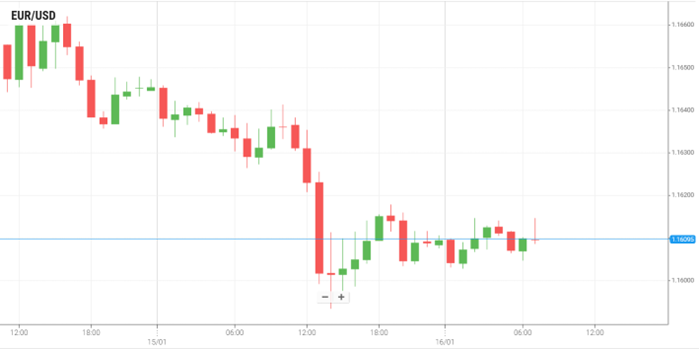
EUR/USD slipped to a fresh yearly low below the 1.1600 mark on Thursday, pressured by robust US economic data and broad-based US Dollar strength. Improved risk sentiment followed reports that President Donald Trump softened his rhetoric on Iran, though weak Eurozone data failed to provide support for the single currency.
The US Dollar advanced after upbeat economic releases reinforced confidence in the resilience of the US economy.
Initial Jobless Claims fell to 198,000 for the week ending January 10, down from 207,000 previously and well below expectations of 215,000. The data underscored continued strength in the labor market and prompted investors to scale back expectations for Federal Reserve rate cuts in 2026.
Manufacturing indicators also surprised to the upside. The New York Empire State Manufacturing Index rebounded sharply in January, rising to 7.7 from -3.7, while the Philadelphia Fed Manufacturing Survey surged to 12.6, far exceeding forecasts of -2. Together, the reports pointed to a broad improvement in regional factory activity.
In Europe, the economic calendar was relatively light. Eurozone Industrial Production rose 0.7% month-over-month in November, beating forecasts for a 0.5% increase. On an annual basis, output growth accelerated to 2.5%, up from 2.0% in October and above expectations. Inflation figures from France and Spain for December, however, did little to support the euro.
On January 16, attention will turn to inflation data from Germany and Italy. In the US, investors will focus on December Industrial Production figures, alongside further commentary from Federal Reserve officials.
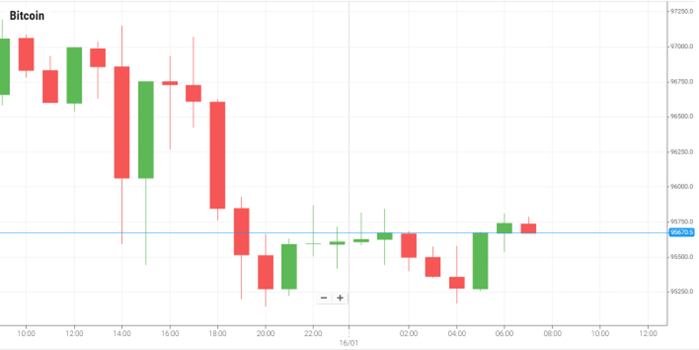
Bitcoin edged lower during Asian trading on Friday, paring some of its recent gains after US lawmakers postponed discussions on a highly anticipated bill aimed at establishing a regulatory framework for digital assets.
The world’s largest cryptocurrency had climbed as high as $96,000 earlier in the week, but the rally proved short-lived as overall sentiment across crypto markets remained subdued.
Optimism earlier in the week had been fueled by expectations that the proposed legislation would deliver much-needed regulatory clarity for the crypto sector. However, momentum faded after US lawmakers delayed a key debate on the bill, following opposition from Coinbase Global Inc.
Coinbase CEO Brian Armstrong criticized provisions related to stablecoins, arguing that the bill would restrict crypto firms’ ability to offer yields or rewards on customer stablecoin holdings. While investors welcomed the prospect of clearer rules, concerns over these stablecoin measures tempered bullish sentiment.
Despite Friday’s pullback, Bitcoin remained on track for a solid weekly gain, supported by bargain hunting and renewed institutional interest. Much of the advance followed a disclosure by Strategy, the largest corporate holder of Bitcoin, revealing a purchase exceeding $1 billion, which rekindled hopes of improving corporate demand.
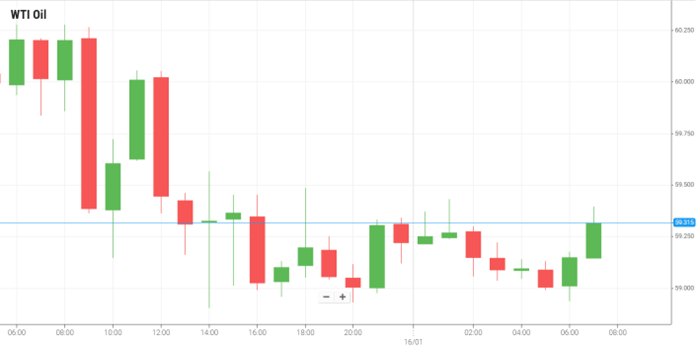
Oil prices were largely steady during Asian trading on Friday, following a steep selloff in the previous session that erased most of the gains recorded earlier in the week. The pullback came after US President Donald Trump downplayed the likelihood of imminent military action against Iran, easing fears of supply disruptions.
Thursday’s sharp decline followed comments from Trump indicating that Washington was not planning immediate military intervention in Iran. His remarks helped unwind a geopolitical risk premium that had built rapidly earlier in the week.
Oil prices had surged to multi-month highs after widespread anti-government protests in Iran raised concerns that exports from one of OPEC’s largest producers could be disrupted. Those fears intensified after Trump warned against the use of lethal force on protesters, which markets interpreted as increasing the probability of US military involvement.
Further weighing on crude prices were signs of easing tensions between the US and Venezuela. Trump has signaled support for Venezuela’s continued role within OPEC, opening the door for the country’s oil exports to return more fully to global markets.
Adding to the downside pressure, recent US inventory data showed rising crude and fuel stockpiles, reinforcing concerns over oversupply and limiting upside momentum in oil prices.
US equities closed higher on Thursday, snapping a two-day losing streak as investors bought the recent dip in semiconductor stocks, triggering a broader recovery across the technology sector.
Chip stocks led the advance as bargain hunting followed recent weakness, with sentiment further buoyed by strong earnings from Taiwan Semiconductor Manufacturing Company.
TSMC reported better-than-expected fourth-quarter net profit, as the world’s largest contract chipmaker continued to benefit from outsized demand for advanced processors driven by artificial intelligence applications. Widely viewed as a bellwether for the semiconductor industry, the results helped lift confidence across the sector.
Markets also digested news that President Donald Trump imposed 25% tariffs on imports of certain advanced computing chips on Wednesday. However, the measures were seen as unlikely to materially impact major producers, many of which maintain manufacturing operations within the United States.
Geopolitical risks remained in focus, with Trump expressing optimism about reaching an agreement related to Greenland following high-level meetings between US officials and Danish and Greenlandic foreign ministers.
In corporate news, additional earnings from major banks drew investor attention. Morgan Stanley reported a sharp increase in fourth-quarter profit, driven by a surge in dealmaking activity, while Goldman Sachs posted higher earnings supported by stronger trading revenues, robust investment banking results, and a one-time gain from exiting its Apple credit card partnership.

The materials contained on this document should not in any way be construed, either explicitly or implicitly, directly or indirectly, as investment advice, recommendation or suggestion of an investment strategy with respect to a financial instrument, in any manner whatsoever. Any indication of past performance or simulated past performance included in this document is not a reliable indicator of future results. For the full disclaimer click here.
Join iFOREX to get an education package and start taking advantage of market opportunities.
 A beginner's e-book
 $5,000 practice demo account
 A 12-part video course
 Trusted partner
 Featured partner
 By
By 


