
Listed on 
 Years active
 English (Arabic)
 Chinese Simplified - 中文 (简体)
 Chinese Traditional - 中文 (繁體)
 English
 Japanese - 日本語
 Korean - 한국어 (대한민국)
 Portuguese - Português
 Russian - Русский
 Spanish - Español
 Thai - ไทย
 English (India)
Don't have an account?
Register via AppHave an account?
Login 09/06/2026 - 07:22 UTC
Global markets are experiencing a shift in sentiment as easing Middle East tensions pull the US Dollar back from its recent two-month high. Investor focus now shifts firmly to the upcoming US economic calendar, where Wednesday's Consumer Price Index (CPI) and Thursday's Producer Price Index (PPI) will offer critical clues regarding the Federal Reserve's monetary policy path. Driven by a lingering hawkish outlook, traders have aggressively repriced the likelihood of a 25-basis-point rate hike in December to 43.2%, a sharp contrast to the 14% probability seen just a month ago.
The US Dollar Index (USDX) dipped -0.08% to trade near 99.85 during early European hours, losing traction after diplomatic interventions prompted a temporary pause in hostilities between Israel and Iran. Although elevated US bond yields and firm Fed expectations continue to provide an underlying floor for the greenback, this cooling of immediate geopolitical risks has allowed short-term sellers to cap its recent upward momentum.
Gold prices slid -0.6%, struggling to find meaningful traction even against a softer US Dollar. The precious metal remains confined to a tight consolidation range, hovering just above its lowest levels since late March. While the de-escalation of the Israel-Iran conflict stripped away some of Gold’s immediate safe-haven premium, ongoing friction regarding Iran's nuclear program and international sanctions has limited deeper losses, leaving the asset caught between high bond yields and persistent long-term geopolitical risks.
West Texas Intermediate (WTI) Crude Oil fell sharply by -1.49%, breaking below the $89.00 threshold to trade near $88.75. This sell-off was accelerated by the Israel-Iran truce, which effectively eased fears of near-term supply disruptions. The downside is currently cushioned by broader uncertainties surrounding the Strait of Hormuz and potential flare-ups in Lebanon, keeping a structural risk premium intact.
Most Asian equity markets rebounded on Tuesday, heavily supported by a strong recovery in semiconductor and artificial intelligence stocks following sharp losses in recent sessions. Investor sentiment was further boosted by a temporary de-escalation of military friction in the Middle East. Regional markets tracked a mixed lead from Wall Street, where a bounce-back in technology shares contrasted with more subdued performances in other sectors. US futures also edged higher following statements from the US administration regarding the conflict.
South Korea’s KOSPI index led the regional advance, lifted by a sharp turnaround in major memory chip manufacturers. This momentum was amplified by a high-profile partnership announcement between a domestic chip giant and top AI chipmaker Nvidia, alongside upwardly revised economic growth data driven by semiconductor exports. Japan’s Nikkei 225 and TOPIX indices also capitalized on this technology sector revival, with major chip-manufacturing equipment producers spearheading the gains. Despite the daily bounce, broader market caution remains as investors weigh whether the recent AI-driven rally has peaked.
Chinese mainland shares moved upward following better-than-expected trade data, which highlighted a substantial increase in exports. Notably, local imports also exceeded forecasts due to robust domestic demand for semiconductor and AI data center hardware. The market largely brushed off new US restrictions blacklisting several major Chinese tech and automotive firms over alleged military ties. Meanwhile, Hong Kong’s Hang Seng index underperformed slightly, bucking the broader upward trend. In contrast to the tech-led rally elsewhere, Australia's ASX 200 lost ground due to a drag from domestic mining stocks.
Global investors are facing a highly anticipated stretch of trading, driven by upcoming macroeconomic indicators and a monumental public listing. The primary market catalyst arrives on Friday, June 12, with the historic SpaceX initial public offering. Expected to test investor appetite for high-growth aerospace and technology firms, the listing is poised to inject both substantial capital and notable volatility into the broader tech sector.
On Wednesday, June 10, the inflation spotlight hits the U.S. CPI report, with annual inflation projected at 4.2% and core monthly data at 0.5%, offering critical clues on future Federal Reserve rate paths. Attention turns to Europe on Thursday, June 11, for the European Central Bank's interest rate decision—where the main refinancing rate is forecast to rise to 2.40%—followed by the latest U.S. wholesale inflation updates via the PPI report. The trading week concludes on Friday, June 12, with the UK's monthly GDP print, expected to show a 0.3% economic expansion.
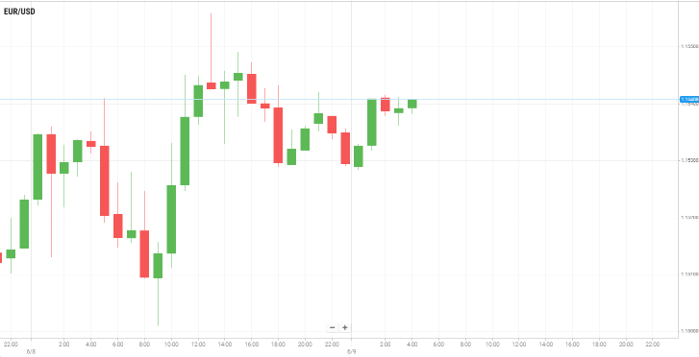
The euro weakened against the US dollar during early Asian trading on Tuesday, with EUR/USD falling to around 1.1530 as investors reacted to renewed uncertainty in the Middle East. Market participants are also positioning ahead of key economic and monetary policy events later this week, including US inflation data and the European Central Bank's (ECB) interest rate decision.
Geopolitical concerns resurfaced after Israeli Prime Minister Benjamin Netanyahu stated on Monday that the conflict involving Iran and the Lebanon-based Hezbollah group "has not yet ended," despite claiming that both adversaries have been significantly weakened. His remarks came after Iran announced the conclusion of its military operations against Israel. However, Tehran's military leadership warned that any further Israeli attacks, including those in southern Lebanon, would trigger a stronger response.
The escalation in regional tensions has boosted demand for safe-haven assets, supporting the US dollar and placing downward pressure on EUR/USD.
Investors are now awaiting the release of the US Consumer Price Index (CPI) report for May, scheduled for Wednesday. The data could provide fresh clues about the Federal Reserve's policy outlook and influence near-term currency market direction.
Attention will then shift to the ECB's policy meeting on Thursday. Financial markets have fully priced in a 25-basis-point interest rate increase following the recent rise in Eurozone inflation to 3.2%.
Beyond the rate decision itself, traders will focus on the ECB's press conference for signals regarding future policy moves. Any indication that policymakers remain committed to further tightening could provide support for the euro in the short term.
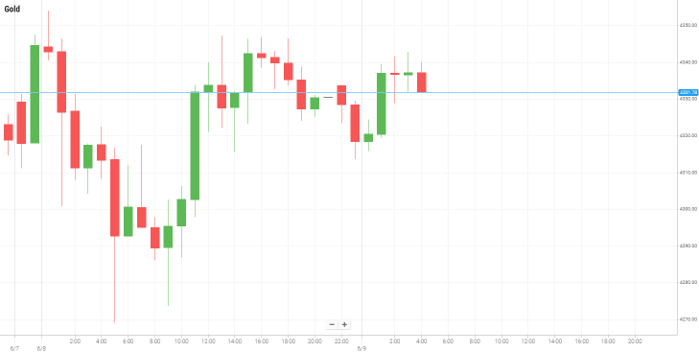
Gold prices remained largely unchanged during Asian trading on Tuesday. While a softer US dollar provided some support to the precious metal, expectations of tighter US monetary policy continued to limit upside momentum.
The US dollar eased from a more than two-month high after Israel and Iran announced a halt to direct hostilities following an appeal from US President Donald Trump. The de-escalation reduced immediate demand for safe-haven assets, weighing on the greenback and offering support to gold prices.
However, market participants remain cautious as broader geopolitical risks in the Middle East have not fully subsided. Diplomatic efforts between the United States and Iran remain stalled due to significant disagreements over Tehran's nuclear program. President Trump has reiterated that any future agreement must prevent Iran from developing nuclear weapons.
Adding to market concerns, shipping activity through the Strait of Hormuz remains restricted, contributing to volatility in global energy markets and reinforcing inflation fears. As a result, investors have maintained expectations that major central banks, including the US Federal Reserve, may need to keep monetary policy tighter for longer.
Investors are now turning their attention to key US inflation data scheduled for release this week. The Consumer Price Index (CPI) report is due on Wednesday, followed by the Producer Price Index (PPI) on Thursday. The figures are expected to provide important clues about the Federal Reserve's future policy path and could drive the next major move in both the US dollar and gold prices.
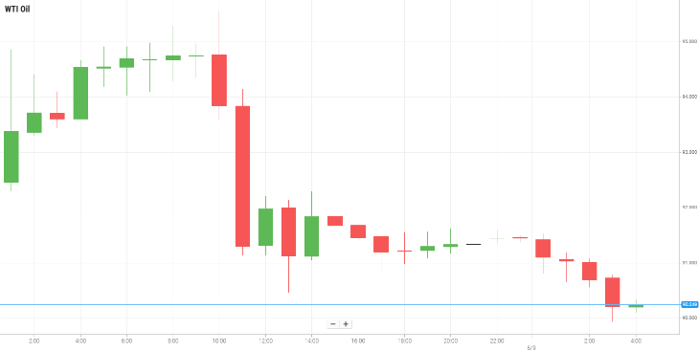
Oil prices edged lower during Asian trading on Tuesday as investors assessed a fragile ceasefire between Israel and Iran, while ongoing disruptions in the Strait of Hormuz continued to provide underlying support to crude markets.
The pullback followed a sharp rally on Monday, when Brent briefly surged above $98 per barrel amid renewed military exchanges between the two regional rivals.
Market sentiment improved after US President Donald Trump indicated that Israel and Iran were moving toward an immediate ceasefire. Both countries later signaled a temporary halt to military operations, easing concerns over a broader regional conflict and prompting some traders to unwind risk premiums that had been built into oil prices.
The ceasefire follows a volatile weekend marked by missile strikes and attacks on energy-related infrastructure, events that reignited fears of supply disruptions across the Middle East. While the reduction in hostilities has helped stabilize markets, investors remain cautious as the truce remains fragile and could quickly deteriorate if tensions flare again.
A key source of concern remains the Strait of Hormuz, one of the world's most important oil transit routes. Shipping activity through the strategic waterway remains heavily restricted, raising fears of prolonged supply disruptions and contributing to elevated volatility across energy markets.
Meanwhile, traders are also evaluating the effect of planned production increases from OPEC+ in the coming months. Although the producer alliance is gradually restoring output, many analysts believe the additional supply may not be sufficient to fully offset potential disruptions linked to the Hormuz crisis.
Looking ahead, oil prices are likely to remain highly sensitive to geopolitical headlines and developments surrounding regional security. While the ceasefire has reduced immediate fears of a broader conflict, persistent supply risks and uncertainty over key shipping routes continue to support crude prices and keep volatility elevated.
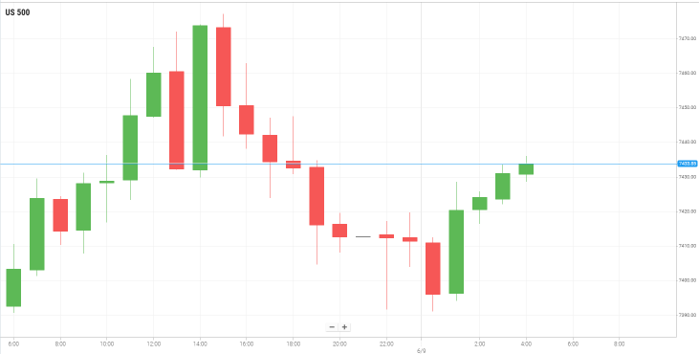
US stocks finished mixed on Monday, with the US 500 and US Tech 100 recovering from their sharpest decline of the year as investors returned to technology shares and welcomed signs of easing tensions in the Middle East.
The rebound followed Friday’s steep selloff, which saw the US 500 post its worst daily performance of the year and end a nine-week winning streak.
Market sentiment had been rattled by a stronger-than-expected May employment report, which reinforced the view that the Federal Reserve may keep monetary policy restrictive for longer. The data triggered a sharp rise in Treasury yields and weighed heavily on growth-oriented sectors, particularly technology stocks.
Despite the recent volatility, many investors continue to view the broader market outlook positively. Strong corporate earnings and resilient economic data have supported expectations that equities can continue advancing even without near-term interest rate cuts.
Attention is now turning to this week's inflation reports, which could provide crucial guidance on the Federal Reserve's next policy steps. The Consumer Price Index (CPI) is scheduled for release on Wednesday, followed by the Producer Price Index (PPI) on Thursday.
Technology stocks led Monday's recovery. Semiconductor shares rebounded strongly after Friday's selloff, helping lift the broader market. The Philadelphia Semiconductor Index surged more than 5%, with several major chipmakers posting notable gains.
Apple was among the session's notable laggards, declining nearly 2% as investors reacted cautiously to announcements made during the company's annual Worldwide Developers Conference.
The materials contained on this document should not in any way be construed, either explicitly or implicitly, directly or indirectly, as investment advice, recommendation or suggestion of an investment strategy with respect to a financial instrument, in any manner whatsoever. Any indication of past performance or simulated past performance included in this document is not a reliable indicator of future results. For the full disclaimer click here.
Join iFOREX to get an education package and start taking advantage of market opportunities.
 A beginner's e-book
 $5,000 practice demo account
 A 12-part video course
 Trusted partner
 Featured partner
 By
By 


