
Listed on 
 Years active
 English (Arabic)
 Chinese Simplified - 中文 (简体)
 Chinese Traditional - 中文 (繁體)
 English
 Japanese - 日本語
 Korean - 한국어 (대한민국)
 Portuguese - Português
 Russian - Русский
 Spanish - Español
 Thai - ไทย
 English (India)
Don't have an account?
Register via AppHave an account?
Login 15/07/2026 - 07:23 UTC
The US Dollar Index (USDX) stepped back from recent highs, dropping -0.39% on Tuesday. This pullback was primarily driven by softer-than-expected US consumer inflation data, which prompted traders to rapidly scale back their bets on aggressive Federal Reserve rate hikes.
Despite the weaker Greenback, the energy sector remained highly elevated due to intense geopolitical friction. Ongoing military strikes between the US and Iran, alongside severe shipping bottlenecks at the Strait of Hormuz, pushed West Texas Intermediate (WTI) Crude Oil up another 1.12% on Tuesday. While this energy spike keeps inflation fears simmering, the combination of a softer dollar and cooling core price pressures gave Gold room to breathe. The non-yielding precious metal advanced 1.3% on Tuesday, reclaiming ground above the critical $4,000 psychological level.
A distinct risk-on sentiment washed over Asian markets, catalyzed by cooling US inflation and the resulting drop in Treasury yields. South Korea emerged as the region's clear outperformer, heavily driven by a massive rally in its semiconductor heavyweights. Riding strong US momentum and corporate restructuring optimism, SK Hynix surged 9.31% and Samsung Electronics climbed 5.66% in their latest trading sessions, completely reversing their prior weekly slumps.
Beyond tech, the broader Asian market showed fragmented underlying health. While Japan’s Nikkei 225 capitalized on the global tech tailwinds to post solid gains, Chinese mainland equities struggled to find their footing. Slower-than-expected Q2 GDP growth in China weighed on regional sentiment, highlighting an uneven economic recovery that capped the broader Asian rally.
On Wall Street, cooling rate anxieties breathed fresh life into risk assets, pushing the Nasdaq up 0.90% and the S&P 500 up 0.38%, while the Dow saw much more subdued gains. High-valuation tech shares led the charge, with NVIDIA jumping 4.06% on Tuesday as the broader semiconductor space rebounded.
However, performance across the tech and aerospace sectors was far from uniform. SpaceX slid -2.24% during Tuesday's session, and defensive favorite Apple dipped into the red, closing down -0.8% as investors aggressively rotated capital. Corporate earnings also injected severe single-stock volatility; IBM suffered a massive 25% plunge following a bleak revenue warning, underscoring the high stakes of the current reporting season.
Looking forward, global financial markets are bracing for a high-impact calendar of economic data and monetary policy updates. With June's headline CPI officially clocking in at a cooler 3.5% year-over-year, all eyes now shift to Wednesday’s US Producer Price Index (PPI) to measure wholesale inflation, alongside critical UK GDP figures.
Mid-week volatility will likely remain high as central bankers command the spotlight. Newly appointed Fed Chair Kevin Warsh enters his second day of congressional testimony, where markets will scrutinize his hawkish warnings against persistent inflation, while Bank of England Governor Andrew Bailey is also slated to speak. Simultaneously, the corporate earnings season continues to unfold with major reports from the banking sector. Following blowout trading results from Goldman Sachs and JPMorgan Chase—and stark expense-driven losses from Citigroup—investors will be hyper-focused on upcoming executive commentary regarding loan-loss provisions, net interest margins, and the overall health of the consumer.
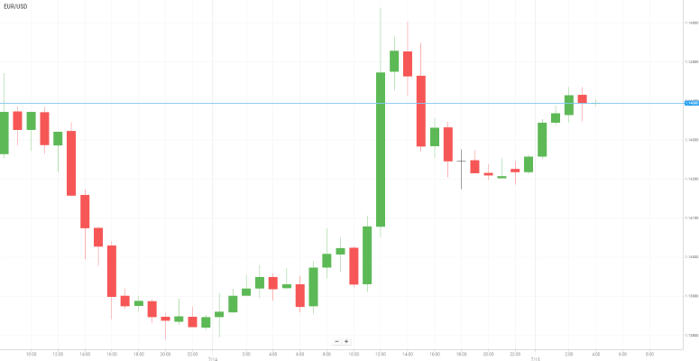
The euro strengthened against the US dollar on Wednesday, with EUR/USD rising to around 1.1430 during the Asian session. The pair remained supported after softer-than-expected US inflation data eased expectations of near-term Federal Reserve tightening, putting pressure on the greenback. Investors are now turning their attention to the US Producer Price Index (PPI) report later in the day for fresh policy signals.
Data released by the US Bureau of Labor Statistics (BLS) showed that annual consumer inflation slowed to 3.5% in June from 4.2% in May, coming in below the market forecast of 3.8%. On a monthly basis, headline CPI declined by 0.4%, reversing the 0.5% increase recorded in the previous month.
Core inflation, which excludes volatile food and energy prices, was unchanged on the month and rose 2.6% year-over-year, down from 2.9% in May and below economists' expectations of 2.8%. The softer inflation readings reinforced expectations that the Fed may have more room to delay further interest rate increases.
Following the inflation report, traders significantly reduced their expectations for a July rate hike. According to the CME FedWatch Tool, the probability of a July increase fell to 16% from 42% a day earlier.
Despite the cooling inflation data, Federal Reserve officials continued to emphasize caution. Fed Chairman Kevin Warsh said that one month of weaker inflation does not mean the fight against inflation has been won. Earlier in the week, Fed Governor Christopher Waller noted that interest rates may still need to rise in the near term if inflation remains well above the central bank's 2% target.
On the European side, the euro also found support from growing expectations that the European Central Bank (ECB) will continue tightening monetary policy.
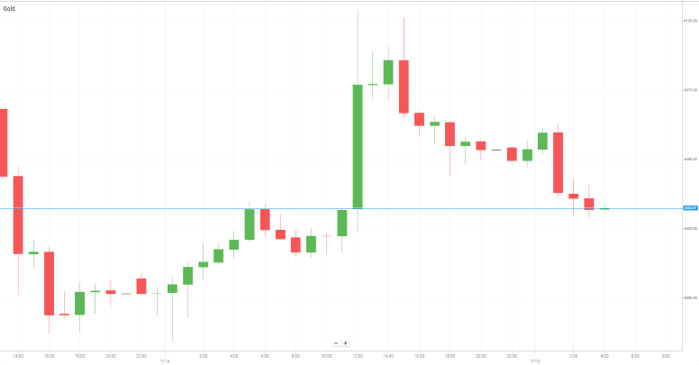
Gold prices edged lower during Wednesday's Asian session, with XAU/USD retreating after failing to sustain gains above the $4,100 level in the previous session.
The initial boost from weaker-than-expected US consumer inflation data faded as investors shifted their focus to rising crude oil prices, which continue to fuel inflation concerns. Escalating tensions between the United States and Iran, along with the closure of the Strait of Hormuz, have kept oil prices elevated, reinforcing expectations that the Federal Reserve may still need to raise interest rates before the end of the year.
The softer inflation figures initially weighed on the US dollar, sending it to its lowest level in nearly four weeks and prompting traders to scale back expectations for additional Fed rate hikes. However, those moves proved short-lived after Federal Reserve Chair Kevin Warsh reaffirmed the central bank's commitment to restoring price stability during his congressional testimony, emphasizing that policymakers remain vigilant despite signs of easing inflation.
Meanwhile, geopolitical tensions in the Middle East continue to underpin demand for safe-haven assets. The latest exchange of military strikes between the United States and Iran, coupled with renewed warnings from US President Donald Trump, has kept investors cautious and prevented a deeper decline in the US dollar.
Looking ahead, traders will closely monitor the release of the US Producer Price Index (PPI) for further clues on inflation trends. Markets will also focus on the second day of Fed Chair Kevin Warsh's congressional testimony, while any new developments surrounding the Middle East conflict are likely to remain a key driver of short-term price action in both the US dollar and gold.
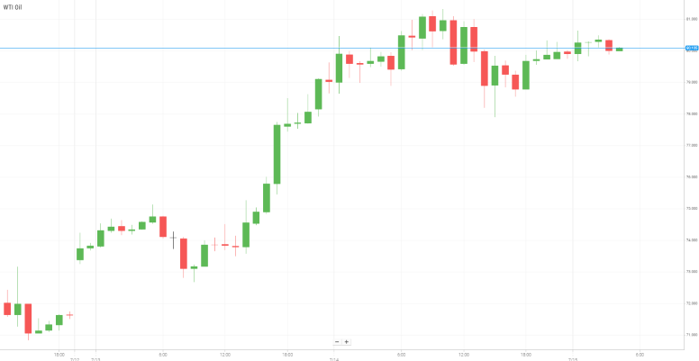
Oil prices climbed further on Wednesday as escalating hostilities between the United States and Iran heightened concerns over global energy supplies. President Donald Trump announced the reimposition of a naval blockade on all Iranian ports, while Iran responded with fresh attacks on US military infrastructure across the region, raising fears of a prolonged disruption to oil exports.
The latest gains were driven by growing concerns over supply disruptions in the Strait of Hormuz, a strategic waterway that previously handled roughly one-fifth of global oil and liquefied natural gas shipments before the conflict intensified. Tehran has reaffirmed that the strait remains closed after renewed fighting with the United States last week undermined a fragile ceasefire reached in June.
Early Wednesday, the US military launched another round of strikes aimed at weakening Iran's military capabilities used to target commercial shipping in the Strait of Hormuz. Meanwhile, President Trump signaled that Washington could expand its military campaign, stating that energy infrastructure may become a future target if Tehran refuses to return to negotiations.
Iran also stepped up its retaliation, with its military announcing drone strikes against US positions at Jordan's Azraq air base. In addition, Iran's Islamic Revolutionary Guard Corps claimed responsibility for attacks targeting weapons depots and military storage facilities in Bahrain and Kuwait, although those reports have not been independently verified.
The renewed escalation has cast fresh doubt over the effectiveness of last month's memorandum of understanding, which had raised hopes of a lasting ceasefire after months of regional conflict.
For now, geopolitical risk continues to provide strong support for oil prices, with traders closely monitoring military developments and any signs of renewed diplomatic engagement between Washington and Tehran.
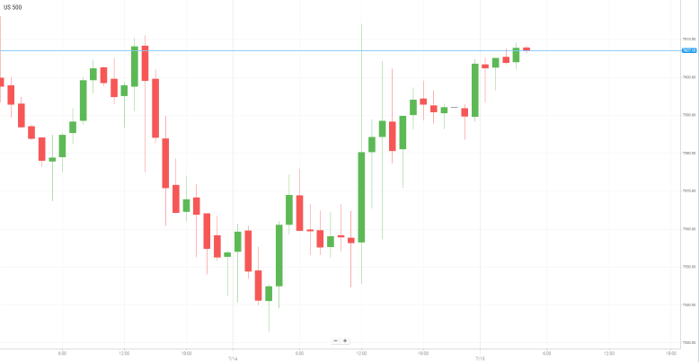
US stocks finished higher on Tuesday as investors digested a softer-than-expected inflation report, congressional testimony from Federal Reserve Chair Kevin Warsh, escalating developments in the Middle East, and a wave of second-quarter earnings from major financial institutions.
Investor sentiment improved after fresh data showed inflation cooled more than expected in June, easing concerns that the Federal Reserve would need to tighten monetary policy aggressively in the near term.
The softer inflation data prompted investors to scale back expectations for additional Federal Reserve rate hikes, providing support for equities. Federal Reserve Chair Kevin Warsh acknowledged that the June inflation report was encouraging but reiterated that the central bank remains firmly committed to restoring price stability.
On the corporate front, second-quarter earnings from major US banks were largely stronger than expected. JPMorgan Chase and Goldman Sachs posted solid results, benefiting from increased trading activity, stronger investment banking revenue and robust dealmaking. Goldman Sachs shares jumped 9.1%, while JPMorgan gained 2.5%, providing significant support for the broader market. Bank of America also advanced after reporting better-than-expected earnings.
In contrast, IBM suffered the biggest decline among blue-chip stocks, with shares tumbling more than 25% after the company released preliminary quarterly revenue that missed analysts' expectations. The technology giant attributed the weakness to an unexpected shift in enterprise spending, as customers redirected capital expenditures toward hardware infrastructure, weighing heavily on software and mainframe sales.
Markets now turn their attention to upcoming producer inflation data, additional corporate earnings releases, and further comments from Federal Reserve officials for fresh clues on the outlook for interest rates and economic growth.
The materials contained on this document should not in any way be construed, either explicitly or implicitly, directly or indirectly, as investment advice, recommendation or suggestion of an investment strategy with respect to a financial instrument, in any manner whatsoever. Any indication of past performance or simulated past performance included in this document is not a reliable indicator of future results. For the full disclaimer click here.
Join iFOREX to get an education package and start taking advantage of market opportunities.
 A beginner's e-book
 $5,000 practice demo account
 A 12-part video course
 Trusted partner
 Featured partner
 By
By 


