
Listed on 
 Years active
 English (Arabic)
 Chinese Simplified - 中文 (简体)
 Chinese Traditional - 中文 (繁體)
 English
 Japanese - 日本語
 Korean - 한국어 (대한민국)
 Portuguese - Português
 Russian - Русский
 Spanish - Español
 Thai - ไทย
 English (India)
Don't have an account?
Register via AppHave an account?
Login 07/07/2026 - 07:36 UTC
The global foreign exchange market experienced a quiet start to the week as the U.S. Dollar Index (USDX) remained almost unchanged on Monday, holding in a tight consolidative phase just under the 101.00 handle. This lack of a decisive trend stems from conflicting forces. Escalating geopolitical tensions in the Strait of Hormuz injected safe-haven demand into the dollar, but the greenback faced resistance from cooling domestic data. Market participants dialed back expectations for aggressive Federal Reserve rate hikes following June’s cooler Nonfarm Payrolls report and a softening ISM Services PMI that dropped to 54.0, leaving currency desks waiting for a definitive catalyst.
This tense backdrop triggered diverging paths in commodities. Gold slipped by -0.61%, maintaining a bearish tone above the $4,100 mark as reviving inflationary fears and rising U.S. Treasury yields increased the opportunity cost of holding the non-yielding metal. Conversely, Crude Oil prices gained 0.75% to trade above $69.00 per barrel, driven by supply anxieties after Iranian forces targeted commercial tankers transiting the Strait of Hormuz. This geopolitical risk premium completely overshadowed a bearish supply update from Saudi Arabia, where Saudi Aramco aggressively slashed its flagship Arab Light crude pricing for Asian buyers following a weekend OPEC+ agreement to gradually increase production quotas.
Over on Wall Street, equity futures experienced mild downward pressure after a robust regular session that pushed the Dow Jones Industrial Average to a record high. Early-week optimism was spearheaded by tech equities, supported by Broadcom extending its chip development agreement with Apple through 2031. Within the sector, artificial intelligence leader Nvidia ticked up 0.41% on robust global enterprise spending, while aerospace pioneer SpaceX dipped -0.85% in private market tracking. Beyond tech, major banking corporations—including JPMorgan Chase, Bank of America, Wells Fargo, and PNC Financial Services—explored acquiring Fiserv's STAR and Accel debit networks to vertically integrate infrastructure and circumvent federal interchange fee caps.
In contrast to Western markets, Asian semiconductor and technology shares suffered severe declines as spectacular data paradoxically triggered aggressive profit-taking. South Korean titan Samsung tumbled -7.26% despite forecasting an historic nineteen-fold surge in second-quarter operating profit to 89.4 trillion won, as traders used the blockbuster print to lock in gains. The heavy selling quickly engulfed its domestic rival, SK Hynix, which dropped -3.36%. This synchronized retreat dragged down the benchmark KOSPI index and rippled through tech clusters across Japan and Taiwan, weighing heavily on broader hardware ecosystems including component manufacturers and assembly partners like Murata Manufacturing, MediaTek, and Foxconn.
Looking ahead, global market participants are shifting focus toward critical macro data and the formal kickoff of the second-quarter corporate earnings season. The week's centerpiece is Wednesday's release of the Federal Reserve's latest FOMC minutes, which will be heavily parsed for clues regarding the central bank's interest rate trajectory. Simultaneously, the corporate earnings calendar is poised to pick up steam, testing lofty equity valuations. Consumer staple giant PepsiCo is scheduled to unveil its quarterly results on Thursday, followed by Delta Air Lines on Friday, establishing an early fundamental baseline before major Wall Street banking institutions report the following week.
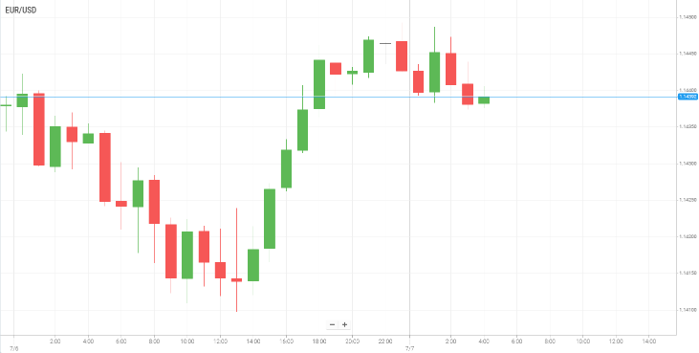
The EUR/USD pair continues to trade within a narrow range during Tuesday's Asian session, maintaining its footing above the 1.1400 level despite lacking strong directional momentum.
Escalating tensions surrounding the Strait of Hormuz have provided some support for the safe-haven US Dollar. The fragile 60-day ceasefire between the United States and Iran is showing signs of strain, while reports that an oil tanker was hit by an unidentified projectile while transiting the strategic waterway have kept geopolitical risks elevated.
At the same time, the US Dollar's gains remain restrained by expectations that the Federal Reserve may adopt a less aggressive policy stance. Recent declines in crude oil prices have eased inflationary pressures, reducing the urgency for central banks to continue tightening monetary policy. Additionally, softer-than-expected US employment data released last Thursday prompted markets to scale back expectations for further Fed rate hikes, capping broader USD strength and offering some support to the euro.
However, expectations for additional European Central Bank tightening have also softened following an unexpected slowdown in Eurozone inflation. The moderation in ECB rate hike expectations may limit demand for the common currency, suggesting caution before anticipating a sustained EUR/USD recovery.
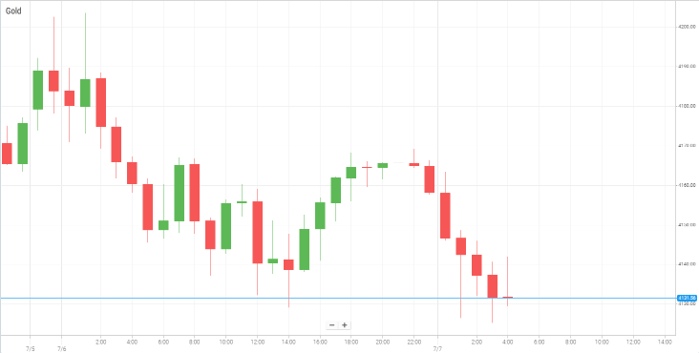
Gold prices remain under pressure for a second consecutive session during Tuesday's Asian trading. Renewed geopolitical tensions in the Strait of Hormuz have lifted crude oil prices, reigniting inflation concerns and pushing US Treasury yields higher. The rise in yields has weighed on the non-yielding precious metal, although expectations for a less aggressive Federal Reserve and subdued US Dollar demand could help limit further downside.
The Strait of Hormuz remains a key source of market uncertainty as Iran seeks to strengthen its strategic influence by introducing transit fees for vessels passing through the vital shipping route. While the US has opposed the move, Tehran maintains that the charges are intended to fund security, vessel monitoring, and environmental protection rather than serve as tolls.
Despite these headwinds for gold, the US Dollar has struggled to attract meaningful buying interest.
Looking ahead, investors are likely to remain cautious ahead of Wednesday's release of the FOMC Minutes, which could offer fresh insight into the Fed's policy outlook. In the meantime, developments in the Middle East will continue to influence oil prices, Treasury yields, and US Dollar demand, all of which remain key drivers for gold. From a technical perspective, traders may prefer to wait for stronger follow-through selling before concluding that the recent rebound from last week's year-to-date low has run its course.
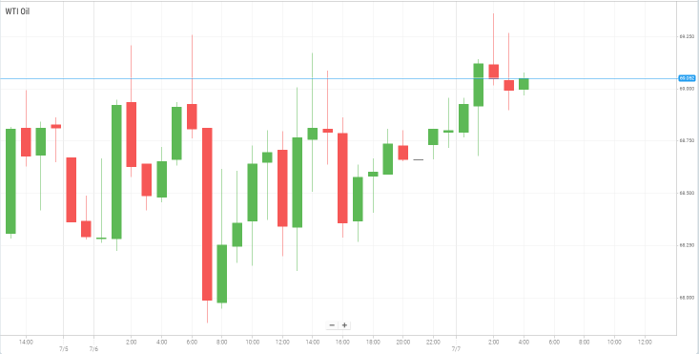
Oil prices posted modest gains on Tuesday as renewed security concerns in the Strait of Hormuz offset expectations of increased global crude supplies following Saudi Arabia's aggressive price cuts for Asian customers and OPEC+'s latest production increase.
Market attention remained firmly on the Strait of Hormuz after reports that a tanker sailing off the coast of Oman was struck by a projectile, triggering a fire but causing no casualties. The incident highlighted that security risks remain elevated despite the recent US-Iran ceasefire and the gradual resumption of commercial shipping through the strategic waterway.
Although vessel traffic—including ships linked to Japanese operators—has resumed, shipping volumes remain below pre-conflict levels. The latest security incident has reinforced concerns that disruptions to Gulf exports could persist, helping maintain a geopolitical risk premium in oil prices.
Despite the support from geopolitical tensions, the broader market continues to focus on improving supply conditions. Saudi Aramco lowered the August official selling price of its flagship Arab Light crude for Asian buyers to a discount against the regional benchmark for the first time since 2020.
The price cuts followed OPEC+'s decision over the weekend to raise production targets for August, reinforcing expectations that additional barrels will gradually return to the global market as regional conditions stabilize.
Investors are now awaiting the US Energy Information Administration's (EIA) Short-Term Energy Outlook for updated forecasts on production, demand, and inventories. At the same time, traders will continue monitoring developments in the Strait of Hormuz and the pace at which additional OPEC+ supply reaches global markets, as both factors are expected to remain key drivers of oil prices in the near term.
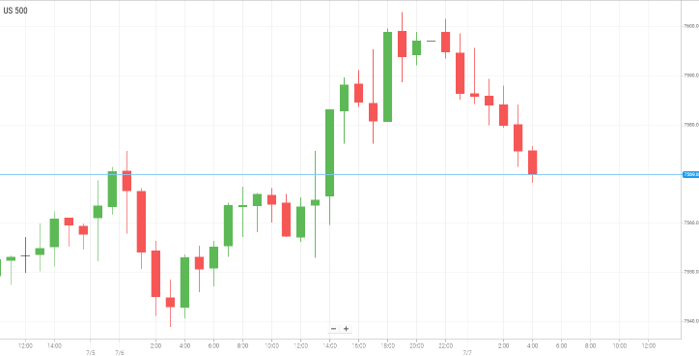
US stocks started the first full trading week of July on a strong note, with technology shares leading gains as semiconductor stocks rebounded from a two-week selloff. Investors returned from the long Independence Day weekend with renewed optimism, while attention shifted toward upcoming Federal Reserve minutes and the start of the second-quarter earnings season.
Monday's rebound reflected renewed confidence in AI-related stocks, supported by analyst upgrades and improving industry sentiment. Reports that Samsung plans to raise DRAM memory chip prices by around 20% this quarter also boosted optimism across the memory and storage segment, lifting shares of companies exposed to growing AI-driven demand.
Beyond the technology sector, investors remain focused on the outlook for US monetary policy. Attention now turns to the release of the Federal Open Market Committee (FOMC) Minutes on Wednesday, which should provide additional insight into policymakers' views on inflation, interest rates, and the economic outlook.
Monday's economic data also painted a mixed but generally supportive picture. US services sector activity expanded in June, while surveys indicated easing price pressures within the services industry, reinforcing hopes that inflation could continue moderating in the second half of the year.
Investors are also preparing for the start of the second-quarter earnings season, with companies including Levi Strauss, PepsiCo, and Delta Air Lines among the first major firms scheduled to report results later this week.
Among notable stocks, Dell Technologies gained more than 4% after President Donald Trump publicly encouraged Americans to purchase Dell computers during a White House event launching the administration's new Trump Accounts investment program for US children.
The materials contained on this document should not in any way be construed, either explicitly or implicitly, directly or indirectly, as investment advice, recommendation or suggestion of an investment strategy with respect to a financial instrument, in any manner whatsoever. Any indication of past performance or simulated past performance included in this document is not a reliable indicator of future results. For the full disclaimer click here.
Join iFOREX to get an education package and start taking advantage of market opportunities.
 A beginner's e-book
 $5,000 practice demo account
 A 12-part video course
 Trusted partner
 Featured partner
 By
By 


