
Listed on 
 Years active
 English (Arabic)
 Chinese Simplified - 中文 (简体)
 Chinese Traditional - 中文 (繁體)
 English
 Japanese - 日本語
 Korean - 한국어 (대한민국)
 Portuguese - Português
 Russian - Русский
 Spanish - Español
 Thai - ไทย
 English (India)
Don't have an account?
Register via AppHave an account?
Login 05/06/2026 - 06:43 UTC
The US Dollar Index (DXY) traded sideways around 99.40 early on Friday as investors awaited the release of the US Nonfarm Payrolls (NFP) report for May, scheduled for 12:30 GMT.bThe index, which measures the US Dollar’s performance against a basket of six major currencies, showed little movement as market participants refrained from taking significant positions ahead of the closely watched labor market data.
According to expectations, the US Bureau of Labor Statistics (BLS) is projected to report the addition of 85,000 jobs in May, down from 115,000 in April. The unemployment rate is forecast to remain unchanged at 4.3%. Wage growth figures will also be closely monitored. Annual Average Hourly Earnings are expected to ease to 3.4% from 3.6%, while monthly wage growth is projected to accelerate to 0.3% from 0.2%.
Recent comments from Fed officials suggest that inflation concerns remain a higher priority than signs of labor market weakness. On Thursday, Kansas City Fed President Jeffrey Schmid echoed similar concerns, describing inflation as the biggest risk facing the economy. He noted that policymakers must determine whether maintaining current interest rates is sufficient or whether additional tightening may be required to bring inflation back to target.
Gold prices declined during Asian trading on Friday, heading for their steepest weekly loss in more than a month as fading hopes for a peace agreement between the United States and Iran boosted inflation concerns and supported the US Dollar. The precious metal remained under pressure as investors reassessed geopolitical risks and the outlook for global interest rates. The selloff was driven by escalating tensions between the United States and Iran, with both sides reportedly exchanging new attacks amid indications that Tehran had stepped back from diplomatic negotiations.
Oil prices moved higher in Asian trading on Friday, supported by escalating tensions in the Middle East after the Iran-backed group Hezbollah rejected a proposed ceasefire between Lebanon and Israel, casting further doubt on efforts to secure a broader regional peace agreement. The latest gains in crude followed a statement from Hezbollah rejecting a ceasefire proposal with Israel and refusing to withdraw its forces from southern Lebanon. The group also criticized ongoing Lebanon-Israel negotiations. Meanwhile, Israeli forces continued airstrikes across southern Lebanon, prompting retaliatory attacks from Hezbollah. Israeli officials indicated that military operations would continue despite a temporary pause earlier in the week.
Asian equity markets mostly traded lower on Friday as investors continued rotating out of technology stocks and into more economically sensitive sectors, triggering sharp declines in major chipmaking and artificial intelligence-related shares.
The heaviest losses were recorded in Japan and South Korea, where technology stocks extended their recent pullback after strong gains earlier in the year. Market sentiment was also affected by growing expectations that the Bank of Japan could raise interest rates later this month.
Asian markets took a mixed lead from Wall Street, where investors shifted away from high-growth technology names and toward sectors more closely tied to economic activity.
US stock index futures moved lower on Thursday evening as technology and semiconductor shares remained under pressure following a sharp post-earnings selloff in Broadcom Inc.
Semiconductor stocks led market declines after Broadcom shares plunged 12.44% during Thursday's regular session. Although the company reported strong earnings growth, investors were disappointed that management maintained its forecast for artificial intelligence chip revenue at $100 billion by 2027 rather than raising guidance. The unchanged outlook fell short of expectations after a prolonged period of increasingly optimistic AI-related forecasts.
Attention now shifts to Friday's US employment report, which is expected to show slower job growth in May compared with the previous month.
The labor market remains one of the Federal Reserve's key indicators when determining interest rate policy. With inflation pressures remaining elevated, a stronger-than-expected payrolls reading could reinforce expectations that policymakers will keep rates higher for longer.
The euro remained largely unchanged against the US dollar on Friday, with EUR/USD trading near 1.1620 during the early Asian session as investors awaited the release of crucial US labor market data.
Market participants are focusing on the US Nonfarm Payrolls (NFP) report for May, which is expected to provide fresh direction for the currency pair. Earlier this week, stronger-than-anticipated ADP private payrolls and JOLTS job openings figures pointed to continued resilience in the US labor market.
A stronger-than-expected jobs report could reinforce expectations that the Federal Reserve will maintain higher interest rates for longer, potentially boosting demand for the US dollar. According to CME FedWatch data, markets currently assign roughly a 42% probability to a Fed rate hike in December.
On the European side, expectations of further monetary tightening by the European Central Bank (ECB) may help support the euro. Economists surveyed by Reuters anticipate the ECB will raise its deposit rate to 2.25% at its June policy meeting, with an additional rate increase likely in September.
As a result, while the dollar could gain support from solid US employment data, the ECB's hawkish outlook may help limit downside pressure on the euro.
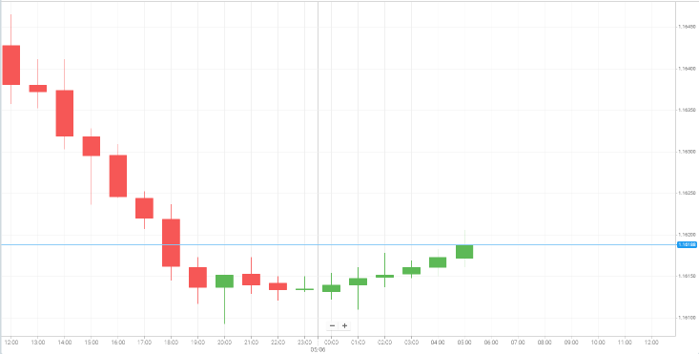
Gold prices moved lower in Friday’s early European trading, slipping toward a weekly low as investors reacted to stalled US–Iran ceasefire negotiations and positioned ahead of key US labor market data.
The precious metal remained volatile amid ongoing geopolitical tensions. Market sentiment was influenced by reports that there has been “no tangible progress” in talks aimed at de-escalating the conflict. Iran’s foreign minister said communication channels with Washington remain open but warned of severe escalation risks if regional attacks intensify. In contrast, comments from US leadership suggested ceasefire discussions were in their final stages, highlighting mixed signals from both sides.
Recent flare-ups in the region, including missile and drone activity, have further added to uncertainty, contributing to concerns about inflationary pressures and sustained higher interest rates. These factors tend to support yields and the US dollar, which in turn weigh on non-yielding assets such as gold.
Attention now turns to the US Nonfarm Payrolls report due later on Friday. Market participants will look for confirmation of labor market resilience, which could reinforce expectations for prolonged higher interest rates and add further pressure on gold in the near term.
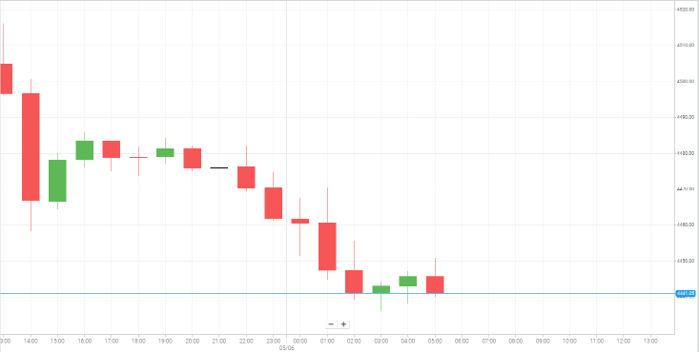
Oil prices climbed in Asian trading on Friday after Hezbollah, the Iran-backed militant group, rejected a proposed ceasefire with Israel, further undermining US-led efforts to de-escalate tensions in the Middle East.
Crude benchmarks were on track for weekly gains as geopolitical risks intensified, with renewed clashes between Israel and Hezbollah in Lebanon and continued hostilities involving the US and Iran. The escalation has kept traders focused on potential supply disruptions in a region critical to global energy flows.
Hezbollah’s rejection of the ceasefire proposal and its refusal to withdraw forces from southern Lebanon further complicated diplomatic efforts. Israeli airstrikes in the region continued alongside retaliatory attacks, signaling no immediate path toward de-escalation.
The breakdown in negotiations has also weighed on broader peace expectations, particularly as Iran has previously linked regional ceasefires to any lasting agreement with the US. Reports earlier indicated that indirect US–Iran talks had already stalled amid mutual accusations of violations.
Meanwhile, concerns persist over potential disruptions to energy shipping routes, including the Strait of Hormuz, a key chokepoint for global oil supply. Flows through the passage remain below pre-conflict levels, reinforcing expectations of tighter near-term supply conditions and supporting crude prices.
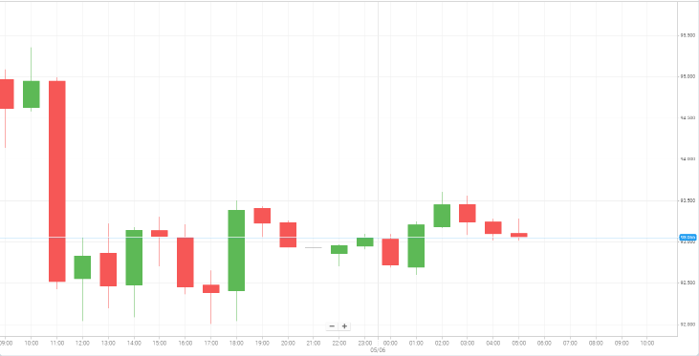
Wall Street finished Thursday’s session mostly higher, as gains in defensive healthcare stocks and improved sentiment around Middle East de-escalation outweighed weakness in the technology sector following a sharp drop in Broadcom.
The session was marked by a rotation out of high-growth technology names, as investors reassessed lofty expectations around artificial intelligence. Broadcom shares tumbled 12.44% after its earnings guidance failed to match elevated market forecasts, despite strong revenue growth driven by AI chip demand. The weaker outlook also dragged other semiconductor names lower, including AMD, Micron, Arm, and Qualcomm.
Sentiment was also shaped by developments in the Middle East, where reports of a renewed ceasefire between Israel and Lebanon helped ease geopolitical risk premiums. The agreement raised hopes for broader diplomatic progress, including potential US–Iran negotiations, while also contributing to a pullback in oil prices.
Attention now turns to Friday’s US Nonfarm Payrolls report, which is expected to play a key role in shaping expectations for Federal Reserve policy. Strong labor data could reinforce higher-for-longer rate expectations, while a softer reading may support risk assets further and extend the recent equity rally.
The materials contained on this document should not in any way be construed, either explicitly or implicitly, directly or indirectly, as investment advice, recommendation or suggestion of an investment strategy with respect to a financial instrument, in any manner whatsoever. Any indication of past performance or simulated past performance included in this document is not a reliable indicator of future results. For the full disclaimer click here.
Join iFOREX to get an education package and start taking advantage of market opportunities.
 A beginner's e-book
 $5,000 practice demo account
 A 12-part video course
 Trusted partner
 Featured partner
 By
By 


