
Listed on 
 Years active
 English (Arabic)
 Chinese Simplified - 中文 (简体)
 Chinese Traditional - 中文 (繁體)
 English
 Japanese - 日本語
 Korean - 한국어 (대한민국)
 Portuguese - Português
 Russian - Русский
 Spanish - Español
 Thai - ไทย
 English (India)
Don't have an account?
Register via AppHave an account?
Login 16/07/2026 - 07:30 UTC
Global financial markets remain on a knife-edge as investors balance cooling domestic inflation data against highly volatile geopolitical developments and a shifting monetary policy landscape. The US Dollar Index (USDX) slipped -0.4% in its latest trading session, retreating toward the 100.50 level. This softening came after a notable moderation in both headline consumer prices and the Producer Price Index (PPI)—which unexpectedly fell 0.3%—briefly tempering immediate rate-hike expectations. However, the Greenback’s losses were firmly cushioned by safe-haven demand and hawkish underlying commentary.
Armed with a highly volatile backdrop in the Middle East, military confrontations—including US Central Command strikes and retaliatory Iranian missile strikes—have crippled diplomacy and disrupted transit through the vital Strait of Hormuz chokepoint. This direct threat to energy supplies continues to reverberate across commodity markets. West Texas Intermediate (WTI) crude oil edged up 0.39% in its latest session, holding near its monthly highs and keeping energy-fueled inflation worries alive. These persistent inflation risks have revived bets of at least one additional Federal Reserve interest rate hike in 2026.
The prospect of prolonged high borrowing costs, coupled with the geopolitical premium, continues to cap precious metals; Gold managed only a minor intraday bounce of 0.12%, struggling to find firm footing as it trades tightly around the $4,025 to $4,030 range.
Asian equities bore the brunt of the geopolitical and macroeconomic friction, triggered by a historic rout in South Korea. The broader KOSPI slumped over 6%, briefly triggering a trading halt, as tech investors rushed to trim exposure. Heavyweight semiconductor names suffered severe liquidation, with SK Hynix plunging -12% and Samsung Electronics dropping -8.07% in their latest sessions. While regional anxiety mounted over supply chain security and the sustainability of AI capital expenditure, Japan’s Nikkei 225 similarly lost ground.
Conversely, Western trading sessions saw a highly divergent "risk-on, risk-off" dynamic play out. On Wall Street, technology and defense giants faced mixed fortunes. NVIDIA managed a slight gain of 0.29%, finding minor relief after prior selloffs. Apple emerged as a standout pocket of resilience, surging 3.96% in its latest session as defensive flows rotated into cash-rich, premium mega-caps. In contrast, legacy tech giant IBM experienced a staggering 25% crash so far this week, after posting disappointing preliminary revenue, citing a sudden, aggressive pivot by enterprise clients who froze traditional IT software budgets to prioritize hardware, server, and memory infrastructure.
Looking forward, the global policy outlook rests heavily on the shoulders of central bank communications and corporate performance. Newly appointed Federal Reserve Chairman Kevin Warsh delivered a resolute message in his first official congressional testimony, warning that the Fed will remain "resolute" in its inflation fight and will not prematurely declare "mission accomplished". At the same time, the focus turns to the official kickoff of the Q2 banking earnings season. Reports from institutional heavyweights like JPMorgan, Bank of America, Goldman Sachs, Wells Fargo, and Citigroup will offer the next vital sanity check on consumer credit health, net interest margins, and the broader trajectory of the global economy.
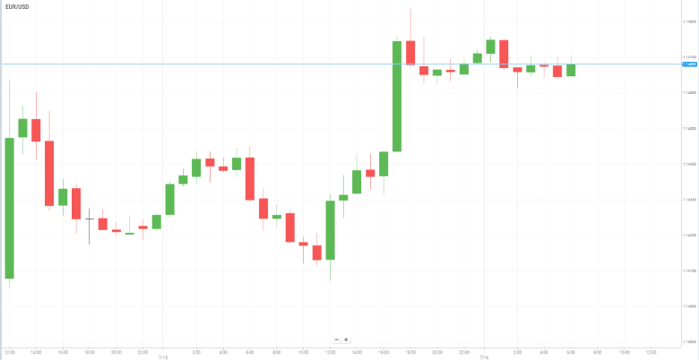
The EUR/USD pair remained steady above the 1.1450 mark during Thursday's Asian session, consolidating recent gains after climbing to its highest level since June 18 over the previous two trading days.
The US Dollar continues to trade under pressure, hovering near a four-week low after weaker-than-expected US inflation data reinforced expectations that the Federal Reserve may delay further policy tightening. The latest Producer Price Index (PPI) report showed producer prices unexpectedly declined by 0.3% in June, following Tuesday's softer Consumer Price Index (CPI) figures. Together, the data prompted markets to scale back expectations of an imminent Fed rate hike, keeping the greenback on the defensive and supporting the euro.
However, escalating geopolitical tensions in the Middle East are preventing a sharper decline in the US Dollar. The conflict between the United States and Iran intensified this week after US forces launched fresh airstrikes targeting Iranian missile and drone facilities, prompting retaliatory attacks by Tehran on US-linked military sites across the region. At the same time, a US naval blockade of Iranian ports and the closure of the Strait of Hormuz have pushed crude oil prices higher, raising concerns about energy-driven inflation.
Investors are now focused on Thursday's US economic calendar, which includes Retail Sales, the Philadelphia Fed Manufacturing Index, and Weekly Initial Jobless Claims. Markets will also monitor comments from Federal Open Market Committee (FOMC) officials for further clues on the Fed's policy outlook.
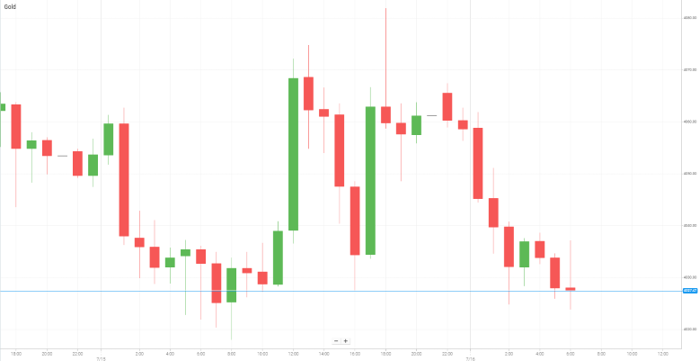
Gold prices edged higher on Wednesday as weaker-than-expected US inflation data reinforced expectations that the Federal Reserve will leave interest rates unchanged at its July policy meeting.
Following the data, traders reduced expectations of a July rate hike, with market pricing indicating only a slim chance of further tightening. Lower interest rate expectations weighed on the US Dollar and Treasury yields, providing support for the non-yielding precious metal.
Despite the rebound, gold's upside remains constrained by escalating geopolitical tensions in the Middle East. Fresh US airstrikes targeting Iranian military infrastructure and continued hostilities around the Strait of Hormuz have driven crude oil prices higher, fueling concerns that energy-driven inflation could keep global interest rates elevated for longer. Such a scenario may limit demand for gold by increasing the opportunity cost of holding non-yielding assets.
Market participants will continue monitoring developments in the Middle East alongside upcoming US economic data and Federal Reserve commentary for fresh direction. Any further signs of easing inflation could bolster gold, while persistent geopolitical risks and rising oil prices may create competing forces for the precious metal.
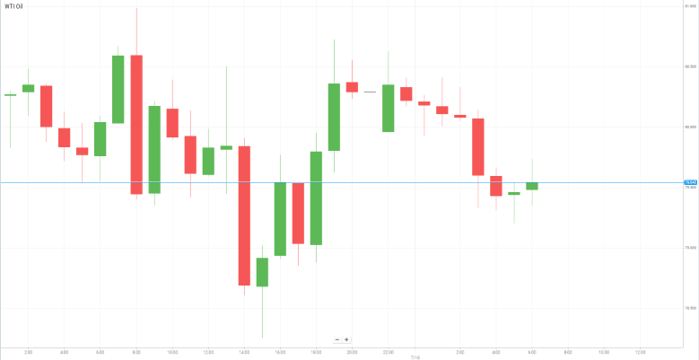
Oil prices advanced for a fourth consecutive session on Thursday as escalating military tensions between the United States and Iran heightened fears of prolonged supply disruptions through the strategically vital Strait of Hormuz.
Investor sentiment remains focused on the Strait of Hormuz, a key global shipping route that handles roughly one-fifth of the world's oil and liquefied natural gas exports. Concerns over potential disruptions intensified after the US launched another round of airstrikes on Wednesday targeting Iranian military assets allegedly linked to attacks on commercial shipping.
Washington said the operation was intended to weaken Iran's ability to threaten maritime security in the Gulf, while Tehran described the conflict as an "existential war" and warned that continued hostilities could further disrupt regional energy exports. The renewed escalation has erased much of the optimism that emerged following a temporary easing of tensions last month.
Oil prices also drew support from the latest US inventory data. The Energy Information Administration (EIA) reported that crude oil stockpiles fell by 1.7 million barrels in the week ended July 10, broadly matching market expectations. Gasoline inventories also declined by 1.5 million barrels, reflecting robust summer driving demand, while distillate stockpiles unexpectedly increased by 4.6 million barrels.
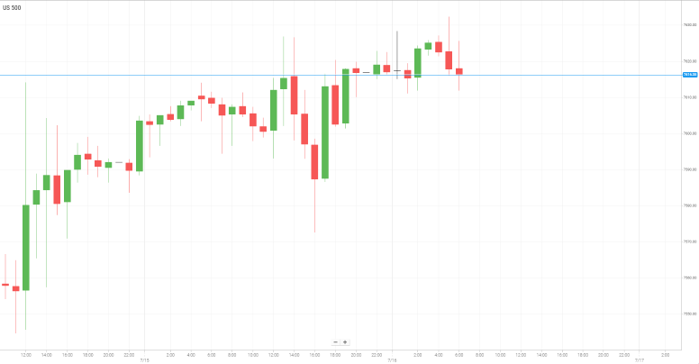
US stocks finished higher on Wednesday as another round of encouraging inflation data and a strong start to the second-quarter earnings season lifted investor confidence. All three major Wall Street indexes posted modest gains, with consumer retail and travel stocks leading the advance despite weakness in the semiconductor sector.
Among individual movers, PayPal soared 17.2% after reports that Stripe and private equity firm Advent International jointly offered to acquire the payments company for $60.50 per share, representing a significant premium to its previous closing price.
Investor sentiment was further supported by softer US inflation data. The latest Producer Price Index (PPI) report, released on Wednesday, followed Tuesday's weaker Consumer Price Index (CPI) figures, suggesting that inflation pressures eased in June. The combination of the two reports strengthened expectations that the Federal Reserve may keep interest rates unchanged at its July meeting, reducing pressure for additional monetary tightening in the near term.
Market expectations for a July rate hike fell sharply following the inflation data, reflecting growing confidence that policymakers can afford to remain patient. However, investors remain mindful that geopolitical tensions in the Middle East continue to pose upside risks to inflation.
Meanwhile, newly confirmed Federal Reserve Chair Kevin Warsh continued his testimony before the Senate Banking Committee, while Fed Governor Lisa Cook reiterated that policymakers remain prepared to act should inflation fail to continue moderating.
The materials contained on this document should not in any way be construed, either explicitly or implicitly, directly or indirectly, as investment advice, recommendation or suggestion of an investment strategy with respect to a financial instrument, in any manner whatsoever. Any indication of past performance or simulated past performance included in this document is not a reliable indicator of future results. For the full disclaimer click here.
Join iFOREX to get an education package and start taking advantage of market opportunities.
 A beginner's e-book
 $5,000 practice demo account
 A 12-part video course
 Trusted partner
 Featured partner
 By
By 


