
Listed on 
 Years active
 English (Arabic)
 Chinese Simplified - 中文 (简体)
 Chinese Traditional - 中文 (繁體)
 English
 Japanese - 日本語
 Korean - 한국어 (대한민국)
 Portuguese - Português
 Russian - Русский
 Spanish - Español
 Thai - ไทย
 English (India)
Don't have an account?
Register via AppHave an account?
Login 11/08/2026 - 07:40 UTC
Global financial markets exhibited mixed performance during Tuesday's Asian session, navigating a complex backdrop of renewed geopolitical friction and shifting interest rate expectations. Following last week’s sharp labor market cooling—highlighted by an unexpected contraction in July’s US Nonfarm Payrolls (NFP)—investors have been forced to balance fading near-term Fed hike expectations against fresh energy-driven inflation risks. Over the latest trading session, asset classes reflected this heightened volatility: the US Dollar Index (USDX) ticked up 0.18%, while spot Gold pulled back by -0.79%. Meanwhile, Crude Oil extended its rebound with a 1.44% gain, even as major technology names diverged; Nvidia slid -2.88%, whereas SpaceX added 4%, SK Hynix edged up 0.11%, and Samsung Electronics surged 4.32%.
The US Dollar Index (USDX), which tracks the Greenback against a basket of six major peers, traded with a mild positive bias around the 99.75 mark on Tuesday. The currency held onto its recovery gains, supported by persistent safe-haven flows as the diplomatic standoff between the US and Iran intensified. Hopes for a swift reopening of the strategic Strait of Hormuz dimmed after US President Donald Trump rejected Tehran’s demands for war damages, prompting Iranian officials to rule out future negotiations until the end of his term in January 2029. Further underpinning the Dollar, supply choke points in the Bab el-Mandeb Strait due to Houthi blockades sent crude prices climbing, reigniting inflation fears and pushing US Treasury yields higher as traders reconsidered the potential for at least one more Fed rate hike this year.
In energy markets, West Texas Intermediate (WTI) Crude prices hovered near $81.40 per barrel on Tuesday, holding on to significant gains from the previous session. Supply disruption risks across the Middle East remained front and center as diplomatic progress between Iran and Oman stalled, pending a broader US-Iran resolution. Spot Gold (XAU/USD) experienced downside pressure, retreating below the $4,400 mark after reaching a two-month high earlier in the session. Stronger oil prices and elevated Treasury yields weighed on the non-yielding metal, though safe-haven demand stemming from broader Middle East instability helped cushion deeper losses.
Equity markets across Asia delivered a fragmented performance on Tuesday. South Korean equities outperformed the region, led by a powerful rally in major semiconductor components after solid tech sales figures bolstered sentiment around AI hardware demand. Conversely, Mainland Chinese benchmarks proved more subdued, and Hong Kong equities dropped, while Australian shares posted modest gains as investors digested the Reserve Bank of Australia’s decision to hold its benchmark cash rate steady at 4.35%. US stock index futures traded in a narrow range as market participants exercised caution ahead of key inflation catalysts.
Digital asset markets faced downward pressure on Tuesday, with Bitcoin slipping back toward the $64,026 level and briefly touching sub-$64,000 lows. The pullback was driven by a deterioration in broader risk appetite alongside news that corporate holder Strategy Inc. disclosed the sale of 1,690 Bitcoins worth approximately $109 million.
Looking ahead, market participants are turning their attention toward a packed schedule of high-profile corporate earnings and critical macroeconomic data. On the corporate front, quarterly results from industry leaders including Super Micro Computer (SMCI), CoreWeave, Lumentum, Rocket Lab, and Cisco Systems (CSCO) are set to offer vital barometer readings on enterprise technology spending and the durability of AI infrastructure demand. On the economic agenda, market focus will pivot toward incoming US CPI and PPI prints for fresh signals on the path of inflation, alongside Thursday’s release of monthly UK GDP figures.
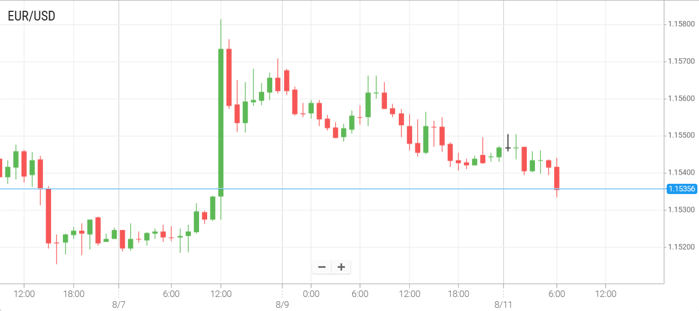
EUR/USD struggles to gain any meaningful traction and holds steady around the 1.1545–1.1550 area during Tuesday’s Asian session, pausing after recording a modest loss of 0.08% on Monday. The shared currency trades within a narrow band as the US Dollar preserves recent recovery gains, leaving spot prices consolidating just below multi-week highs reached last Friday.
The Greenback continues to draw support from persistent Middle East geopolitical tensions, where escalating conflict and ongoing shipping choke points have driven a sharp rebound in crude oil prices. Re-ignited energy volatility has rekindled broader market inflation fears, keeping prospects intact for at least one additional Federal Reserve interest rate hike before year-end and bolstering US Treasury yields.
However, the US Dollar’s upside remains capped by the lingering impact of July’s disappointing US Nonfarm Payrolls (NFP) report, which unexpectedly revealed a loss of 23,000 jobs. The severe labor market cooling forced traders to drastically scale back expectations for near-term Fed policy tightening, creating a persistent tailwind for the major currency pair and limiting deeper pullbacks. Looking ahead, market participants are adopting a cautious stance ahead of critical macroeconomic catalysts.
Investors are turning their primary focus toward Wednesday’s release of the July US Consumer Price Index (CPI) report, followed by Thursday's Producer Price Index (PPI)
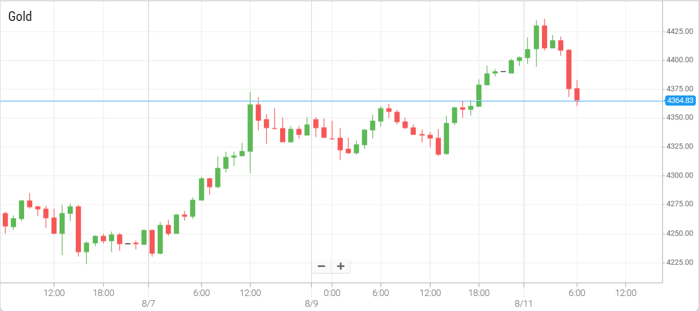
Gold (XAU/USD) retreats from its highest levels since June 5, sliding back below the $4,400 mark heading into Tuesday’s European session despite posting a 1.6% move higher earlier in the day. The precious metal faces renewed pressure after attracting heavy selling following its intraday surge to a over two-month peak.
The pullback in bullion comes as rising crude oil prices rekindle market inflation fears, keeping the prospect of further Federal Reserve interest rate hikes on the table before year-end. Elevated energy prices and firming US Treasury bond yields have helped bolster the Greenback, dampening demand for the non-yielding asset despite the lingering tailwinds from Friday's surprisingly soft US Nonfarm Payrolls (NFP) report.
Geopolitical friction in the Middle East continues to fuel energy volatility, as stalled negotiations over the Strait of Hormuz and ongoing shipping choke points in the Bab el-Mandeb Strait reinforce underlying inflation concerns. While persistent geopolitical uncertainty provides a floor for safe-haven assets, the resulting hawkish Fed expectations continue to cap immediate upside momentum for the yellow metal.
Looking ahead, market participants are turning their focus toward upcoming US inflation data later this week. Wednesday’s Consumer Price Index (CPI) and Thursday’s Producer Price Index (PPI) prints are expected to offer critical guidance on the Federal Reserve’s monetary policy trajectory.
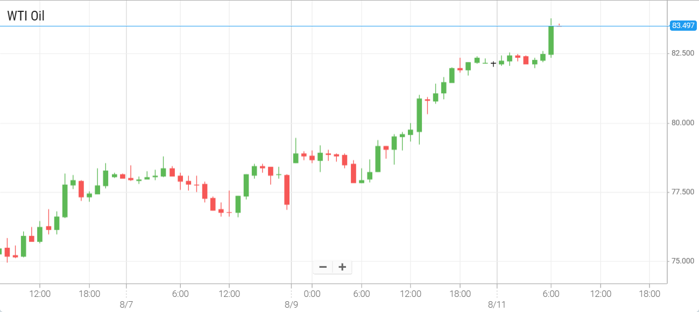
West Texas Intermediate (WTI) Crude Oil gathered strong positive momentum to start the week, surging 4.27% on Monday to extend its recovery after tumbling significantly over the prior week. The US benchmark black liquid climbed back toward the $82.50 region during early Tuesday trading, erasing a large portion of last week's losses as bulls pushed prices higher.
The sharp upward momentum comes as market participants weigh mounting regional supply risks against deteriorating diplomatic prospects surrounding the US-Iran standoff. Tensions flared further after Tehran indicated that an Oman-mediated agreement for the Strait of Hormuz would not suffice to reopen the strategic waterway without full US compliance with its terms. In turn, US President Donald Trump rejected Iranian demands for war damages and insisted on compensation from Iran for casualties, dimming hopes for a near-term diplomatic breakthrough.
The renewed stalemate across the Middle East has re-injected a substantial geopolitical risk premium back into energy markets while reviving broader inflation concerns. Looking ahead, market participants will monitor incoming US macroeconomic releases, including Tuesday's mid-tier housing and business optimism data, alongside fresh developments across the Middle East to gauge the next directional move for Crude Oil prices.
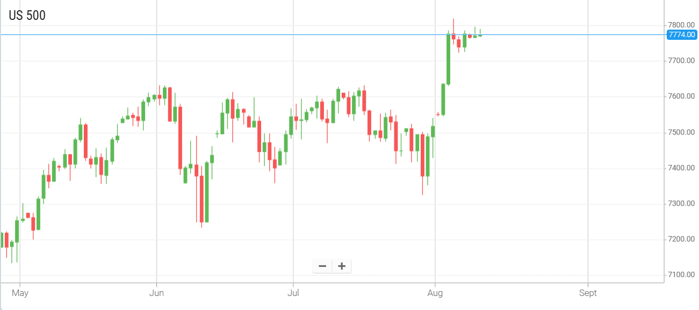
US stock index futures held in a narrow range during early Tuesday Asian trade, taking a breather after a subdued session on Wall Street that saw the S&P 500 post a minor gain of 0.05% on Monday.
Market participants are weighing lingering geopolitical friction surrounding the Strait of Hormuz against upcoming macroeconomic catalysts. Sentiment took a hit as hopes for a swift diplomatic resolution dimmed after US President Donald Trump demanded compensation from Iran as part of any peace agreement, while Tehran reiterated its own strict demands. The resulting surge in crude oil prices has re-ignited underlying inflation concerns, complicating the Federal Reserve’s interest rate outlook and putting pressure on major technology components.
Despite the recent cautious tone, broader market sentiment remains anchored by the lingering impact of Friday's surprisingly soft July US Nonfarm Payrolls report (-23,000), which significantly scaled back bets for near-term Fed policy tightening. Meanwhile, mega-cap tech developments remain in focus following Nvidia’s announcement of a partnership with major financial institutions to build compute-financing platforms aimed at mobilizing over $500 billion for AI infrastructure.
Looking ahead, market focus turns to Wednesday’s July US Consumer Price Index (CPI) and Thursday's Producer Price Index (PPI) releases for fresh signals on the path of inflation, alongside Thursday’s UK monthly GDP data. On the corporate front, investors continue to brace for quarterly results from tech leaders including Super Micro Computer (SMCI), CoreWeave (CRWV), Lumentum, Rocket Lab, Cisco Systems (CSCO), and Applied Materials (AMAT) to gauge the ongoing strength of enterprise AI spending.
The materials contained on this document should not in any way be construed, either explicitly or implicitly, directly or indirectly, as investment advice, recommendation or suggestion of an investment strategy with respect to a financial instrument, in any manner whatsoever. Any indication of past performance or simulated past performance included in this document is not a reliable indicator of future results. For the full disclaimer click here.
Join iFOREX to get an education package and start taking advantage of market opportunities.
 A beginner's e-book
 $5,000 practice demo account
 A 12-part video course
 Trusted partner
 Featured partner
 By
By 


