
Listed on 
 Years active
 English (Arabic)
 Chinese Simplified - 中文 (简体)
 Chinese Traditional - 中文 (繁體)
 English
 Japanese - 日本語
 Korean - 한국어 (대한민국)
 Portuguese - Português
 Russian - Русский
 Spanish - Español
 Thai - ไทย
 English (India)
Don't have an account?
Register via AppHave an account?
Login 10/06/2026 - 06:51 UTC
Financial markets experienced a notable downturn on Tuesday as escalating geopolitical conflicts in the Middle East sparked fresh economic concerns, shifting investor expectations toward a more hawkish central bank outlook. The US Dollar Index (DXY) edged slightly lower, posting a minor loss of -0.04% as investors remained hesitant to place large bets ahead of the upcoming US Consumer Price Index (CPI) inflation report. Despite the minor intraday pullback, the greenback maintained a relatively steady position, supported by growing expectations that sticky inflation—driven by volatile energy markets—will force the Federal Reserve to keep interest rates elevated. According to the CME FedWatch Tool, traders are now pricing in a nearly 75% probability of another Fed rate hike before the end of the year.
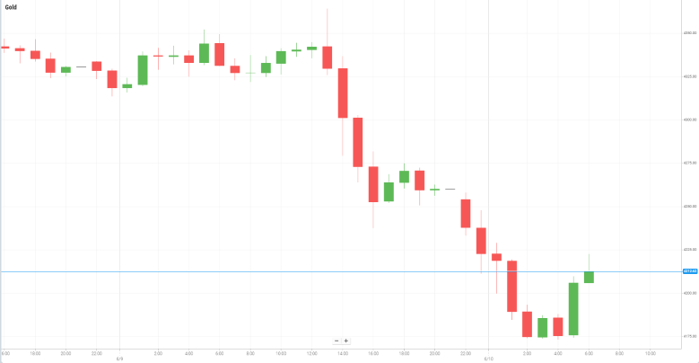
This hawkish interest rate outlook severely impacted the precious metals market, causing gold to plummet by -2.22%. The sharp sell-off forced the yellow metal to break below the $4,200 mark. Because gold is a non-yielding asset, the anticipation of tighter monetary policy and higher interest rates actively drove capital away from the commodity, completely offsetting any traditional safe-haven demand that typically arises during global conflicts.
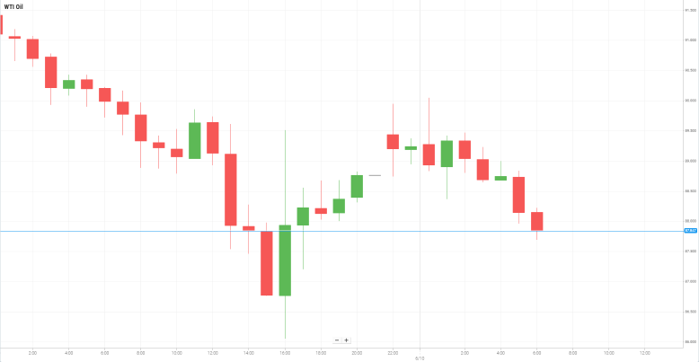
Meanwhile, the energy sector faced its own wave of volatility, with West Texas Intermediate (WTI) crude oil prices ultimately dropping by -1.49%. The decline came despite intensifying supply anxieties fueled by a series of military actions, including US retaliatory strikes against targets in the region and rising tensions involving Iran. While a massive 9.1 million barrel plunge in US crude inventories originally triggered severe supply concerns, the downward pressure on crude prices persisted. This was largely driven by reports from the US Energy Secretary indicating that oil exports and commercial shipping traffic through the critical Strait of Hormuz have actually continued to rise despite the ongoing regional instability.
Asian equity markets declined on Wednesday as escalating military tensions between the United States and Iran sparked widespread risk aversion, completely overshadowing a brief stabilization in technology shares. The negative sentiment followed a muted session on Wall Street, where overnight losses were driven by the geopolitical flare-up and weakness in semiconductor stocks. Investor caution was further heightened globally ahead of critical US consumer price index (CPI) data. Market anxiety was heavily tied to volatile oil prices after the US and Iran exchanged a fresh round of strikes on Tuesday evening, stemming from the downing of a US helicopter in the Strait of Hormuz earlier in the week.
The regional downturn was felt acutely across major indices in Japan, mainland China, and Hong Kong. In Japan, bourses retreated notably as the Nikkei 225 shed more than 1% and the broader TOPIX moved lower. This slide was triggered by hotter-than-expected corporate inflation data for May; driven by rising energy costs, the high wholesale prices fueled concerns that manufacturing expenses could soon spill over into consumer inflation, potentially forcing the Bank of Japan to raise interest rates at its upcoming policy meeting. Compounding these macroeconomic worries, high-profile technology components added severe downward pressure to the index. SoftBank Group, in particular, tumbled heavily following reports that its negotiations with creditors to raise a multi-billion dollar margin loan backed by its OpenAI stake had stalled.
Cross-border sentiment remained similarly depressed on the Chinese mainland where fresh economic data painted a troubled, bifurcated picture of the domestic economy: while consumer inflation came in softer than anticipated—underscoring persistent weakness in consumer demand—factory-gate inflation surged at its fastest pace in nearly four years as Middle East conflict disruptions drove up commodity prices. However, the deepest decline in the region belonged to South Korea’s KOSPI, which plunged around 4% as the previous day's brief rebound in heavyweight semiconductor stocks completely evaporated.
Following a turbulent week, global investors are bracing for the historic SpaceX IPO alongside critical macroeconomic data. The aerospace giant's public debut will test appetite for high-growth tech and inject fresh sector volatility. Simultaneously, key inflation markers arrive with Wednesday's U.S. CPI data (projected at 4.2% annually) and Thursday's U.S. PPI updates. Central bank policy also takes center stage on Thursday with the European Central Bank’s interest rate decision, where the refinancing rate is forecast to rise to 2.40%. Finally, the trading week wraps up on Friday with the UK's monthly GDP print, which is expected to show a 0.3% expansion.
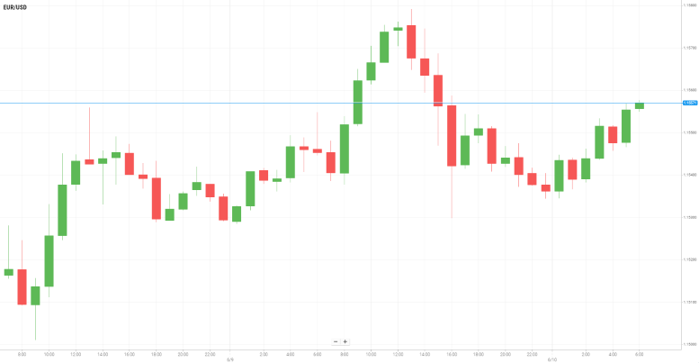
The euro traded in a narrow range against the US dollar during Wednesday's Asian session, with EUR/USD hovering around the 1.1550 level as investors awaited major economic events on both sides of the Atlantic.
The US dollar remained broadly steady ahead of the release of the US Consumer Price Index (CPI) report for May, scheduled for 12:30 GMT. Market participants are closely watching the inflation data for fresh signals on the Federal Reserve's policy trajectory.
Economists expect headline US inflation to rise to 4.2% year-over-year in May, up from 3.8% in April. Core CPI, which excludes volatile food and energy prices, is projected to accelerate slightly to 2.9% annually from 2.8% in the previous month. A stronger-than-expected inflation reading could reinforce expectations that the Federal Reserve will maintain a restrictive monetary policy stance for longer.
Meanwhile, attention in Europe is shifting toward the European Central Bank’s monetary policy announcement on Thursday. Financial markets widely expect the ECB to raise its key interest rates by 25 basis points, taking the Deposit Facility Rate to 2.25%.
Investors will also be focused on the central bank’s guidance regarding future policy moves, particularly as inflationary pressures across the euro area remain elevated amid higher energy costs. Expectations of further monetary tightening by the ECB continue to provide underlying support for the euro, helping EUR/USD remain resilient despite broader market caution ahead of the upcoming data releases.
With both the US inflation report and the ECB policy decision approaching, currency markets are likely to remain range-bound until clearer directional catalysts emerge.
Gold prices extended their decline on Wednesday, falling below the $4,200 level and touching their lowest point since late March as investors reassessed the outlook for global interest rates amid escalating geopolitical tensions and persistent inflation concerns.
The precious metal came under renewed selling pressure during the Asian session, with market participants moving away from non-yielding assets as expectations grew that major central banks could maintain a tighter monetary policy stance for longer. Rising inflation risks linked to developments in the Middle East have reinforced concerns that policymakers may need to keep interest rates elevated.
Geopolitical tensions intensified after the United States launched what it described as defensive strikes against Iran in response to the reported downing of a US military helicopter near the Strait of Hormuz. In retaliation, Iran's Islamic Revolutionary Guard Corps (IRGC) claimed responsibility for attacks targeting military facilities hosting US forces in Jordan, Kuwait, and Bahrain, while warning of further action if hostilities continue.
Market expectations for tighter US monetary policy have strengthened in recent weeks. According to interest rate futures pricing, investors see a growing probability that the Federal Reserve could deliver additional policy tightening before year-end if inflation remains persistent.
Oil prices fell sharply on Tuesday, reversing earlier gains as investors assessed mixed signals surrounding geopolitical developments in the Middle East and the outlook for global energy supplies. The decline came despite heightened tensions after US President Donald Trump stated that Washington would respond to what he described as an Iranian attack that resulted in the downing of a US military helicopter near the Strait of Hormuz.
According to US officials, an Apache helicopter operating in the region was brought down while conducting patrol operations. The crew was rescued safely and sustained no injuries. Trump later said the United States would be compelled to respond to the incident, raising concerns that diplomatic progress between Washington and Tehran could face renewed obstacles. The comments tempered market optimism that had emerged earlier in the week following reports of reduced hostilities between Iran and Israel. Investors had welcomed announcements from both countries indicating a halt to direct strikes, easing fears of a broader regional conflict.
Sentiment had also been supported by indications that negotiations between the United States and Iran were nearing a potential breakthrough. Trump suggested that discussions were entering their final stages and expressed confidence that a deal addressing Iran’s nuclear program and the reopening of the Strait of Hormuz could be reached within days.
Meanwhile, the US Energy Information Administration (EIA) warned that oil inventories among member countries of the Organisation for Economic Co-operation and Development (OECD) are projected to fall to their lowest levels since 2003. The EIA also forecasts that global oil demand will decline by approximately 1.1 million barrels per day in 2026 before rebounding with growth of 2.5 million barrels per day in 2027.
While recent diplomatic developments have offered some hope for easing supply disruptions, markets remain highly sensitive to geopolitical risks, with traders closely monitoring developments in the Middle East for further direction.
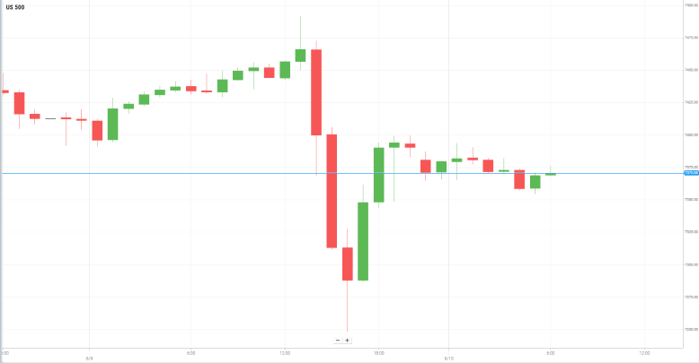
US stocks closed mixed on Tuesday following a volatile trading session, as investors weighed escalating geopolitical tensions in the Middle East, weakness in technology shares, and anticipation surrounding key inflation data due later this week.
Market sentiment deteriorated after US President Donald Trump stated that the United States would respond to an incident involving the downing of a US military helicopter near the Strait of Hormuz, raising concerns that improving diplomatic relations between Washington and Tehran could face renewed setbacks.
The technology sector was a major drag on the broader market as a recent rally in semiconductor stocks lost momentum.
Chipmakers had driven much of Wall Street's gains in recent months, supported by strong demand linked to artificial intelligence and substantial investment in AI infrastructure. However, investors continued to reassess valuations after a sharp sell-off last week that was triggered by stronger-than-expected US employment data and rising expectations for higher interest rates.
The sector also remained in focus after OpenAI, the developer of ChatGPT, confidentially filed for an initial public offering in the United States. The move follows a similar filing by rival AI company Anthropic and underscores continued investor interest in artificial intelligence despite recent volatility across technology shares.
However, analysts cautioned that enthusiasm surrounding AI-related listings may face a more challenging market environment if higher interest rates persist and investor appetite for growth stocks cools.
Investors are now turning their attention to the release of the US Consumer Price Index (CPI) and Producer Price Index (PPI) reports, scheduled for Wednesday and Thursday, respectively.
The materials contained on this document should not in any way be construed, either explicitly or implicitly, directly or indirectly, as investment advice, recommendation or suggestion of an investment strategy with respect to a financial instrument, in any manner whatsoever. Any indication of past performance or simulated past performance included in this document is not a reliable indicator of future results. For the full disclaimer click here.
Join iFOREX to get an education package and start taking advantage of market opportunities.
 A beginner's e-book
 $5,000 practice demo account
 A 12-part video course
 Trusted partner
 Featured partner
 By
By 


