

 English (Arabic)
 Chinese Simplified - 中文 (简体)
 Chinese Traditional - 中文 (繁體)
 English
 Japanese - 日本語
 Korean - 한국어 (대한민국)
 Portuguese - Português
 Russian - Русский
 Spanish - Español
 Thai - ไทย
 English (India)
Don't have an account?
Register via AppHave an account?
Login
Don't have an account?
Register via AppHave an account?
Login 06/04/2026 - 05:00 UTC

having seen inflation in the EU and Germany surge in March due to the conflict in the Middle East the expectation is that we will see a similar uplift in US headline inflation. This has slowed in recent months to 2.4% from the 2.7% seen at the end of last year, although some of that slowdown is likely due to some US companies offering big discounts in the lead-up, as well as the aftermath of Christmas as they looked to unload excess inventory. With this effect set to unwind, and US gasoline prices undergoing a 30% move higher to $4 a gallon in some parts over the past month, there is an expectation that we’ve reached the low point in the current inflationary cycle and that we could see a move back to 3%, and possibly higher, in fairly short order. While the US is somewhat insulated by the fact that its own natural gas prices haven’t gone up to the same extent to those in Europe, the evidence of higher prices is bleeding through elsewhere. The latest prices paid survey on the ISM manufacturing measure saw input prices rise to 78.3, and the highest levels since June 2022. As such this will likely lead to further upward pressure on prices in the months ahead, complicating the picture further for the Federal Reserve as it looks to its next move on interest rates.
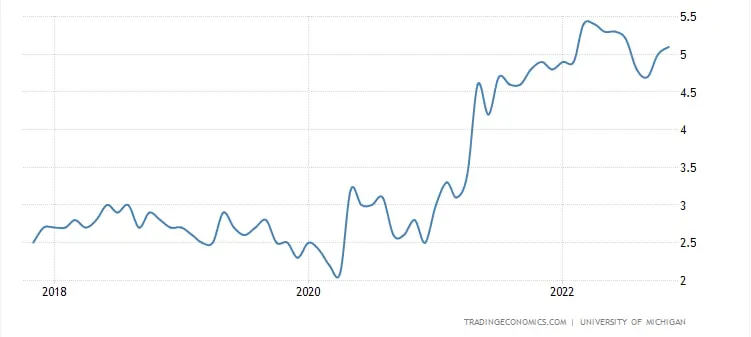
Having seen inflation in the EU and Germany surge in March due to the conflict in the Middle East the expectation is that we will see a similar uplift in US headline inflation. This has slowed in recent months to 2.4% from the 2.7% seen at the end of last year, although some of that slowdown is likely due to some US companies offering big discounts in the lead-up, as well as the aftermath of Christmas as they looked to unload excess inventory. With this effect set to unwind, and US gasoline prices undergoing a 30% move higher to $4 a gallon in some parts over the past month, there is an expectation that we’ve reached the low point in the current inflationary cycle and that we could see a move back to 3%, and possibly higher, in fairly short order. While the US is somewhat insulated by the fact that its own natural gas prices haven’t gone up to the same extent to those in Europe, the evidence of higher prices is bleeding through elsewhere. The latest prices paid survey on the ISM manufacturing measure saw input prices rise to 78.3, and the highest levels since June 2022. As such this will likely lead to further upward pressure on prices in the months ahead, complicating the picture further for the Federal Reserve as it looks to its next move on interest rates.
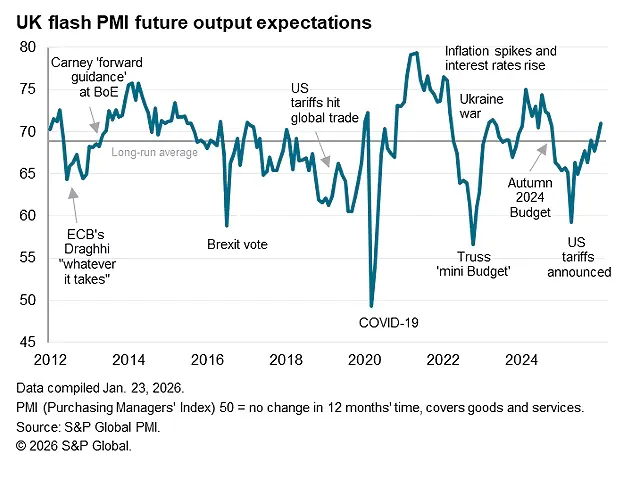
Bár az idei első negyedévben fellendülést tapasztaltunk a gazdasági tevékenységben, továbbra is valószínűnek tűnik, hogy az Egyesült Királyság gazdasága nehézségekkel fog szembesülni a 2026-os második negyedév felé közeledve. A legfrissebb szolgáltatási PMI-adatok szerint a januári és februári erőteljes fellendülés után a legutóbbi előzetes adatokban hirtelen lassulás volt tapasztalható, 53,9-ről 51,2-re, mivel a szolgáltatók új megrendelései jelentősen visszaestek, a külföldi ügyfelek pedig a nemzetközi utazások csökkenésére és a közel-keleti események miatt elhalasztott új beruházásokra hivatkoztak. A költségek is emelkedtek a magasabb szállítási díjak miatt, ami szintén lassította a munkaerő-felvétel ütemét. Mivel a jelenlegi válság nyomán valószínűleg erősödni fognak az inflációs nyomások, a gazdasági tevékenység javulását fenyegető kockázatok hirtelen lefelé tolódtak, míg a novemberi költségvetésben bevezetett új adóváltozások is valószínűleg a brit gazdaság láncszemének fogják bizonyulni a második negyedévben.
We’ve come a long way from the back end of last year when some estimates of US Q4 GDP were coming in at the upper end of 3% after the US economy grew at 4.4% in Q3. These Q4 estimates always seemed a little fanciful given the US government shutdown that went on for several weeks, and which saw a raft of US consumers miss out on their SNAP (food stamps) payments. The impact on the US labour market was also notable as was the effect on consumer spending, with estimates slowly getting revised down when preliminary numbers were released in February, coming in at 1.4%. This was revised lower again in the middle of March to 0.7%, while core inflation was revised upwards to 3.1%. The sharp downward revision to GDP came about due to adjustments on consumer, as well as government spending, as well as exports. There was also a slowdown in healthcare spending. This slowdown is likely to be a warning sign that while the US economy was growing at the end of last year, the spillover from the government shutdown, could well run into Q1, as sharp increase in energy costs also weigh on the US economy towards the back end of Q1. It will also complicate the picture for the Federal Reserve when it comes to the next move on interest rates, especially with core inflation still above 3%, and an economy that could well slow further.
The materials contained on this document should not in any way be construed, either explicitly or implicitly, directly or indirectly, as investment advice, recommendation or suggestion of an investment strategy with respect to a financial instrument, in any manner whatsoever. Any indication of past performance or simulated past performance included in this document is not a reliable indicator of future results. For the full disclaimer click here.
Join iFOREX to get an education package and start taking advantage of market opportunities.
 A beginner's e-book
 $5,000 practice demo account
 A 12-part video course
 Trusted partner
 Featured partner
 By
By 


