
Listed on 
 Years active
 English (Arabic)
 Chinese Simplified - 中文 (简体)
 Chinese Traditional - 中文 (繁體)
 English
 Japanese - 日本語
 Korean - 한국어 (대한민국)
 Portuguese - Português
 Russian - Русский
 Spanish - Español
 Thai - ไทย
 English (India)
Don't have an account?
Register via AppHave an account?
Login 19/02/2026 - 08:40 UTC
The USDX is consolidating its recent gains near the 97.70 level during Thursday's Asian session, maintaining its bullish potential after rallying to a one-week high. This period of stability follows a 0.65% advance on Wednesday, fueled by the release of the January FOMC minutes. The report revealed a committee divided over the timing of future easing, with several officials emphasizing that the bar for further rate cuts remains high due to persistent inflation concerns. The Greenback’s resilience is further bolstered by a shift in rate-cut expectations following last week’s robust Nonfarm Payrolls report, which has tempered bets on aggressive policy easing. Additionally, heightened geopolitical risks—highlighted by reports of potential US military action in the Middle East—have reinforced the dollar's status as a safe-haven asset.
The safe-haven appeal of Gold and WTI Oil surged as of Thursday, February 19, 2026, as multiple geopolitical flashpoints kept global markets on high alert. Gold prices climbed 2.4%, while WTI Oil advanced significantly by 4.43%, following a series of escalations in the Middle East and Eastern Europe. The most immediate driver of market volatility is the reported readiness of the US military to launch potential strikes against Iran as early as this weekend. While a final decision from the White House is still pending, the risk of a full-scale regional conflict has sent oil prices sharply higher. These developments follow the failure of both nations to reach a comprehensive agreement during recent nuclear talks.
Geopolitical risks were further underscored by the conclusion of the third round of US-mediated talks between Ukraine and Russia in Geneva on Wednesday. Despite intense discussions, the talks ended without a breakthrough, particularly on the sensitive issue of territorial control in eastern Ukraine. President Zelenskyy noted that while some "substantive" progress was made on the military track, major political disagreements remain unresolved, warranting caution among global investors.
General Asia news on Thursday saw a significant rally as regional benchmarks tracked overnight gains from Wall Street. While sentiment remained clouded by hawkish Fed minutes and geopolitical tensions in the Middle East, investors prioritized bargain hunting in the technology sector. South Korea’s KOSPI led the region, surging nearly 2.7% to new record highs, while Australian stocks also touched new peaks driven by a combination of strong bank earnings and cooling interest rate hike bets.
The main US equity indices saw a mixed performance among individual stocks following a wave of quarterly reports. Palo Alto Networks fell -2.03% after providing a disappointing profit outlook, adding to sector-wide concerns regarding the immediate returns on AI investments. Conversely, DoorDash climbed 6.91% as investors overlooked a top-line miss to focus on upbeat guidance and strong order growth. Carvana also finished the regular session up 2.98% after reporting record results, though the stock faced significant pressure in late-market trading following its release.
The session was defined by a bond sell-off that sent the 10-year Treasury yield up 3 basis points to 4.082%, while the shorter-end, more rate-sensitive United States 2-Year yield added 2 basis points to 3.460% following industrial production data that beat expectations and hawkish FOMC minutes suggesting future rate hikes remain a possibility if inflation persists.
While softer consumer inflation data from last Friday keeps the possibility of future cuts on the table, the market's focus has now shifted to this Friday's Core PCE Price Index. This upcoming inflation gauge is expected to provide the next major catalyst as traders look for definitive cues on the Fed's path for the remainder of 2026.
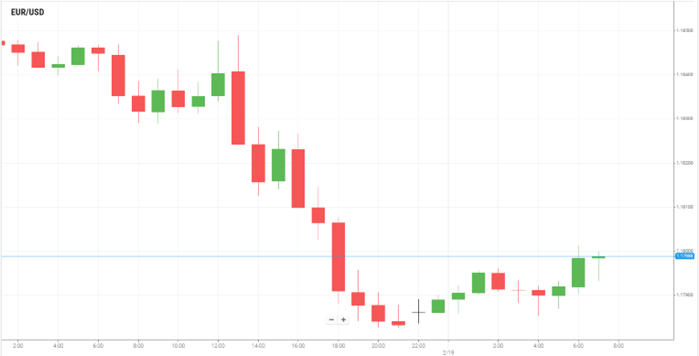
The EUR/USD pair dropped to a near two-week low around 1.1789 don Wednesday, pressured by renewed US Dollar strength following the release of hawkish minutes from the Federal Open Market Committee (FOMC).
The minutes from the Federal Reserve’s January policy meeting indicated that while nearly all policymakers supported keeping interest rates unchanged, only a small minority favored a rate cut. Importantly, several officials emphasized that additional policy tightening could be warranted if inflation proves more persistent than anticipated. At the same time, participants signaled openness to adjusting policy should price pressures ease in line with expectations, underscoring a data-dependent approach going forward.
The tone of the minutes revived market speculation that the Fed may not be finished with its tightening cycle, boosting US Treasury yields and lending support to the Greenback.
On the European side, political uncertainty is adding to pressure on the Euro. According to a report by the Financial Times, Christine Lagarde could step down as President of the European Central Bank before the end of her term in October 2027. The report suggests Lagarde may wish to allow French President Emmanuel Macron and German Chancellor Friedrich Merz time to coordinate on her successor, although no specific timeline for her potential departure has been provided.
Looking ahead, market participants will turn their attention to the preliminary Purchasing Managers’ Index (PMI) data from Germany and the broader Eurozone, due Friday.
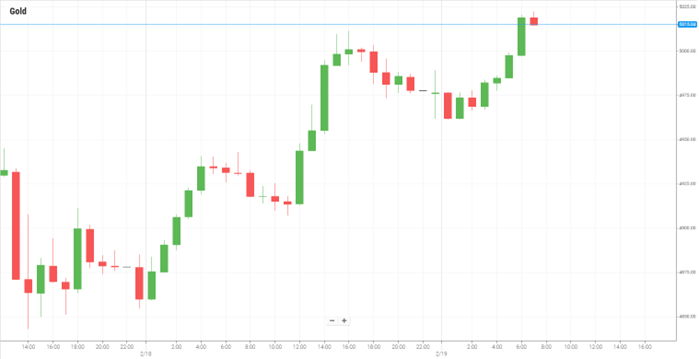
Gold prices extended gains for a second consecutive session on Thursday, climbing back above the key $5,000 psychological level during the European trading hours. The move brings the precious metal closer to its recent swing high, supported primarily by escalating geopolitical risks that continue to drive safe-haven inflows.
The third round of US-mediated negotiations between Ukraine and Russia concluded in Geneva on Wednesday without a significant breakthrough, highlighting persistent disagreements over the status of eastern Ukrainian territories currently under Russian control. In addition, reports indicate that the United States military could be prepared to launch a strike against Iran as soon as this weekend. Although US President Donald Trump has yet to make a final decision on authorizing military action, the possibility of escalation is keeping geopolitical uncertainty elevated and underpinning demand for the traditional safe-haven asset.
However, gains in Gold may remain constrained by resilient US Dollar strength. Minutes from the Federal Reserve’s January policy meeting, released Wednesday, revealed ongoing divisions among policymakers regarding the appropriate timing and scale of future rate cuts.
Attention now turns to Thursday’s US economic calendar, which features Weekly Initial Jobless Claims, the Philadelphia Fed Manufacturing Index, and Pending Home Sales data. Speeches from key Federal Open Market Committee members could also influence market sentiment later in the North American session.
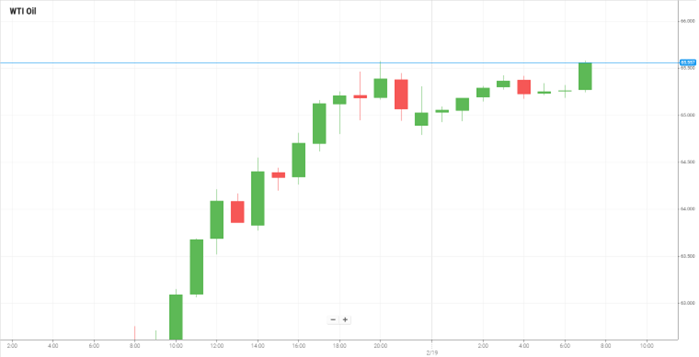
Oil prices edged higher during Asian trading on Thursday, building on gains of more than 4% in the previous session, as persistent geopolitical risks and an unexpected decline in U.S. crude inventories supported sentiment.
Trading volumes across Asia were relatively subdued due to Lunar New Year holidays in several regional markets.
Market participants remained attentive to rising tensions in the Middle East, as growing friction between Washington and Tehran fueled concerns about potential disruptions to oil shipments through the Strait of Hormuz — a vital artery for global energy flows.
Reports of heightened military and naval activity in the Gulf have reinforced fears of supply vulnerability. At the same time, optimism surrounding any near-term easing of sanctions on Russian energy exports diminished after the latest round of Russia–Ukraine negotiations failed to produce a meaningful breakthrough.
Additional upside came from U.S. supply data. The American Petroleum Institute reported that crude stockpiles fell by approximately 609,000 barrels in the week to February 13. The decline contrasted sharply with expectations in a Reuters survey for a build of 2.1 million barrels and followed the previous week’s sharp increase of more than 13 million barrels. A draw in inventories is typically interpreted as a sign of stronger refinery demand or tighter supply conditions — both supportive for crude prices.
Investors now await official confirmation from the Energy Information Administration, which is scheduled to release its weekly petroleum status report later on Thursday.
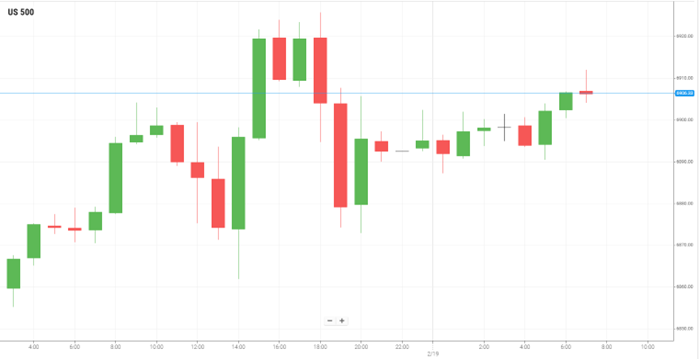
U.S. stock index futures were little changed on Wednesday evening after the release of minutes from the Federal Reserve’s January meeting highlighted divisions among policymakers, adding fresh uncertainty to the long-term interest rate outlook.
Investors are now turning their attention to upcoming earnings from retail heavyweight Walmart Inc. for further insight into the health of the U.S. economy. Heightened geopolitical tensions with Iran also weighed on sentiment, following reports of an expanded U.S. military presence in the Middle East despite ongoing diplomatic engagement between Washington and Tehran.
Futures stabilized after Wall Street posted gains during the regular session, supported largely by a continued rebound in technology shares and data suggesting resilience in the U.S. economy. However, major indexes retreated from intraday highs amid lingering caution over the Federal Reserve’s policy trajectory.
Walmart Inc. is scheduled to report fourth-quarter results on Thursday, with investors closely watching its guidance for 2026. As the world’s largest retailer by revenue and a bellwether for U.S. consumer spending, Walmart’s outlook is expected to offer valuable insight into household demand trends amid persistent inflationary pressures.
In addition to corporate earnings, traders will monitor U.S. trade data for December and weekly jobless claims figures due later on Thursday.
Despite the gains, indexes ended below their session highs as concerns surrounding artificial intelligence continued to cloud the outlook for tech stocks. With monetary policy uncertainty and geopolitical risks still in play, markets appear poised for further volatility as investors assess incoming economic data and corporate earnings.
The materials contained on this document should not in any way be construed, either explicitly or implicitly, directly or indirectly, as investment advice, recommendation or suggestion of an investment strategy with respect to a financial instrument, in any manner whatsoever. Any indication of past performance or simulated past performance included in this document is not a reliable indicator of future results. For the full disclaimer click here.
Join iFOREX to get an education package and start taking advantage of market opportunities.
 A beginner's e-book
 $5,000 practice demo account
 A 12-part video course
 Trusted partner
 Featured partner
 By
By 


