
Listed on 
 Years active
 English (Arabic)
 Chinese Simplified - 中文 (简体)
 Chinese Traditional - 中文 (繁體)
 English
 Japanese - 日本語
 Korean - 한국어 (대한민국)
 Portuguese - Português
 Russian - Русский
 Spanish - Español
 Thai - ไทย
 English (India)
Don't have an account?
Register via AppHave an account?
LoginThe US Dollar Index (DXY) advanced 0.22% on Tuesday, holding its ground above the 101.00 mark as escalating geopolitical friction in the Middle East sparked defensive safe-haven buying. The Greenback found immediate support following US airstrikes on Iranian targets, which came in retaliation for attacks on commercial vessels in the strategic Strait of Hormuz. Despite these immediate geopolitical tailwinds, the index's broader upside remains checked by cooling interest rate expectations following softer Nonfarm Payrolls data and recent commentary from New York Fed President John Williams, who noted diminishing anxiety over domestic inflation due to declining energy costs.
Gold prices tumbled 1.42% during Tuesday's session, pulling back from recent highs near $4,200 before stabilizing above the $4,100 threshold by mid-week. Bullion faces significant headwinds as reignited US-Iran hostilities fuel energy-driven inflation fears, reinforcing expectations that the Federal Reserve will maintain a restrictive "higher for longer" monetary policy. This hawkish environment has driven the 10-year US Treasury yield up, lifting the opportunity cost for the non-yielding precious metal and offsetting its traditional safe-haven appeal.
WTI Crude Oil surged 5.33% on Tuesday, consolidating near a two-week high just above $72.00 per barrel as the military standoff between the US and Iran directly threatened global energy infrastructure. Washington’s decision to revoke a key sanction concession allowing Iranian oil sales, combined with severe supply disruption risks in the Strait of Hormuz, quickly injected a heavy risk premium into the commodity. However, oil's aggressive rally remains capped by a scheduled OPEC+ production target increase and Saudi Arabia’s unprecedented $11 per barrel official selling price cut to Asia.
Most Asian stock markets declined as renewed selling across semiconductor shares extended an artificial intelligence-driven valuation reset, pushing South Korea’s KOSPI toward a bear market despite early bargain hunting. This regional weakness, which mirrored overnight losses on Wall Street and a retracement in major equity futures, was exacerbated by elevated oil prices following fresh US military strikes on Iran and tightened sanctions on Iranian exports in the Strait of Hormuz. The tech-led selloff was initially triggered by blockbuster earnings from Samsung Electronics, which prompted investors across Asia's AI supply chain to question whether steep valuations can be sustained by future earnings.
Amid this broader market reset, individual tech giants moved on distinct catalysts. Nvidia shares managed a 0.77% gain on Tuesday, rebounding from an earlier premarket slip that was triggered by reports that Chinese AI startup DeepSeek is developing its own proprietary semiconductor. Designed for inference tasks rather than model training, DeepSeek's year-long, quiet development project aims to reduce its long-term reliance on Nvidia and Huawei. Meanwhile, SK Hynix Inc. tumbled 4.54%—still outperforming the broader KOSPI's 5% drop—despite robust demand for its upcoming $28 billion Nasdaq listing. The record-breaking offering of 177.9 million American depositary receipts (ADRs) has drawn bids several times greater than the shares on offer from global funds ahead of its Friday debut.
For the remainder of the week, global market focus is shifting toward critical macroeconomic data and the formal kickoff of the second-quarter corporate earnings season. The immediate centerpiece is Wednesday's release of the June FOMC meeting minutes, which investors will parse closely for clues regarding the Federal Reserve's interest rate trajectory and subsequent US Dollar momentum. Simultaneously, market participants are looking past geopolitical headlines to brace for an accelerating corporate calendar poised to test lofty equity valuations, with consumer staple giant PepsiCo reporting on Thursday and Delta Air Lines following on Friday.
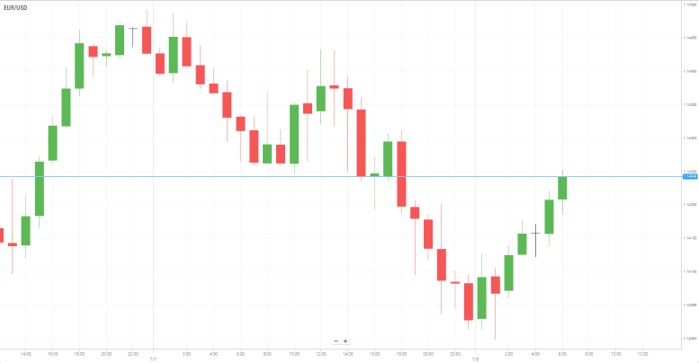
EUR/USD edged higher early on Wednesday, trading near 1.1420 after posting modest losses in the previous session. The pair found support as the US Dollar softened following recent volatility, although broader market sentiment remained cautious ahead of the release of the Federal Reserve's Meeting Minutes. Investors are closely watching the first set of minutes under newly appointed Fed Chairman Kevin Warsh for fresh guidance on the future direction of US interest rates.
The US Dollar remains under pressure after recent swings in sentiment, but demand for the Greenback could strengthen if geopolitical tensions continue to boost safe-haven flows. The latest escalation came after US airstrikes targeted Iran in response to attacks on commercial vessels transiting the strategically important Strait of Hormuz.
Iranian Parliament Speaker Mohammad Bagher Ghalibaf stated that Iran would not yield to external pressure, while the country's senior military leadership condemned the strikes as blatant aggression and pledged a decisive response.
In Europe, expectations of a more cautious European Central Bank policy stance shifted after ECB Executive Board member Isabel Schnabel warned that the conflict involving Iran could keep core inflation elevated. Bank of Italy Governor and ECB policymaker Fabio Panetta reinforced that view, cautioning that uncertainty surrounding energy supplies through the Strait of Hormuz continues to pose significant upside risks to Eurozone inflation.
While Panetta stressed that inflation risks remain tilted to the upside, he also acknowledged that economic prospects remain fragile. This combination points to limited flexibility for the ECB as policymakers balance elevated price pressures against slowing growth.
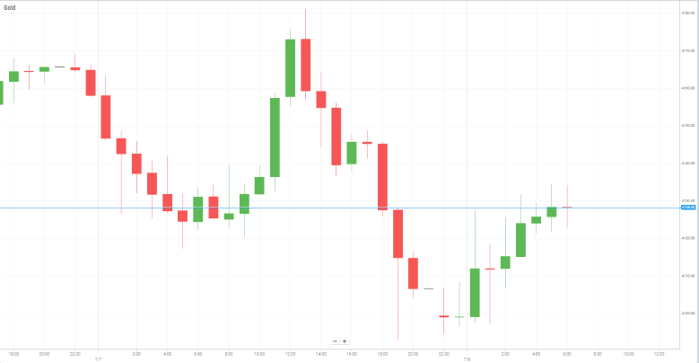
Gold traded with a modest positive bias during Wednesday's Asian session, holding above the $4,100 mark and snapping a two-day losing streak after touching a weekly low in the previous session. The precious metal found support as the US Dollar struggled to extend recent gains, with investors opting for caution ahead of the release of the Federal Reserve's June FOMC Meeting Minutes. While the softer Dollar provided some relief for bullion, the broader fundamental backdrop suggests that upside momentum could remain limited.
Market sentiment remains heavily influenced by escalating geopolitical tensions in the Middle East. The renewed conflict has prompted investors to price in a higher geopolitical risk premium, which could continue supporting the US Dollar's safe-haven appeal and restrict gains in Gold.
Further adding to market uncertainty, the US revoked a key concession that had allowed Iran to sell oil on international markets, triggering a sharp rally in crude oil prices.
According to the CME FedWatch Tool, markets are currently pricing in more than an 80% probability that the Fed will deliver at least one 25-basis-point interest rate hike before the end of the year. Expectations that the upcoming FOMC Minutes will reinforce a hawkish policy outlook have also pushed US Treasury yields higher. The benchmark 10-year Treasury yield climbed to 4.567%, while the policy-sensitive two-year yield advanced to 4.189%, increasing the opportunity cost of holding non-yielding assets such as Gold. As a result, traders may prefer to wait for stronger confirmation of renewed buying interest before positioning for a more sustained rally.
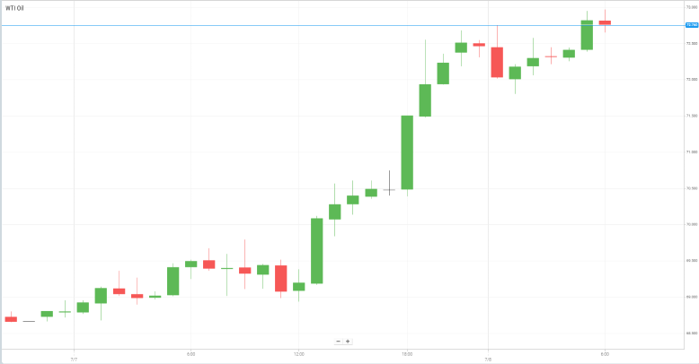
Oil prices rallied sharply during early Wednesday trading after the US military launched a new round of strikes against Iran and reimposed sanctions on the country's oil exports following attacks on commercial vessels in the Strait of Hormuz. The renewed escalation in the Middle East reignited concerns over potential supply disruptions through one of the world's most important energy shipping routes.
According to the US Central Command (CENTCOM), the latest military operation was intended to impose what it described as "heavy costs" on Tehran following attacks on commercial shipping. The US said the strikes were carried out in response to Iranian attacks on three commercial vessels transiting the Strait of Hormuz, accusing Tehran of violating the existing ceasefire.
The renewed hostilities have revived fears of disruptions to oil shipments through the Strait of Hormuz, a critical chokepoint for global energy supplies. Market sentiment was further supported after Washington revoked a key sanctions waiver that had previously allowed Iran to continue selling oil on international markets, a move that could tighten global crude supplies in the weeks ahead.
The latest escalation now threatens to undermine that agreement, with prospects for renewed peace negotiations appearing increasingly uncertain.
Concerns over potential supply disruptions in the Middle East largely outweighed expectations of increased global production after the Organization of the Petroleum Exporting Countries (OPEC) and its allies agreed over the weekend to raise oil output. For now, geopolitical risks remain the dominant driver of crude prices, overshadowing the prospect of higher supply from the producer group.
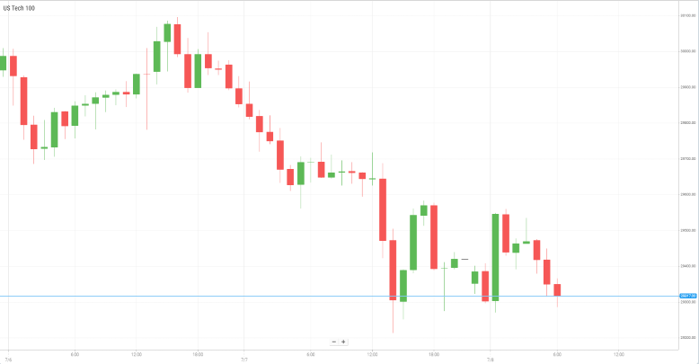
The US Tech 100 closed sharply lower on Tuesday as renewed weakness in semiconductor stocks weighed on technology shares, reflecting growing concerns that the AI-driven rally may have become overstretched. Investors trimmed exposure to chipmakers after Samsung Electronics' stronger-than-expected earnings failed to meet lofty market expectations, triggering a broad selloff across the sector.
Micron Technology fell 4.4%, while Sandisk dropped 7.3%, helping drag the Philadelphia Semiconductor Index down 4.65%. Despite the decline, the semiconductor benchmark remains up roughly 74% so far in 2026, highlighting the sector's strong gains earlier in the year.
Investor sentiment was further pressured after Reuters reported that Chinese AI startup DeepSeek is developing its own artificial intelligence chip, a move that could reduce its reliance on processors supplied by Nvidia and Huawei. The report added to concerns about intensifying competition within the rapidly expanding AI hardware market.
Tuesday's decline marked the latest bout of volatility for memory chipmakers and other AI-related companies, as investors questioned whether valuations have become too demanding following months of optimism surrounding AI infrastructure and data center investment.
Elsewhere, SpaceX fell nearly 7% during its first trading session as a member of the Nasdaq 100 Index, despite receiving coverage initiations from several brokerage firms.
Investors are also looking ahead to Wednesday's release of the Federal Reserve's latest meeting minutes, the first under Chairman Kevin Warsh. The document is expected to provide fresh insight into the central bank's policy outlook and could influence expectations for the path of US interest rates.
Join iFOREX to get an education package and start taking advantage of market opportunities.
 A beginner's e-book
 $5,000 practice demo account
 A 12-part video course
 Trusted partner
 Featured partner
 By
By  08/07/2026 - 06:51 UTC


