
Listed on 
 Years active
 English (Arabic)
 Chinese Simplified - 中文 (简体)
 Chinese Traditional - 中文 (繁體)
 English
 Japanese - 日本語
 Korean - 한국어 (대한민국)
 Portuguese - Português
 Russian - Русский
 Spanish - Español
 Thai - ไทย
 English (India)
Don't have an account?
Register via AppHave an account?
Login 18/06/2026 - 07:50 UTC
The US Dollar Index (USDX) surged by 0.86% on Wednesday, approaching the 100.40 level following the Federal Reserve’s June policy decision. In Kevin Warsh’s first meeting as Fed Chair, the central bank kept interest rates unchanged at 3.50%–3.75% as expected, but struck a hawkish tone by removing references to "additional rate adjustments." This shift, alongside the dot plot raising the year-end median rate projection to 3.8% and lowering 2026 GDP growth expectations to 2.2%, signaled a more cautious, data-dependent stance and the potential for a rate hike later this year.
Gold (XAU/USD) slid by -1.22% on Wednesday during the post-FOMC slump, though it managed to hold above the $4,300 mark into Thursday. The precious metal faced pressure from a sharp rise in US Treasury bond yields and aggressive pricing of a December rate hike following the Fed's hawkish tilt. However, deeper losses were capped as investors reacted to a signed Memorandum of Understanding (MoU) between US President Donald Trump and Iranian President Masoud Pezeshkian, an agreement aimed at ending hostilities and reopening the Strait of Hormuz that triggered profit-taking on the safe-haven dollar.
Crude Oil (WTI) fell by -0.78% on Wednesday as geopolitical tensions eased significantly following the finalized US-Iran deal. The announcement by President Trump regarding the reopening of the vital Strait of Hormuz—which handles nearly 20% of the global energy supply—and the planned removal of the US naval blockade within 30 days drove intense selling pressure, pushing prices down toward the $79.50 level. While the deal temporarily deflated the market, analysts note that further downside may be limited due to extensive war-related damage to Middle East energy infrastructure.
In other news, U.S. President Donald Trump announced that Apple has agreed to partner with Intel to design and manufacture its chips domestically. The collaboration is part of the administration's broader push to revive American semiconductor manufacturing, which also includes Intel's existing partnerships with Nvidia and Elon Musk’s TerraFab venture. While Trump provided no specific details on the Apple-Intel deal, it follows a preliminary agreement reported in early May. Intel, which has fallen behind competitors like TSMC in manufacturing advanced chips during the AI boom, is central to the government's domestic chipmaking strategy.
Wall Street indexes fell sharply on Wednesday following a hawkish pivot by the Federal Reserve under its new Chair, Kevin Warsh. This outlook prompted markets to increase bets on a 25-basis-point rate hike by year-end, causing Treasury yields to surge and further pressuring stocks. Consequently, the S&P 500 slid by around 1.2%, the Nasdaq Composite dropped by almost 1.4%, and the Dow Jones Industrial Average fell by around 1%.
In corporate news, SpaceX saw a pause in its historic post-IPO surge, falling 4.85% on Wednesday after rising roughly 50% from its initial offering price in its first four trading sessions to close at $201.80 on Tuesday. Despite Wednesday's dip, the explosive early rally had given the aerospace company an implied market capitalization of approximately $2.65 trillion, allowing it to surpass Amazon's valuation and briefly leapfrog Microsoft to become one of the world's most valuable companies.
Global investor attention is now shifting toward a fresh slate of macroeconomic data, with markets now anticipating UK data, which highlights a 25.8K increase in the Claimant Count Change alongside the Bank of England's latest monetary policy decisions. The Monetary Policy Committee (MPC) voted 1-0-8 to maintain the Official Bank Rate at 3.75%, indicating a heavy majority in favor of keeping borrowing costs unchanged, with only one member dissenting.
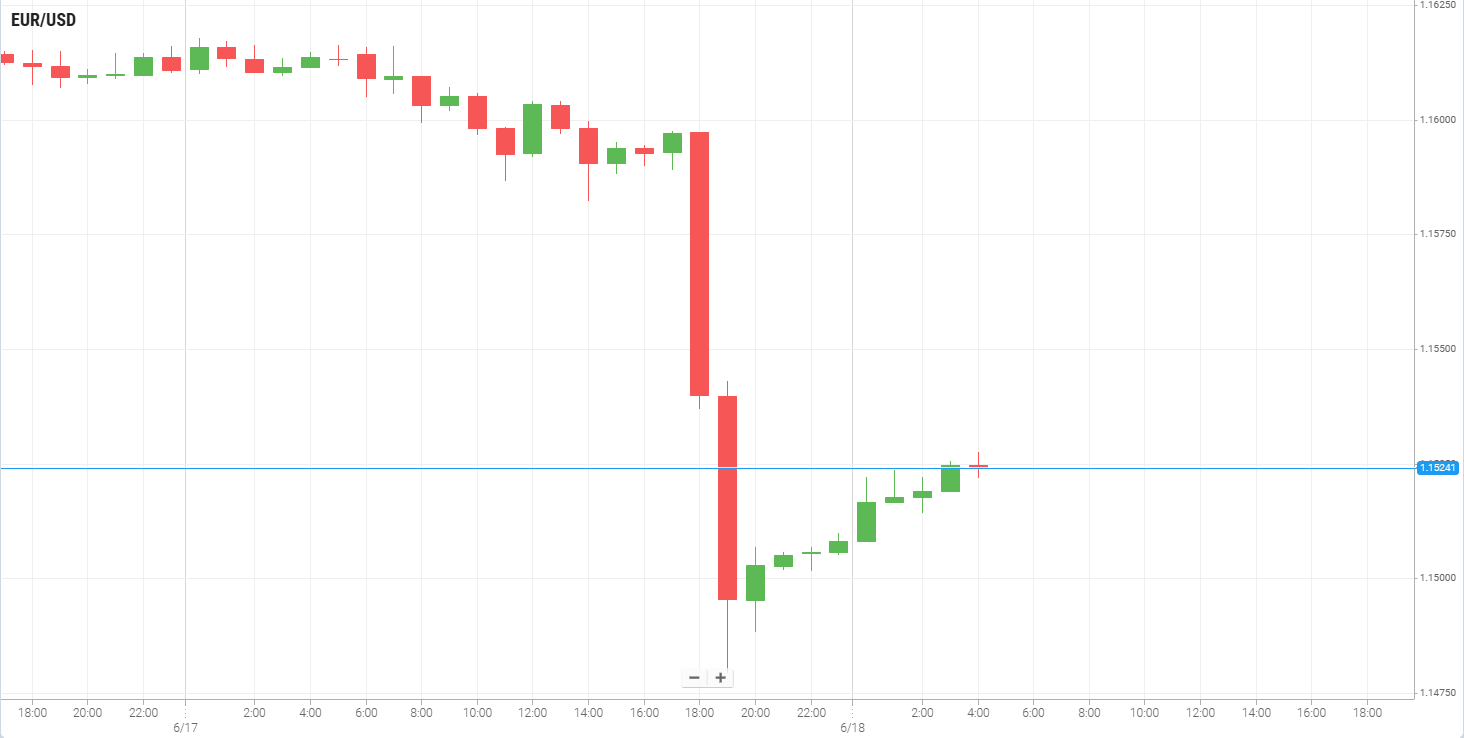
The EUR/USD pair regained momentum during Thursday’s early Asian trading session, trading near 1.1515 after recovering from recent losses. The euro strengthened against the US dollar as investor sentiment improved following progress toward a US-Iran peace agreement. Market attention now turns to upcoming US economic data, including the Initial Jobless Claims report, as traders assess the next direction for the currency pair.
According to reports, the White House confirmed that US President Donald Trump and Iranian President Masoud Pezeshkian signed a memorandum of understanding aimed at ending the conflict between the US, Israel, and Iran. The agreement was reportedly signed electronically after senior officials from both sides completed their signatures earlier in the week.
Meanwhile, the US Federal Reserve kept its benchmark interest rate unchanged at its June policy meeting, maintaining the federal funds rate target range at 3.50%–3.75%, in line with market expectations. The decision was unanimous and marked the first policy meeting under new Fed Chair Kevin Warsh.
Fed officials indicated that inflation risks remain a key concern, particularly due to potential economic effects from the Iran conflict. During his press conference, Warsh emphasized that maintaining price stability would remain the central bank’s primary focus.
Investors will continue monitoring geopolitical developments, upcoming US economic data, and the Fed’s policy outlook for fresh direction in the currency market.
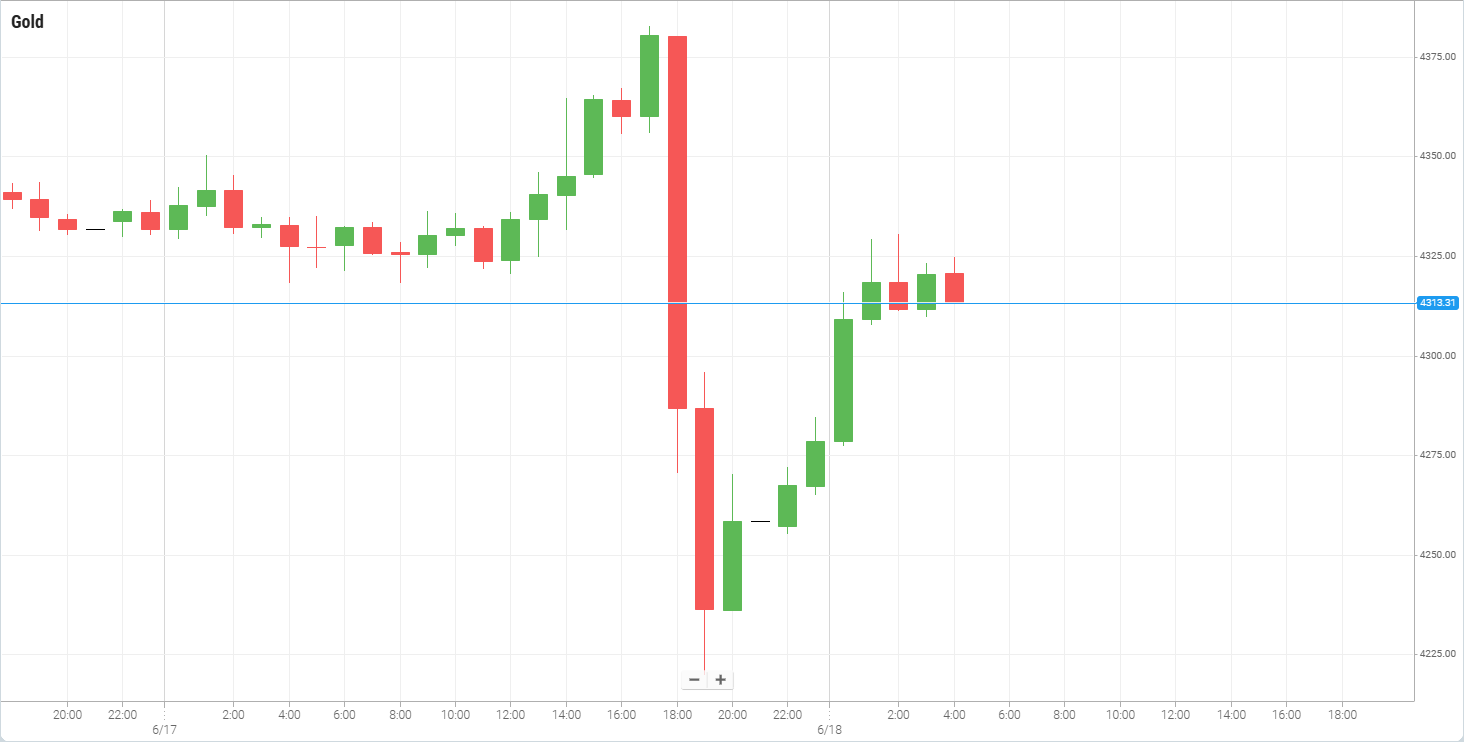
Gold attracted fresh buying interest during Thursday’s Asian session, climbing back above the $4,300 level after suffering a sharp decline following the Federal Reserve’s policy decision. The precious metal found support as optimism surrounding a potential US-Iran peace agreement triggered profit-taking in the US dollar.
The improved risk environment weakened demand for the US dollar, which had strengthened after the Federal Reserve adopted a more hawkish tone on Wednesday. The dollar retreated from its highest level since late March, providing a boost for gold prices.
The Federal Reserve, as widely expected, kept interest rates unchanged at a target range of 3.50%–3.75% during its first meeting under new Chair Kevin Warsh. However, policymakers removed language suggesting a preference for further rate cuts and signaled a stronger commitment to keeping monetary policy restrictive.
Fed officials projected the federal funds rate could reach 3.8% by the end of the year, compared with the previous estimate of 3.4% in March. Following the decision, markets increased expectations for a possible 25-basis-point rate hike in December, pushing US Treasury yields higher and offering renewed support to the dollar.
Higher interest rates and rising bond yields remain a challenge for gold, as the non-yielding asset becomes less attractive compared with interest-bearing investments.
Market participants will now focus on upcoming US economic data, including the Philadelphia Fed Manufacturing Index and weekly Initial Jobless Claims. Comments from Federal Reserve officials may also influence expectations for future monetary policy and provide further direction for both the US dollar and gold prices.
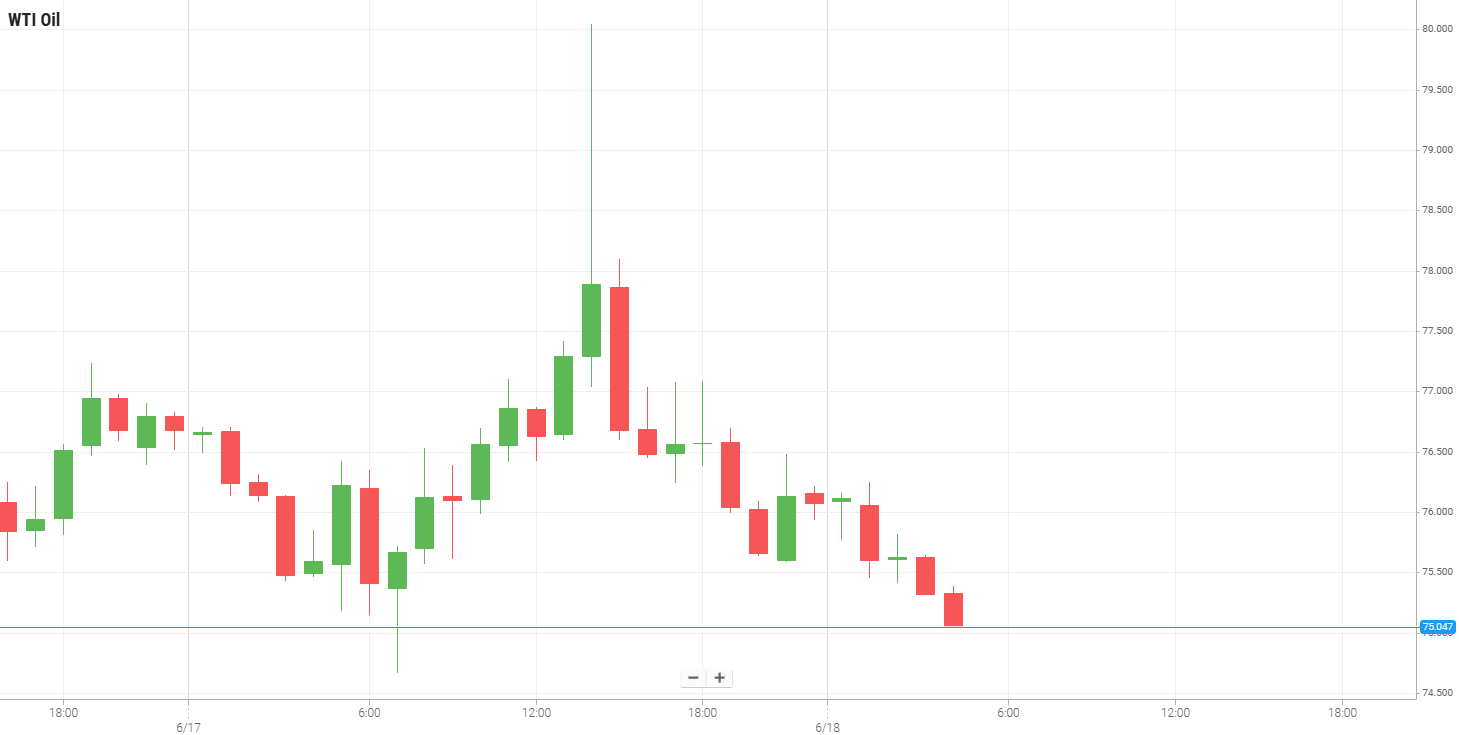
Oil prices moved lower in early Thursday trading after the United States and Iran reached an interim agreement aimed at ending the conflict, reopening the Strait of Hormuz, and easing restrictions on Iranian oil exports. The potential return of Iranian crude supply reduced concerns over a major energy disruption and weighed on prices.
The decline extended losses after oil prices briefly recovered on Wednesday following comments from US President Donald Trump, who warned that military action could resume if Iran’s leadership failed to comply with the agreement.
According to market analysts, energy traders are increasingly pricing in the possibility of Iranian oil returning to global markets sooner than expected following the US-Iran memorandum of understanding. The agreement reportedly includes a 60-day negotiation period during which Iran would allow unrestricted passage through the Strait of Hormuz, one of the world’s most important oil transit routes. Full shipping capacity through the strait is expected to be restored within 30 days under the preliminary deal.
If the agreement is successfully implemented and the Strait of Hormuz fully reopens, the current supply shortage could shift into a potential surplus. The International Energy Agency (IEA) warned that global oil supply may exceed demand by around 5.05 million barrels per day in 2027 as Middle Eastern production returns to the market.
Additional pressure on crude prices came from growing expectations that the Federal Reserve may raise interest rates later this year to contain inflation. Higher borrowing costs could slow economic growth and reduce energy demand.
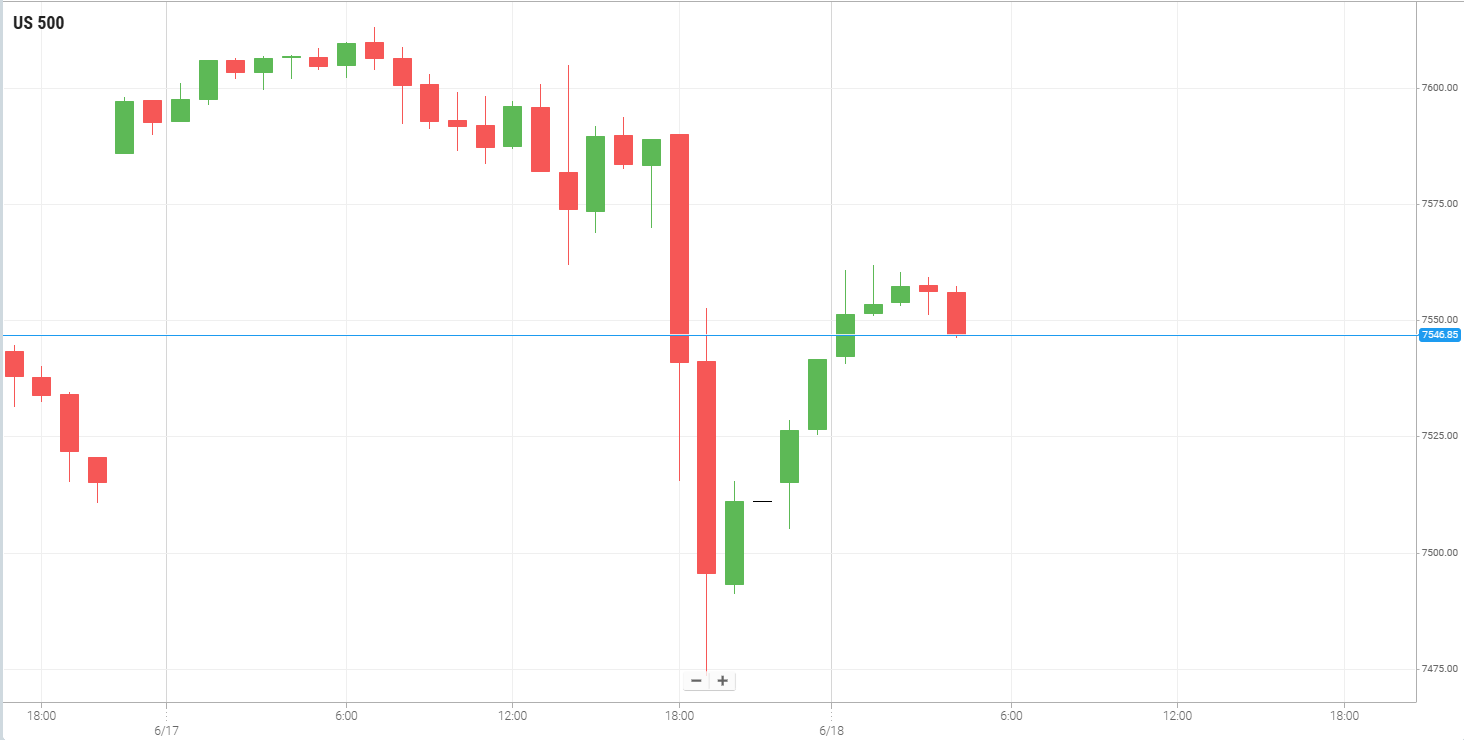
US stocks ended lower on Wednesday after the Federal Reserve kept interest rates unchanged as expected but signaled that a rate increase could still be possible later this year. Investors also evaluated new Fed Chair Kevin Warsh’s plans for broad reforms aimed at changing how the central bank conducts monetary policy.
Market sentiment had initially remained supported by optimism surrounding a potential US-Iran peace agreement. However, the Fed’s more hawkish outlook shifted investor focus toward higher interest rate risks.
A major focus of the Fed meeting was Chair Kevin Warsh’s vision for restructuring the central bank’s policy framework. Warsh announced the creation of task forces examining five key areas: Fed communications, balance sheet management, reliance on economic data, productivity and employment trends, and inflation policy.
The Fed also introduced a shorter policy statement that removed forward guidance and concluded with a stronger commitment to maintaining price stability.
Elsewhere in markets, SpaceX shares declined 5% on Wednesday as the company’s strong post-IPO rally lost momentum.
The company had surged following its market debut, briefly surpassing Amazon in valuation and approaching Microsoft’s market capitalization. After pricing its IPO at $135 per share and raising $75 billion, SpaceX gained nearly 50% within four trading sessions. The recent decline marks the first major pullback following one of the strongest market debuts in history.
The materials contained on this document should not in any way be construed, either explicitly or implicitly, directly or indirectly, as investment advice, recommendation or suggestion of an investment strategy with respect to a financial instrument, in any manner whatsoever. Any indication of past performance or simulated past performance included in this document is not a reliable indicator of future results. For the full disclaimer click here.
Join iFOREX to get an education package and start taking advantage of market opportunities.
 A beginner's e-book
 $5,000 practice demo account
 A 12-part video course
 Trusted partner
 Featured partner
 By
By 


