
Listed on 
 Years active
 English (Arabic)
 Chinese Simplified - 中文 (简体)
 Chinese Traditional - 中文 (繁體)
 English
 Japanese - 日本語
 Korean - 한국어 (대한민국)
 Portuguese - Português
 Russian - Русский
 Spanish - Español
 Thai - ไทย
 English (India)
Don't have an account?
Register via AppHave an account?
Login 29/07/2026 - 06:28 UTC
The US Dollar Index (USDX) traded little changed below the 101.50 mark during Thursday's Asian session as investors remained cautious ahead of the Federal Reserve’s policy announcement later in the day. Risk sentiment remained fragile after Iran’s Islamic Revolutionary Guard Corps reportedly launched ballistic missile attacks targeting US forces in the Middle East late Tuesday. In addition, President Donald Trump reiterated that the United States was prepared to resume military action against Iran should diplomatic efforts fail to ease the conflict.
Market participants largely refrained from taking significant positions ahead of the Federal Open Market Committee (FOMC) decision. Investors will closely monitor the Fed’s statement and any guidance on the future path of monetary policy, as these are expected to shape the US Dollar’s next directional move.
Gold remained under pressure for a second consecutive session, trading near the $4,020 level as renewed tensions in the Middle East boosted oil prices and revived inflation concerns. The rebound in crude prices, following Iran's missile attack on US forces, reduced demand for the non-yielding metal while reinforcing expectations that interest rates could stay higher for longer.
On the energy front, WTI crude oil rebounded sharply from a two-week low, climbing back above the $82 mark as renewed geopolitical tensions in the Middle East revived concerns over global supply disruptions. Oil prices were supported after Iran launched ballistic missile attacks on US forces, while President Donald Trump warned that military action could resume if negotiations with Tehran fail. Ongoing concerns over the Strait of Hormuz and Red Sea shipping routes further underpinned prices, with a softer US Dollar also providing additional support ahead of the Federal Reserve's policy decision.
On the cryptocurrency front, Bitcoin posted losses, as a broad sell-off in AI-related technology stocks spilled over into digital assets and weighed on overall risk appetite. Investors also remained cautious ahead of the Federal Reserve's policy decision, while continued outflows from US spot Bitcoin ETFs limited the cryptocurrency's rebound. Meanwhile, the Senate delayed consideration of the Digital Asset Market Clarity Act, postponing progress on a key crypto regulatory framework. Most major altcoins also traded lower, with Ethereum, XRP, Solana, and Dogecoin posting losses.
Asian equity markets traded sharply lower, led by a steep sell-off in South Korean technology stocks as investors continued to reassess AI-related valuations and semiconductor industry competition ahead of key earnings from major US tech companies. Korea 200 tumbled more than 10%, with heavy losses in chipmakers such as SK Hynix and Samsung Electronics, while Japan, Taiwan, Hong Kong, and mainland Chinese markets also declined. Australia outperformed the region after softer-than-expected inflation data reduced expectations for further Reserve Bank of Australia tightening, helping mining stocks lift the ASX 200.
US stock futures edged lower as investors remained cautious ahead of major technology earnings and the Federal Reserve’s policy decision. Wall Street ended the previous session mixed, with the US 30 outperforming while the US Tech 100 slipped as semiconductor stocks extended their decline amid concerns over AI valuations and rising competition in the chip sector.
Market attention turned to upcoming results from major companies including Microsoft, Meta, Apple, and Amazon, which are expected to provide further insight into AI investment trends and cloud demand. Meanwhile, renewed geopolitical uncertainty added to the cautious market tone, while investors continued to monitor the outlook for monetary policy.
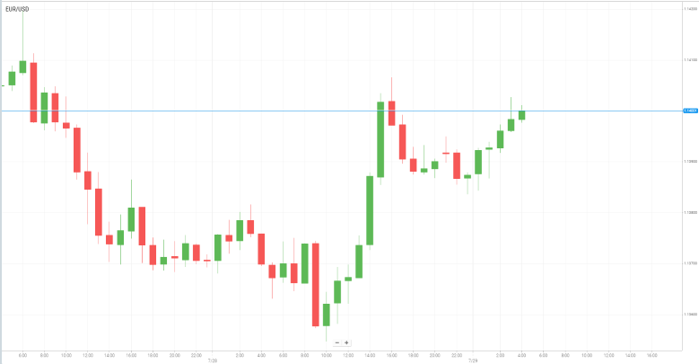
The EUR/USD pair traded with a positive tone near the 1.1390 level during Wednesday's Asian session, marking a second consecutive day of gains as the US Dollar remained under pressure ahead of the Federal Reserve’s highly anticipated policy announcement. While the Fed is widely expected to keep interest rates unchanged, investors remain alert for any signals regarding the future path of monetary policy.
Markets continue to reflect an unusual degree of uncertainty, with traders assigning a 30.5% probability of an immediate rate hike despite expectations for no change at this meeting. Looking ahead, markets also see a strong likelihood of tighter policy in September, reinforcing the view that US interest rates may stay elevated for longer.
The US Dollar could still find some support from ongoing geopolitical tensions in the Middle East, which continue to underpin safe-haven demand and keep inflation concerns in focus. Investors are also assessing the potential impact of higher energy prices on the broader economic outlook and future central bank decisions.
Meanwhile, the Euro remains supported after the European Central Bank left interest rates unchanged at its July meeting while signaling that a rate increase in September remains a likely outcome. Policymakers highlighted that persistently high energy costs could fuel broader inflationary pressures, reinforcing expectations that the ECB may resume policy tightening later this year.
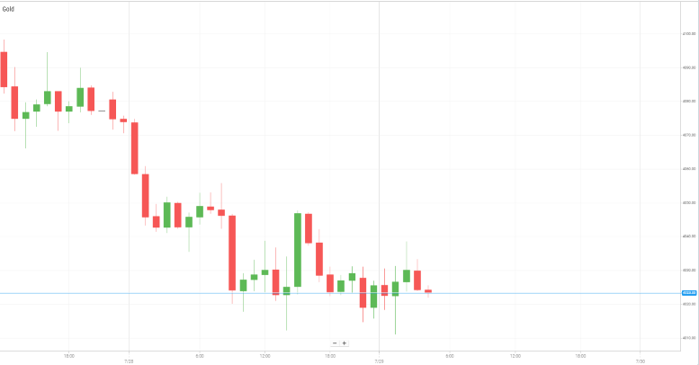
Gold prices remained under pressure for a second consecutive session, trading near the $4,020 per ounce level during Wednesday's Asian session. The precious metal continued to face headwinds as rebounding oil prices and renewed geopolitical tensions in the Middle East fuelled inflation concerns, reducing demand for non-yielding assets.
Investor attention remains firmly on the Federal Reserve's policy decision later in the day. While the US central bank is widely expected to leave interest rates unchanged, markets continue to reflect an unusually high degree of uncertainty.
Traders are pricing in a 30.5% probability of an immediate rate hike, while expectations for additional tightening remain elevated, with markets assigning a 76.6% chance of a rate increase at the September meeting.
At the same time, developments in the Middle East remain in focus after renewed military tensions reignited concerns over potential energy supply disruptions. Higher oil prices have reinforced fears that inflationary pressures could persist, supporting expectations that interest rates may remain higher for longer, a backdrop that continues to weigh on gold prices.
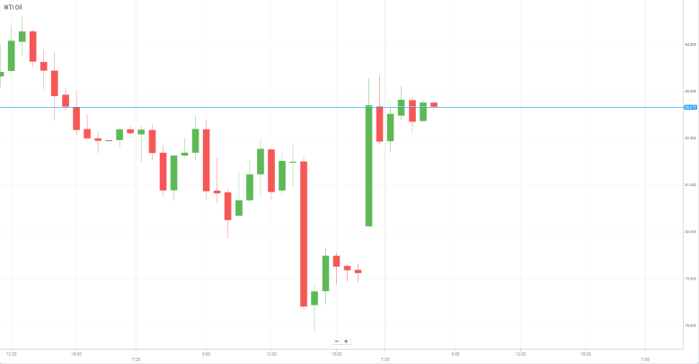
Oil prices climbed sharply during Wednesday's Asian session, extending recent gains as escalating geopolitical tensions in the Middle East heightened concerns over potential supply disruptions. Market sentiment was also supported by signs of tighter US crude supplies and expectations that OPEC+ could pause planned production increases later this year.
Brent crude advanced toward the $87.40 per barrel level, while West Texas Intermediate (WTI) rose above $82.30, with both benchmarks gaining nearly 4%. The move followed renewed military developments involving the United States, Saudi Arabia and Iran, which reduced expectations for a near-term easing of tensions and reinforced fears over the security of regional energy infrastructure.
Adding to the bullish sentiment, industry data showed US crude inventories declined by approximately 3.3 million barrels during the week ended July 24, pointing to firm demand and tighter supply conditions ahead of official government data later in the day.
Meanwhile, investors are also monitoring reports that OPEC+ could suspend further production increases for three months beginning in October after completing the scheduled return of previously curtailed output. Such a move would help keep global oil supplies relatively tight, providing additional support to crude prices.
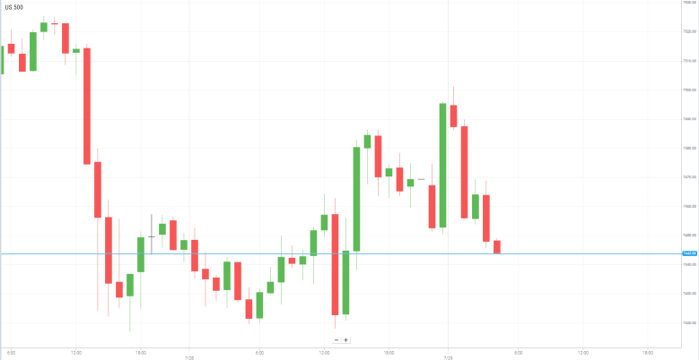
US stocks closed mixed on Tuesday as solid corporate earnings and easing oil prices helped offset continued weakness in the technology sector ahead of the Federal Reserve’s latest policy announcement.
Technology shares continued to struggle following renewed concerns over AI-related spending and growing competition from China’s semiconductor industry. Chipmakers and memory-related companies led the declines, weighing on the broader technology sector, although gains in defensive sectors such as consumer staples and healthcare helped support the wider market.
Corporate earnings remained a key source of optimism. Several major companies posted stronger-than-expected quarterly results, with firms including Coca-Cola, Boeing, Sherwin-Williams and PayPal recording notable gains after reporting upbeat earnings and, in some cases, improving their outlooks. Apple also advanced, briefly becoming the first company to reach a market valuation above $5 trillion during the session.
Investors are now turning their attention to a pivotal day for financial markets, with the Federal Reserve's policy decision, Chair Kevin Warsh’s press conference, and quarterly results from Microsoft and Meta all due later on Wednesday. Market participants will be looking for fresh guidance on the interest rate outlook, while closely monitoring whether major technology companies continue to justify their elevated AI investment plans through strong earnings and future spending guidance.
The materials contained on this document should not in any way be construed, either explicitly or implicitly, directly or indirectly, as investment advice, recommendation or suggestion of an investment strategy with respect to a financial instrument, in any manner whatsoever. Any indication of past performance or simulated past performance included in this document is not a reliable indicator of future results. For the full disclaimer click here.
Join iFOREX to get an education package and start taking advantage of market opportunities.
 A beginner's e-book
 $5,000 practice demo account
 A 12-part video course
 Trusted partner
 Featured partner
 By
By 


