
Listed on 
 Years active
 English (Arabic)
 Chinese Simplified - 中文 (简体)
 Chinese Traditional - 中文 (繁體)
 English
 Japanese - 日本語
 Korean - 한국어 (대한민국)
 Portuguese - Português
 Russian - Русский
 Spanish - Español
 Thai - ไทย
 English (India)
Don't have an account?
Register via AppHave an account?
Login 09/07/2026 - 07:16 UTC
The US Dollar Index (USDX) remained unchanged on Wednesday, closing near the 101.00 mark as opposing market forces locked the greenback in a tight range. The afternoon release of the June FOMC meeting minutes initially left the dollar on the defensive, as it revealed a divided central bank with many policymakers predicting that interest rates would level off or finish slightly below current target ranges by year-end. However, deeper USD losses were completely prevented by a swift influx of safe-haven buying. Traders hesitated to short the greenback as the geopolitical crisis in the Middle East escalated, prompting markets to price in a 70% chance of a 25-basis-point Fed rate hike later this year to counter incoming price shocks.
Gold fell 0.54% on Wednesday, sliding deep into its fourth consecutive day of losses and testing a one-week low near the $4,020 region. Despite a generally softer undercurrent for the broader greenback, gold bulls completely failed to build upward momentum. The yellow metal's non-yielding nature left it highly vulnerable as the escalating military theater in the Middle East sparked fresh global inflation fears, reinforcing bets that the Federal Reserve will enforce tighter monetary policy. Technical setups continue to favor the bears, suggesting that any short-term recovery attempts for the bullion will likely face heavy selling pressure.
Crude Oil (WTI) surged 2.82% on Wednesday, hitting a two-week high near $75.75 per barrel as a massive geopolitical risk premium was priced into the commodity. A dramatic escalation of hostilities saw the US military launch targeted strikes against Iran in retaliation for attacks on commercial shipping in the critical Strait of Hormuz, which was met by Iranian counterstrikes on US installations across Bahrain and Kuwait. Donald Trump’s subsequent announcement that the Middle East ceasefire is officially over—coupled with the threat of Iran fully blocking the Strait of Hormuz and Washington revoking key oil-export waivers—sent severe supply disruption panic through energy markets, completely overshadowing a larger-than-expected EIA inventory build of nearly 3 million barrels.
Asian equity markets fluctuated as a strong rally in technology and semiconductor sectors lost momentum, dragging broader Asia-Pacific indices lower. In contrast, Japan's Nikkei rebounded from a multi-day losing streak, while South Korea's benchmark index gave up substantial early gains as heavyweights in the memory chip sector lost their initial upward traction. European stock futures and Wall Street futures pointed toward a positive opening session following a volatile preceding day on US exchanges, where major indices managed to claw back from initial lows to finish marginally higher.
In corporate news, US semiconductor giant Nvidia saw a notable upward move following media reports indicating that Chinese artificial intelligence firms might be permitted to purchase a limited number of the company's advanced processors. This corporate optimism, however, clashed with broader macroeconomic pressures as global oil prices continued their multi-day surge.
Looking ahead, market participants are shifting focus to critical macroeconomic data scheduled for release today and tomorrow. Today’s risk sentiment will be steered by US Weekly Initial Jobless Claims and June Existing Home Sales, alongside crucial speeches from prominent FOMC members (including New York Fed President John Williams) that could provide fresh hints on the path of interest rates. Tomorrow, the spotlight shifts to Europe, where Germany’s final June Consumer Price Index (CPI) will be released, offering a vital update on Eurozone inflation conditions. Amid these releases, global financial markets will remain highly sensitive to further developments in the Middle East, which threaten to inject persistent volatility across currencies and commodities.
Simultaneously, market participants are looking past geopolitical headlines to brace for an accelerating corporate calendar poised to test lofty equity valuations, with consumer staple giant PepsiCo reporting on Thursday and Delta Air Lines following on Friday.
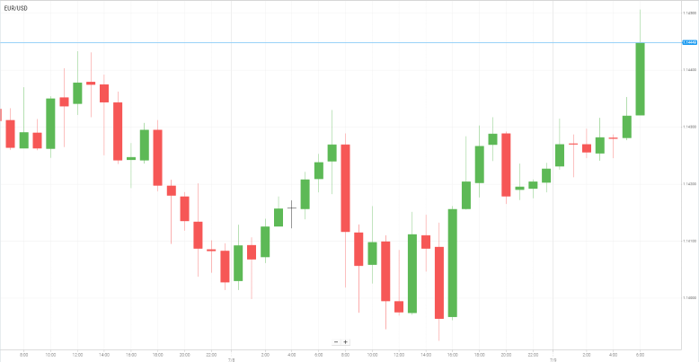
The Euro gained against the US Dollar for a second consecutive session early on Thursday, with EUR/USD trading near 1.1430 during Asian trading hours. The shared currency found support ahead of Germany’s upcoming Trade Balance report, while investors also looked ahead to Friday’s Harmonized Index of Consumer Prices (HICP) data for fresh clues on the Eurozone inflation outlook.
The US Dollar remained under pressure after the Federal Reserve’s June meeting minutes highlighted growing divisions among policymakers. During the June 16–17 meeting, some officials suggested that the benchmark interest rate—currently at 3.50%–3.75%—could remain unchanged or even decline by the end of the year. Others, however, maintained that persistent inflationary pressures could require an additional rate hike before year-end.
Despite the mixed views, markets continue to expect the Fed to keep monetary policy restrictive for longer to contain inflation.
At the same time, escalating geopolitical tensions between the United States and Iran may help limit further losses in the US Dollar by boosting demand for safe-haven assets. After two days of renewed US military strikes, Iranian Parliament Speaker Mohammad Bagher Ghalibaf warned that any additional US action would prompt an immediate response from Tehran. He also emphasized that Iran maintains control over the strategically important Strait of Hormuz, heightening concerns over potential energy supply disruptions and renewed inflationary pressures.
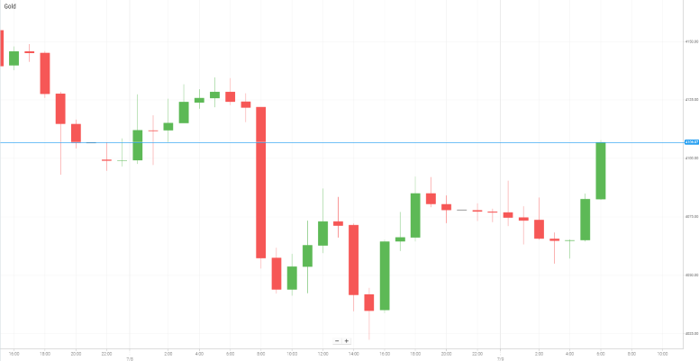
Gold prices remained under pressure for a fourth consecutive session during Asian trading hours on Thursday, hovering near the one-week low of around $4,020 reached in the previous session. Renewed tensions between the United States and Iran have revived inflation concerns and reinforced expectations that the US Federal Reserve could raise interest rates in 2026, weighing on the non-yielding precious metal during Asian trading hours.
The US Dollar, however, continued to trade with a softer tone after the minutes of the Federal Reserve’s June 16–17 policy meeting failed to deliver a decisively hawkish message, helping to limit downside pressure on Gold.
Despite the mixed signals, markets continue to price in roughly a 70% probability of a September rate hike, reflecting expectations that the Fed will maintain a restrictive policy stance for longer.
Geopolitical developments also remained in focus. The latest escalation in the US-Iran conflict followed a fresh wave of US military strikes in response to attacks on commercial vessels in the Strait of Hormuz. Iran retaliated by targeting US military facilities and assets in Bahrain and Kuwait, while US President Donald Trump declared on Wednesday that the ceasefire with Iran had ended.
The combination of persistent inflation concerns, elevated rate hike expectations, and heightened geopolitical risks continues to support the US Dollar and limits the potential for a sustained recovery in Gold prices. Investors now await the release of the US Weekly Initial Jobless Claims report and comments from Federal Reserve officials for additional policy signals, while developments in the Middle East are likely to remain the primary driver of market sentiment and precious metal prices.
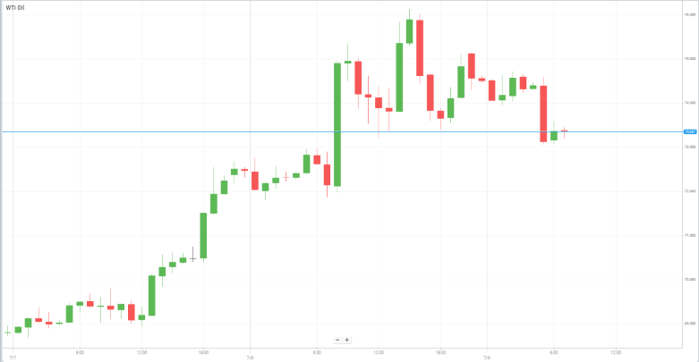
Oil prices remained elevated on Thursday, although gains eased from the previous session’s sharp rally, as investors continued to assess the risk of supply disruptions following renewed hostilities between the United States and Iran and growing concerns over shipping through the Strait of Hormuz.
Crude prices stayed well above levels seen earlier in the week after both benchmarks posted huge gains on Wednesday. The rally followed US President Donald Trump's announcement that the US-Iran ceasefire had effectively ended, accompanied by fresh military strikes on Iranian targets and warnings of further action. In response, Iran threatened shipping through the Strait of Hormuz, raising fears over potential disruptions to global oil supplies.
Although Gulf oil exports have not yet been significantly affected, market participants remain cautious after several commercial vessels were attacked near the Strait of Hormuz in recent days. The incidents prompted some tanker operators to delay or reroute shipments through the strategic waterway.
Supporting the bullish outlook, recent US government data showed another significant decline in gasoline and distillate inventories alongside record fuel exports. Although commercial crude inventories increased last week, the drawdown in refined fuel stocks and resilient downstream demand continue to provide support for oil prices.
Market attention remains focused on developments in the US-Iran conflict, security conditions in the Strait of Hormuz, and any signs of further disruptions to Middle East oil exports, all of which are expected to remain key drivers of crude prices in the near term.
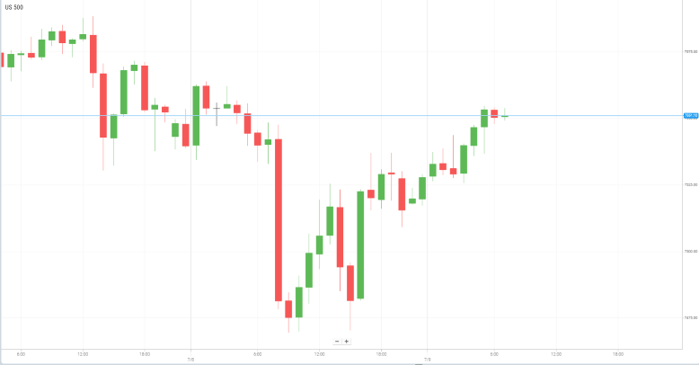
US stocks ended mixed on Wednesday after President Donald Trump declared that an interim agreement aimed at ending the conflict with Iran was "over," renewing concerns about escalating geopolitical tensions and their potential impact on global markets.
Speaking at a NATO summit in Turkey, Trump said he had no interest in further negotiations with Iran and warned that the United States was likely to launch additional military strikes later in the day. His remarks dampened investor sentiment, as markets continued to grapple with shifting signals surrounding the conflict after several failed attempts to reach a lasting ceasefire.
Broadcom surged 4.9% after Apple announced plans to spend more than $30 billion under a recently signed chip supply agreement with the company. Nvidia also gained 3.65% following reports that China intends to permit leading artificial intelligence firms to purchase a limited number of the company's H200 AI chips.
Meanwhile, major technology stocks came under pressure. Microsoft and Alphabet each declined more than 1%, while Meta Platforms lost 2%. The broader market weakened as investors weighed the economic implications of renewed Middle East tensions.
Minutes from the Federal Reserve's June policy meeting also highlighted persistent inflation concerns among policymakers, reinforcing expectations that interest rates could remain elevated for longer. According to CME FedWatch data, traders continue to price in the likelihood of a Fed rate hike by December.
The materials contained on this document should not in any way be construed, either explicitly or implicitly, directly or indirectly, as investment advice, recommendation or suggestion of an investment strategy with respect to a financial instrument, in any manner whatsoever. Any indication of past performance or simulated past performance included in this document is not a reliable indicator of future results. For the full disclaimer click here.
Join iFOREX to get an education package and start taking advantage of market opportunities.
 A beginner's e-book
 $5,000 practice demo account
 A 12-part video course
 Trusted partner
 Featured partner
 By
By 


