
Listed on 
 Years active
 English (Arabic)
 Chinese Simplified - 中文 (简体)
 Chinese Traditional - 中文 (繁體)
 English
 Japanese - 日本語
 Korean - 한국어 (대한민국)
 Portuguese - Português
 Russian - Русский
 Spanish - Español
 Thai - ไทย
 English (India)
Don't have an account?
Register via AppHave an account?
Login 19/12/2025 - 08:00 UTC
The dollar index (USDX) moved slightly higher on Thursday and continued to gain ground toward the 98.55 level during Friday’s early European session. This recovery sees the index bouncing from 11-week lows as a cautious market mood provides some support to the greenback. However, the move follows the release of significantly softer-than-expected inflation data; the US Consumer Price Index (CPI) rose 2.7% YoY in November, well below the market consensus of 3.1%. Meanwhile, core CPI slowed to 2.6%, missing expectations of 3.0% and marking its slowest pace since 2021. Despite the recent uptick, the potential upside for the USDX remains limited as cooling inflation paves the way for the Federal Reserve to deliver further interest rate cuts in 2026. While financial markets are currently pricing in only a 26.6% probability of a rate reduction at the January meeting, the broader trend of a weakening labor market and slowing price growth keeps the dollar on the defensive. Traders are now shifting their focus to the University of Michigan Consumer Sentiment Index and inflation expectations data due later today for further directional cues.
Gold posted a moderate decline on Thursday and continued to dip below the $4,350 mark in early Friday trading as investors engaged in profit-taking near record highs. Despite this short-term pressure, the metal's bullish outlook remains supported by significant safe-haven demand fueled by escalating geopolitical tensions, specifically the risk of military confrontation following the U.S. naval "blockade" of Venezuela's oil industry. Sentiment is further bolstered by domestic political shifts in the U.S., where President Trump’s intent to appoint a Federal Reserve chair who favors significantly lower interest rates "by a lot" has increased expectations for a more dovish monetary policy path.
The Bank of Japan (BoJ) raised interest rates by 25 basis points to 0.75% on Friday, marking the highest level since 1995. The unanimous decision was driven by sticky inflation and expectations of steady wage growth in 2026. While the BoJ signaled readiness for further hikes if economic conditions align with its forecasts, it noted that real interest rates remain "significantly negative," maintaining a broadly accommodative stance. Despite the hawkish messaging, the USD/JPY pair rose 0.26% to 156.00 as of 06:05 AM GMT Friday, as the market's reaction reflected a "sell the fact" sentiment following the widely anticipated move.
In the equity markets, Japanese indices showed resilience despite the tighter policy outlook. The Japan 225 climbed 0.49% and the Japan 100 rose 0.61% as of 06:06 AM GMT Friday. Gains were supported by a positive lead from Wall Street and cooling US inflation data, which bolstered broader risk appetite across Asia. While stocks slightly trimmed their intraday peaks following the rate announcement, the market remains focused on Governor Kazuo Ueda’s upcoming press conference for clearer cues on the terminal rate and the pace of future normalization.
The main US equity indices moved higher on Thursday as softer-than-expected November inflation data triggered a rebound in technology shares. Despite this daily advance, Wall Street remains on track for a negative week due to an extended tech rout and lingering economic uncertainty. Analysts noted that while the Consumer Price Index (CPI) print provided a short-term boost, the reading may have been impacted by previous government shutdown disruptions, leading many to believe that December’s data will be the true gauge for future Federal Reserve policy.
In the corporate sector, Micron Technology surged 10.14% on Thursday following blowout quarterly earnings, providing much-needed relief to the semiconductor industry. Oracle also saw positive momentum, rising 0.86% amid reports of its involvement in a consortium to purchase TikTok’s U.S. operations and news of a significant valuation hike for OpenAI. Meanwhile, FedEx gained 1.81% after reporting stronger-than-expected fiscal second-quarter earnings, though the logistics giant warned of a continued challenging macroeconomic environment.
Market participants continue to monitor the balance between cooling inflation and the sustainability of high valuations in the artificial intelligence space. While the tech sector saw a reprieve on Thursday, many major players are still recovering from significant monthly losses. Focus remains on whether the current cost-cutting measures seen in the industrial sector can offset broader economic headwinds.
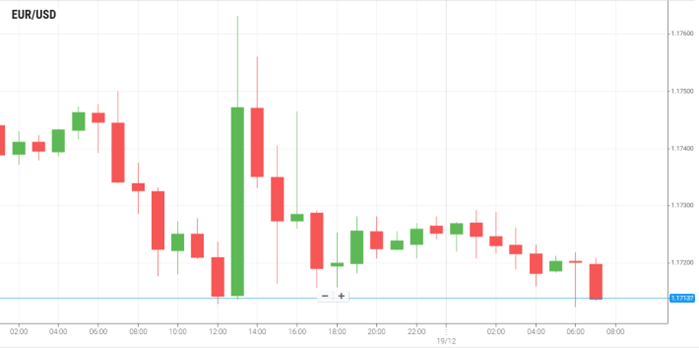
EUR/USD slipped modestly on Thursday, down 0.14% as traders digested a packed economic calendar on both sides of the Atlantic. Softer US inflation data and the European Central Bank’s decision to keep interest rates unchanged failed to provide fresh momentum for the single currency.
US data showed that November inflation continued to cool, with both headline and core readings falling to their lowest levels since early 2021, according to the Bureau of Labor Statistics. While the softer inflation profile reinforces the broader disinflation trend, stronger-than-expected labor market data tempered expectations for imminent Fed easing. Initial Jobless Claims declined to 224K for the week ending December 13, below forecasts and signaling continued resilience in employment conditions.
In Europe, the ECB left policy rates unchanged, as widely anticipated. President Christine Lagarde said the decision was unanimous and reaffirmed the central bank’s meeting-by-meeting approach. A Bloomberg report citing sources suggested that the ECB’s easing cycle is “most likely over,” reinforcing the perception that policymakers are comfortable maintaining current settings for now.
Market attention now turns to upcoming US releases, including the Fed’s preferred inflation measure—the Core Personal Consumption Expenditures (PCE) Price Index—and the final reading of the University of Michigan Consumer Sentiment Index. In Europe, traders will monitor ECB commentary from Mario Cipollone and Martin Kocher, along with October Current Account data.
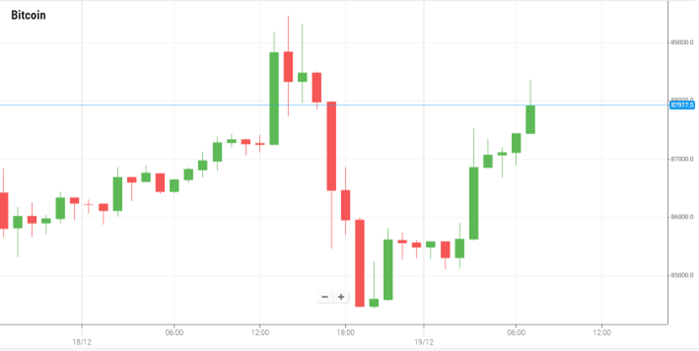
Bitcoin traded with moderate gains early on Thursday, hovering near the $87,000 level after spending much of the week in a tight range, as investors absorbed softer-than-expected US inflation data that reinforced expectations for future Federal Reserve rate cuts.
Despite the modest uptick, Bitcoin remains on track for a weekly decline extending a consolidation phase following strong gains earlier in the year.
Bitcoin has struggled to sustain moves above the $90,000 level this month, with the psychologically important threshold continuing to cap upside attempts. Seasonal thin liquidity, typical of late-December trading, has dampened momentum and limited follow-through after brief rallies.
Bitcoin showed little immediate reaction to Thursday’s US Consumer Price Index data, which came in below expectations, with annual inflation easing to 2.7%.
The softer inflation reading strengthened market expectations that the Federal Reserve could accelerate rate cuts in 2026, as cooling price pressures give policymakers greater flexibility. Lower interest rates typically support risk assets by reducing the opportunity cost of holding non-yielding investments such as Bitcoin.
However, in the absence of crypto-specific catalysts, the inflation surprise alone was insufficient to drive a sustained move higher.
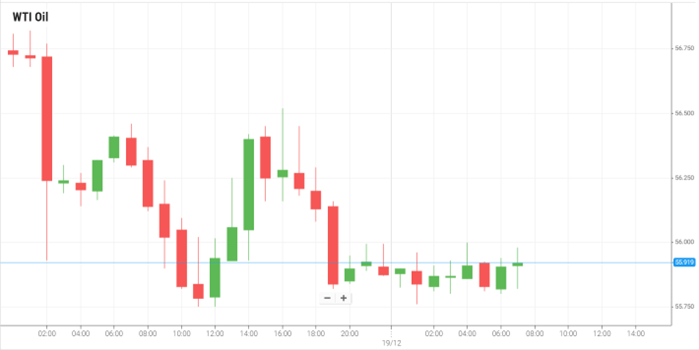
Oil prices were little changed in Asian trading on Friday but remained on track for a second consecutive weekly decline, as persistent concerns over a global supply glut outweighed support from ongoing geopolitical risks.
Market sentiment has been dominated by expectations that global oil supply will continue to outstrip demand into 2026. Rising production from non-OPEC producers, combined with muted consumption growth in major economies, has kept global inventories well supplied.
OPEC and its allies have also gradually increased output this year as they unwind earlier voluntary production cuts, adding further barrels to an already saturated market.
Weak demand from China has compounded these pressures. Slower growth in industrial activity and consumer spending in the world’s largest crude importer has limited gains in fuel consumption.
Recent data showing comfortable crude and refined fuel stockpiles in the United States and parts of Asia have reinforced the view that the market remains well buffered against potential disruptions.
Despite supply glut concerns, traders continued to monitor potential geopolitical risks that could threaten supply. One key focus is the possibility of additional US sanctions on Russia’s energy sector should efforts to secure a peace agreement in Ukraine falter.
Stricter measures targeting Russian crude exports or shipping could tighten global supplies, although the timing and scope of any such actions remain uncertain.
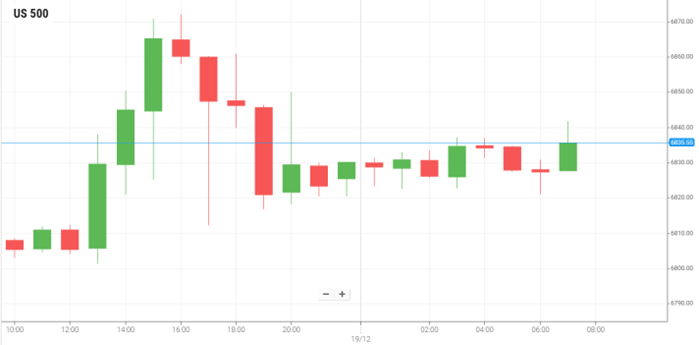
U.S. stocks ended higher on Thursday, led by a rebound in major technology shares after recent selling, as softer-than-expected consumer inflation data strengthened expectations for further Federal Reserve interest rate cuts next year.
U.S. inflation rose less than anticipated in November, marking the first full set of consumer price data released since the government shutdown ended in mid-November.
Still, the softer inflation data reinforced expectations for monetary easing. Market pricing now reflects roughly an 80% probability of at least 50 basis points of rate cuts through the end of 2026, up from about 75% before the release.
Investor sentiment received an additional boost from Micron Technology, which surged after reporting better-than-expected fiscal first-quarter earnings and issuing current-quarter guidance nearly double analyst estimates.
The memory chipmaker cited strong and sustained demand from the artificial intelligence sector, driven by continued investment in data center infrastructure. Broader technology sentiment improved following several sessions of selling, with Alphabet, NVIDIA, Meta Platforms, and Microsoft all gaining more than 2%.
The materials contained on this document should not in any way be construed, either explicitly or implicitly, directly or indirectly, as investment advice, recommendation or suggestion of an investment strategy with respect to a financial instrument, in any manner whatsoever. Any indication of past performance or simulated past performance included in this document is not a reliable indicator of future results. For the full disclaimer click here.
Join iFOREX to get an education package and start taking advantage of market opportunities.
 A beginner's e-book
 $5,000 practice demo account
 A 12-part video course
 Trusted partner
 Featured partner
 By
By 


